
3D-rendering til byplanlægning
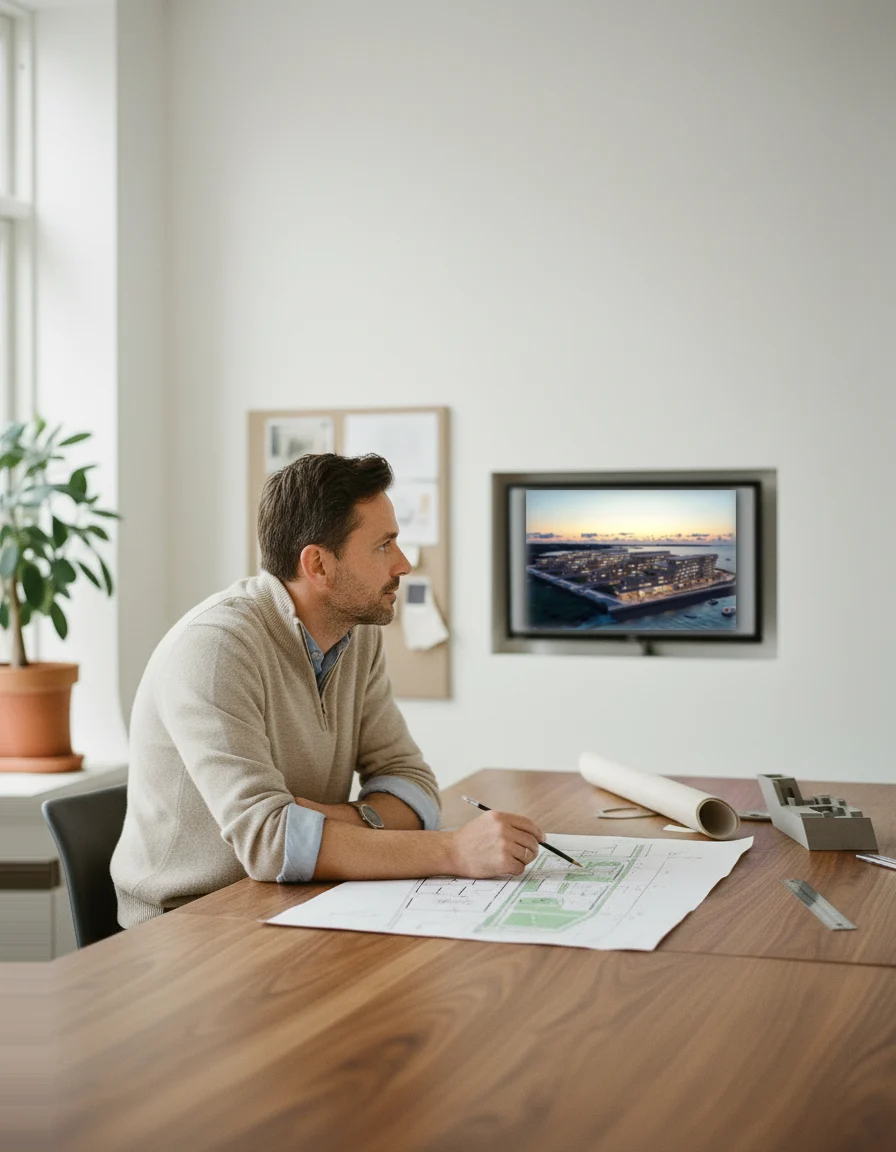
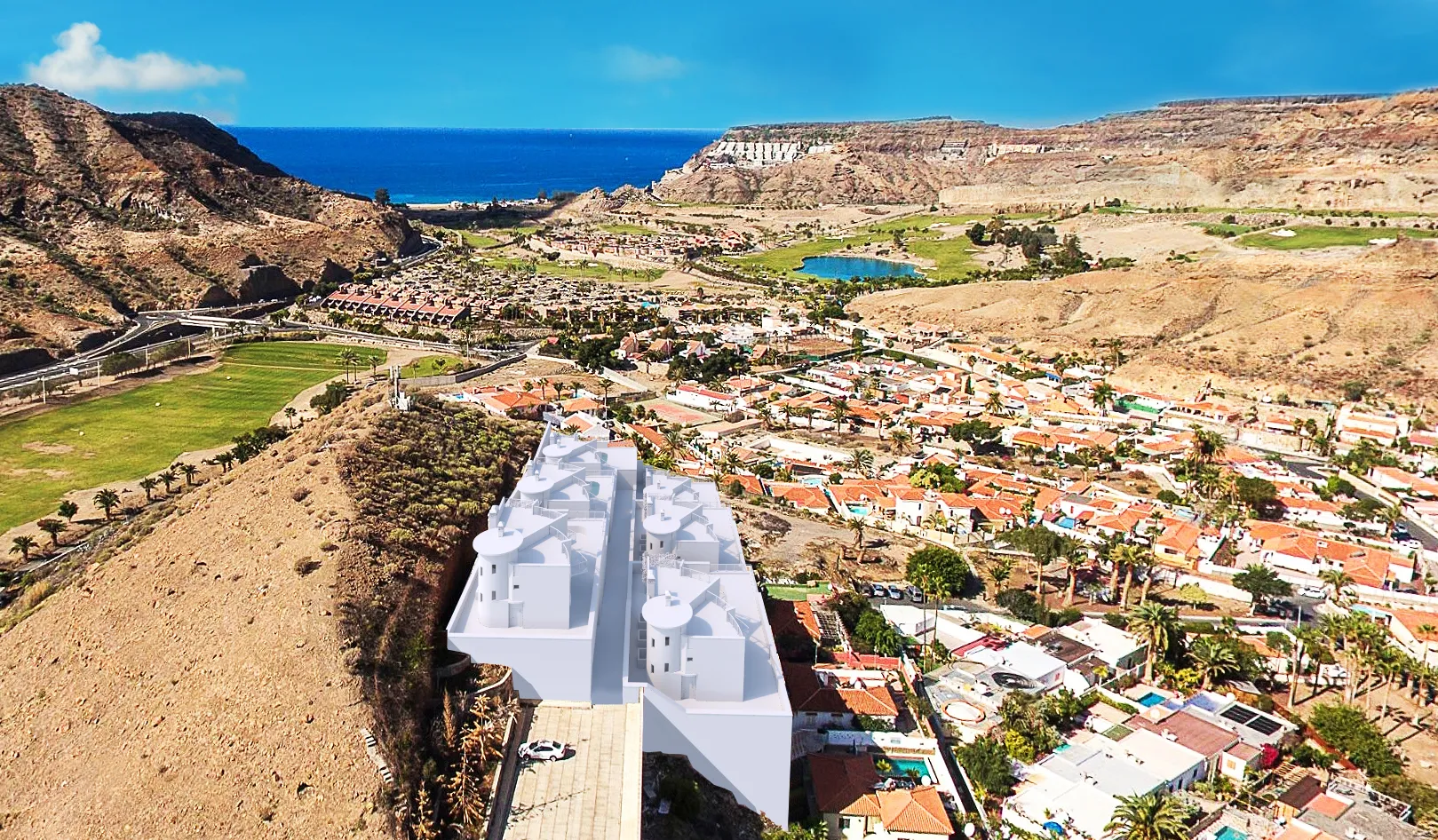
Visualisering til byplanlægning: masterplan-luftfotos, visninger i øjenhøjde og høringsbilleder til byplanlæggere, arkitekter og ejendomsudviklere. Projektet tegnet ærligt ind i den grund, det rent faktisk skal ligge på, for et udvalg, der opdager én smigrende detalje, holder op med at tro på resten af materialet.
- Kontekst modelleret ud fra opmåling og fotografering af grunden, ikke efter hukommelse
- Beplantning tegnet i den størrelse, den har ved overdragelsen, og kun med den tyveårige version, hvis du beder om det
- Svar inden for 30 minutter, kamerakoordinater returneres, fuld brugsret inkluderet
Vi tager kun et begrænset antal projekter hver måned, så hver scene får topkvalitet.
1,247
Gennemførte projekter
13
År i branchen
17
Lande vi har leveret til



★★★★★
Bedømt 4.9 på Clutch · Se vores anmeldelser



125 af 220 kunder kom tilbage
Mere end halvdelen af vores kunder har hyret os igen
Billedet er bevis, ikke en reklame
En masterplan-visualisering indgår i en byplanlægningsproces og bliver der. Den læses af en sagsbehandler, der skriver en indstilling, af indsigere med god tid og af naboer, der kender vejen bedre end dig.
Derfor er naboerne modelleret ud fra opmåling og ikke efter hukommelse, beplantningen er tegnet i den størrelse, den har på overdragelsesdagen, og kameraet står, hvor oversigten over udsigtspunkter siger, det skal stå. Alt andet på denne side følger af de tre regler.
Indsigere er gode til at fange det modsatte. Et træ i en højde, som det ville tage årtier at nå, en nabotaglinje stille og roligt sænket en etage, et udsigtspunkt flyttet femten meter op ad vejen, så en gavl falder ud af billedet. Hvis blot én af dem bliver fundet, er alle andre billeder i materialet i tvivl. Projekter fejler sjældent på selve overdrivelsen. De fejler på det, den antyder om de tegninger, ingen har kontrolleret endnu.
Disciplinen er ikke kompliceret, den er bare ikke glamourøs. Modeller det, der er. Vis det, der er foreslået. Hvor informationen slap op, og en antagelse måtte gøres, skriver man antagelsen ned ved siden af billedet, før andre selv skal finde den.
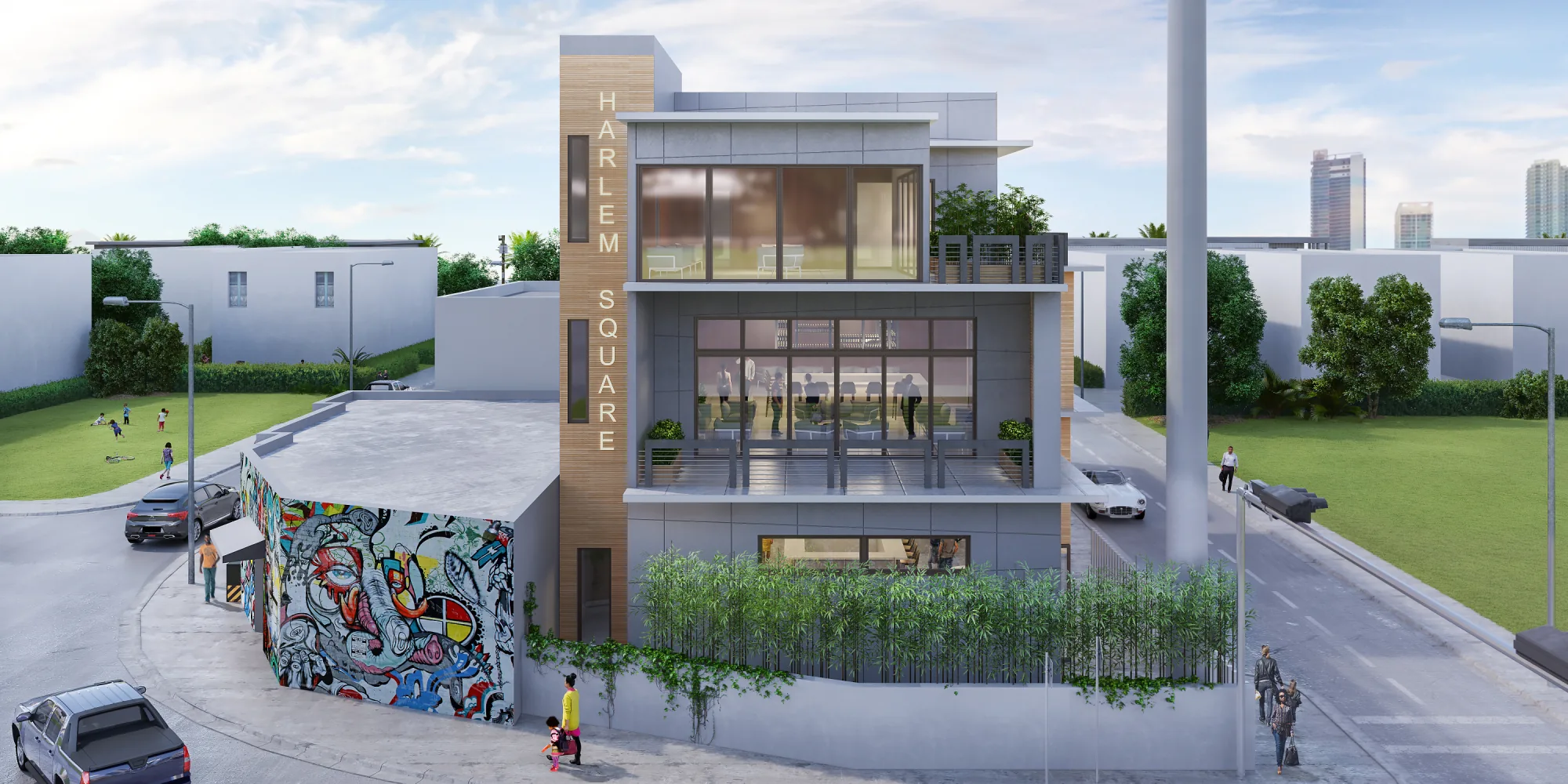
Hvad visualisering af bydesign faktisk kræver
Bydesign-visualisering er ikke dekoration. Dens opgave er at lade beskueren prøve volumenerne af mod det, der allerede står: højder mod bygningerne på hver side, taglinjen mod en eksisterende skyline, den skygge, en ny blok kaster over en have, der er ældre end den. Gøres den test forkert, bliver billedet grunden til, at et projekt falder, og ikke til, at det lykkes.
Én masterplanvisualisering, uanset hvor mange leverancer
En enkelt masterplanvisualisering, bygget én gang ud fra opmåling og projekttegninger, er udgangspunktet for alle senere billeder: udvalgets luftfoto, udsigtspunkter i øjenhøjde, høringsplancher og faseringssættet. Bygges konteksten op igen for hver leverance, ender materialet med at modsige sig selv.
Se, hvordan det holder i det udvalgte arbejde nedenfor.
Materialet, salen og hele grunden
01
Materialet til udvalget
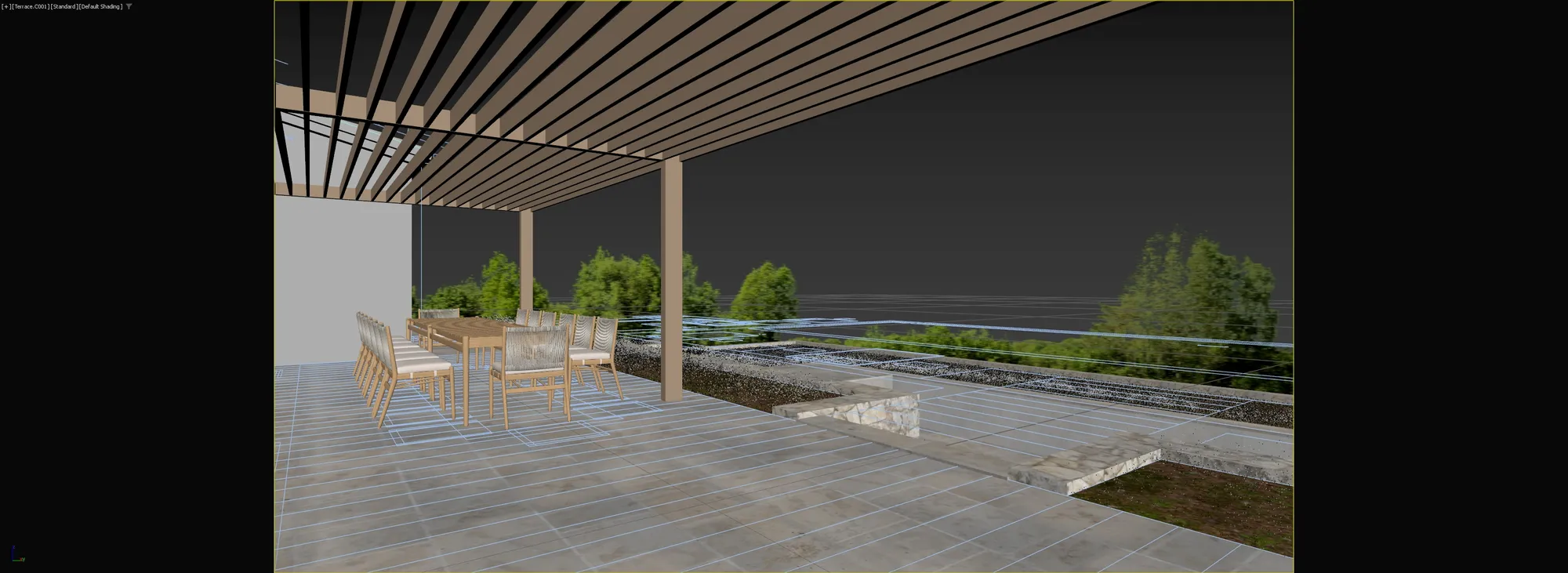
Billeder, der indsendes, kommer ind i et offentligt register og læses ved siden af sagsbehandlerens rapport og eventuelle indsigelser. De skal derfor kunne refereres til: nummererede og hver knyttet til en markeret position på situationsplanen, så en indstilling kan henvise til visning 04, og alle i lokalet ser på det samme billede.
Udsigtspunkterne aftales med dig eller afstemmes efter myndighedens oversigt, før noget bliver renderet. Medlemmer, der kender vejen, har stået på den, og hvis billedet ikke svarer til det, de husker, handler mødet ikke længere om dit projekt.
02
Høringsaftenen
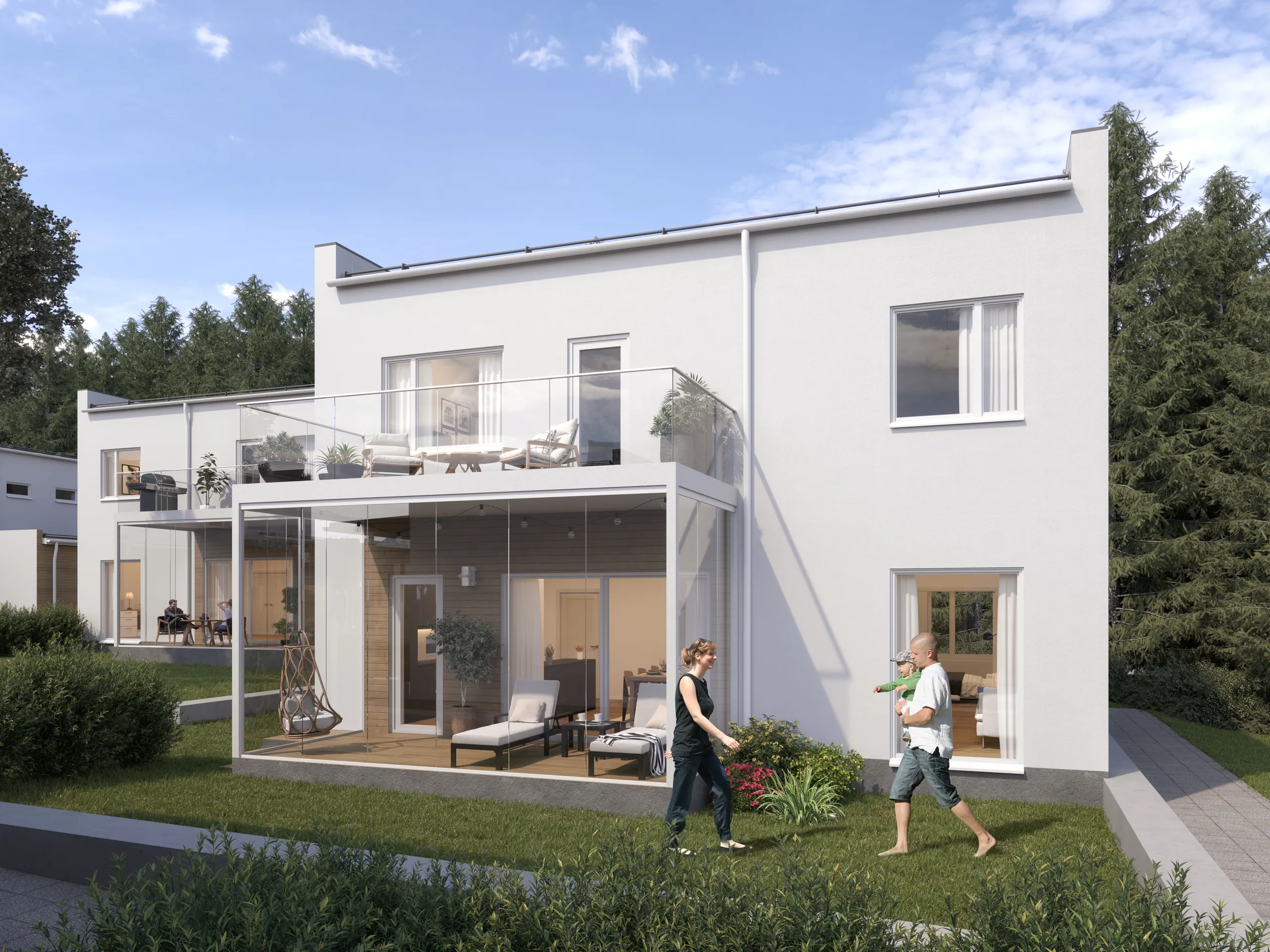
Et offentligt møde er et rum fyldt med mennesker, der ikke har bedt om dit projekt og for det meste allerede har besluttet, hvad de mener om det. Smigrende billeder gør det værre: den første, der opdager smigeriet, har rummet resten af aftenen.
Det, der virker, er øjenhøjde, almindeligt vejr, ægte terrænniveau og det offentlige rum i den størrelse, en person går igennem det. En planche, folk kan stå foran og ærligt diskutere, er mere værd end et prangende hovedbillede, de ikke stoler på.
03
Projektet som én helhed
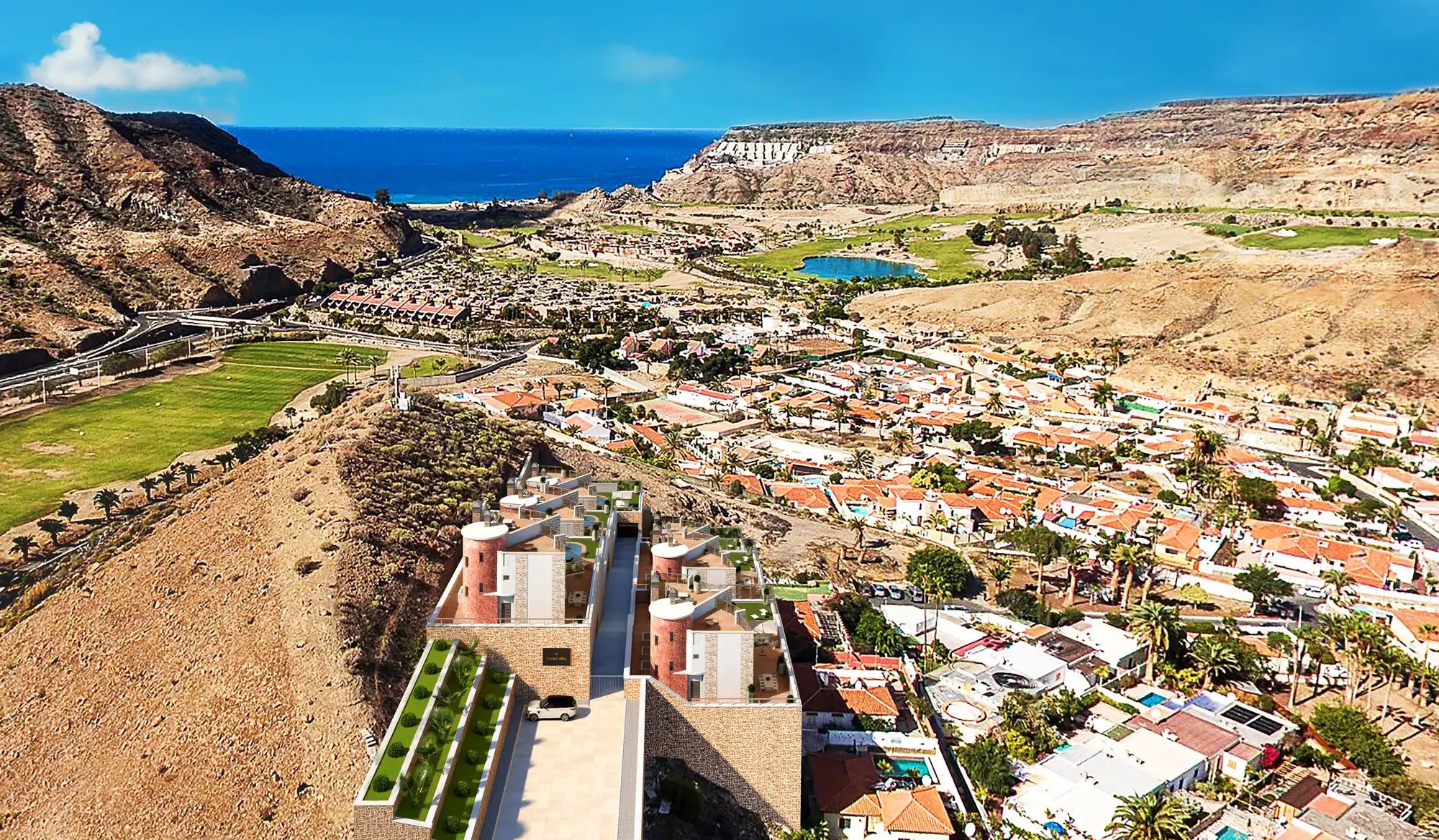
Hvert billede i øjenhøjde besvarer én indvending fra én position. Luftbilledet er stedet, hvor projektet bliver bedømt som helhed: hvordan det møder de eksisterende gader, hvor én fase slutter, og den næste begynder, og hvad en person to veje væk kommer til at se. Det er lige så meget byvisualisering som arkitektur. Planerne rummer alt dette, men næsten ingen i lokalet læser planer på den måde.
Det bygger på den samme scene som gadebillederne, så de to stemmer overens. Hvis et luftbillede og et sæt udsigtspunkter laves af to leverandører, ender en indsendelse med at modsige sig selv offentligt.
Fire slags billeder, én model som grundlag
En ansøgning, en høring og en salgslancering har brug for forskellige billedudsnit. De bør ikke kræve forskellige modeller, ellers ender materialet med tal, der ikke stemmer overens.
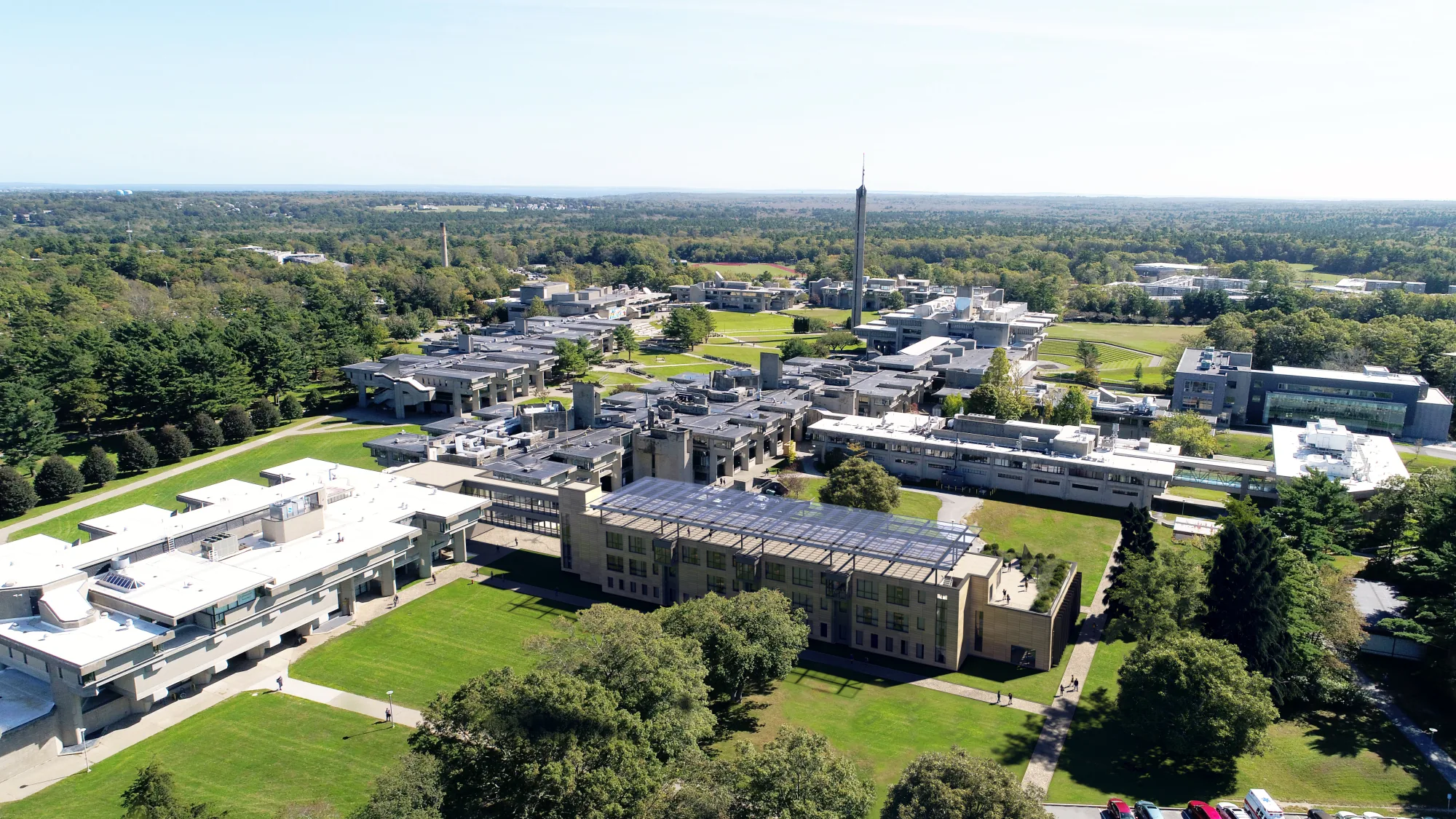
Masterplan-luftbilleder
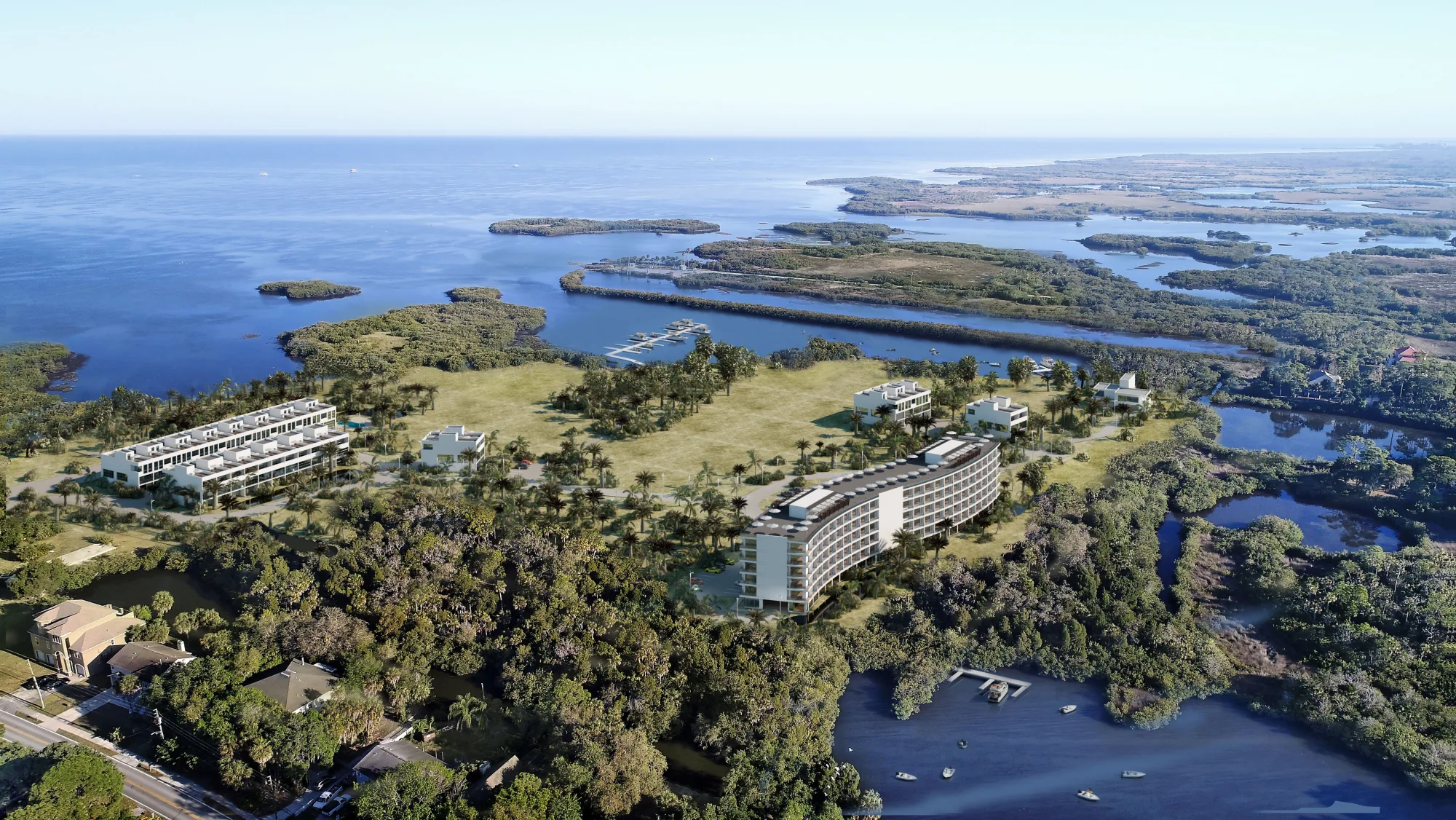
Hele grunden i én ramme: grænse, adgang, taglandskab, landskab og de naboer, den skal ligge op ad. Billedet, som planerne ikke kan erstatte.
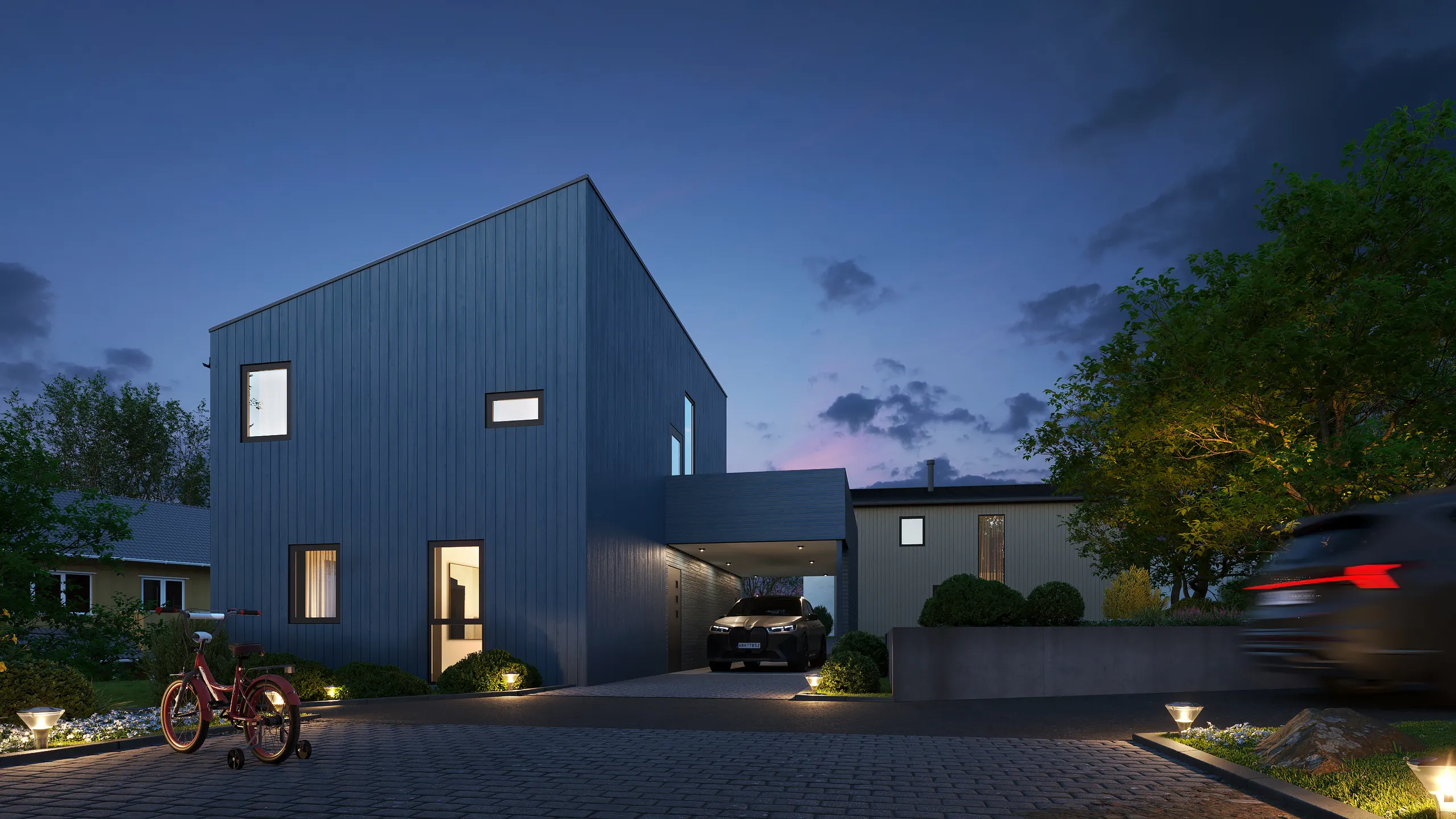
Udsigtspunkter i øjenhøjde
Udsigten fra det hjørne, hvor folk faktisk står, i den højde, en person faktisk har. Nummereret, aftalt og registreret, før kameraet flyttes.
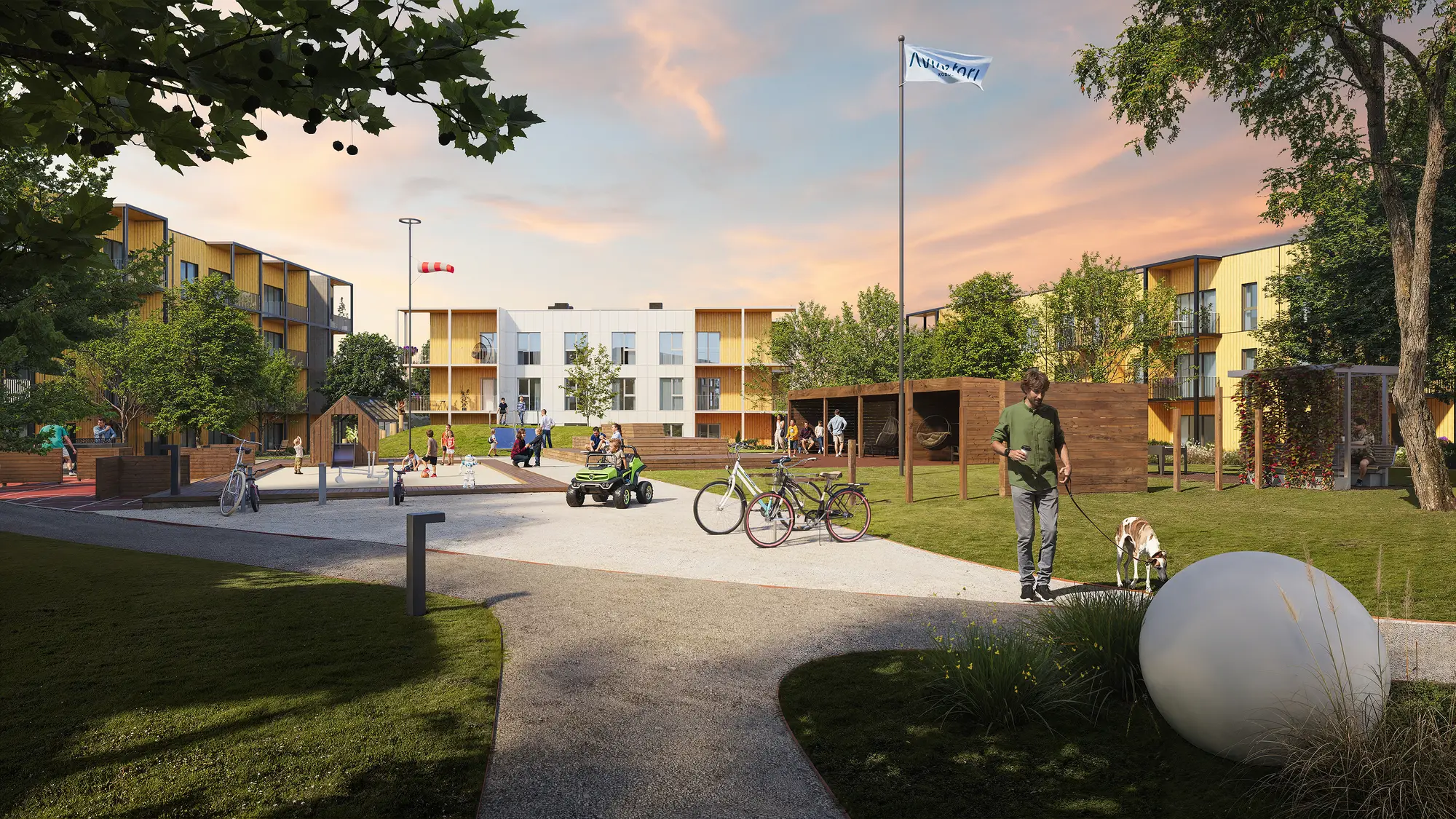
Det offentlige rum og landskab
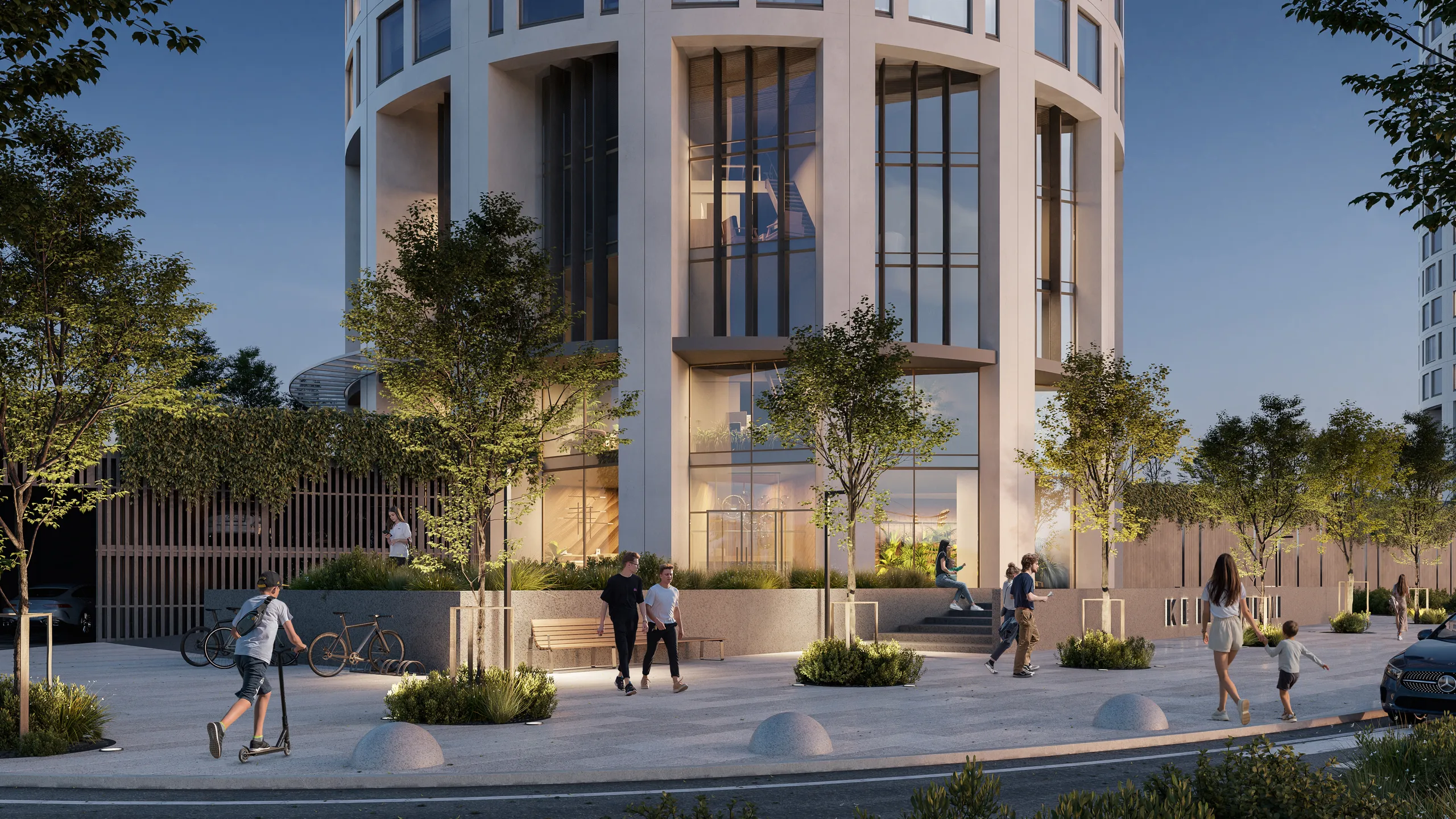
Pladser, stier, beplantning og jorden mellem bygningerne. Den del, en høring spørger til først, og som de fleste ansøgninger visualiserer sidst.
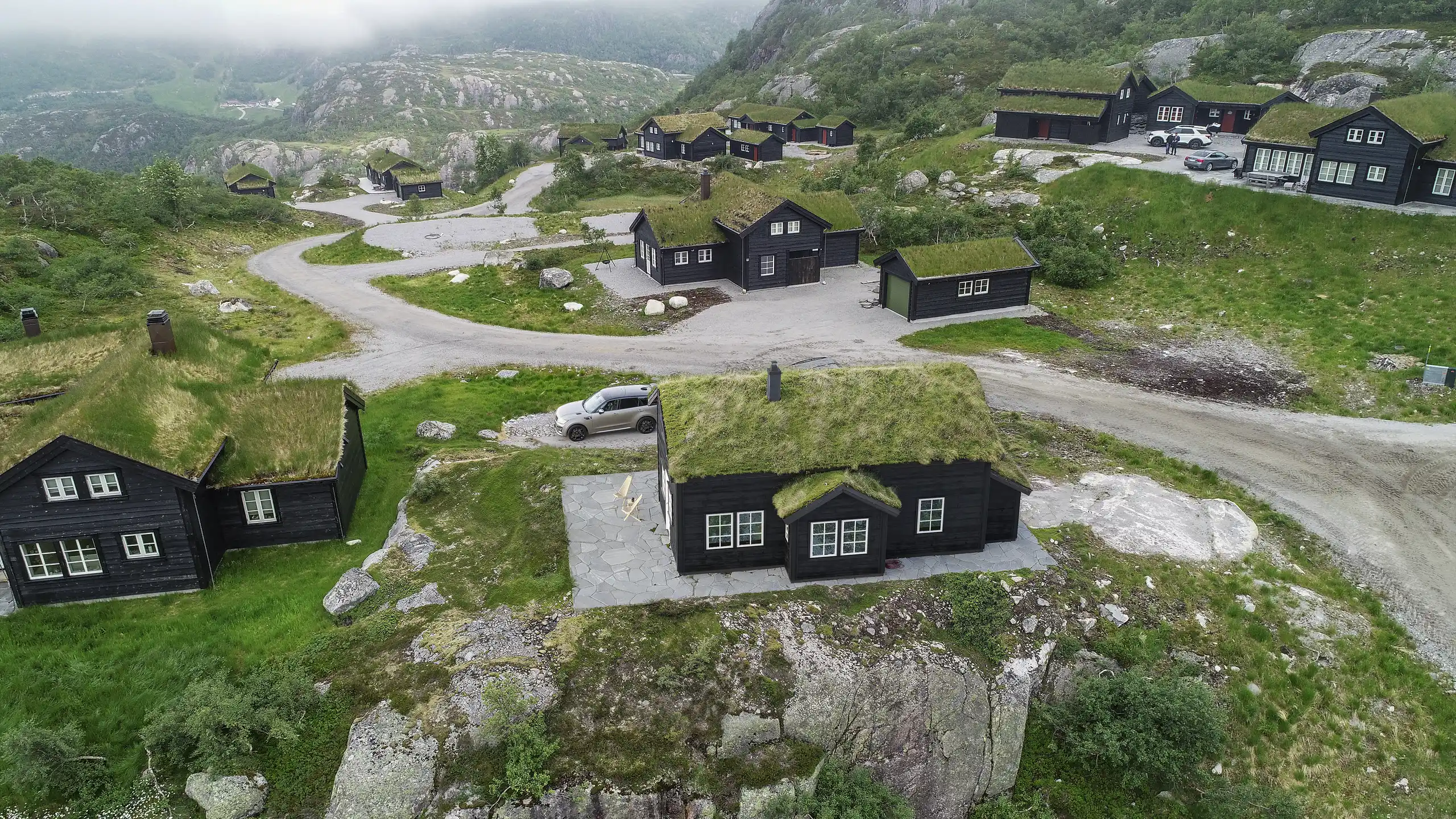
Faseinddeling og sammenligningssæt
Samme kamera og samme lys på tværs af eksisterende, fase ét og færdigt. Et sæt, der skifter vejr fra billede til billede, er ikke en sammenligning.
Tre opgaver, én arbejdsmetode
Skitseforslag, fulde og reviderede ansøgninger trækker alle på den samme grundmodel. Det, der ændrer sig, er, hvor meget stringenthed fasen kræver.
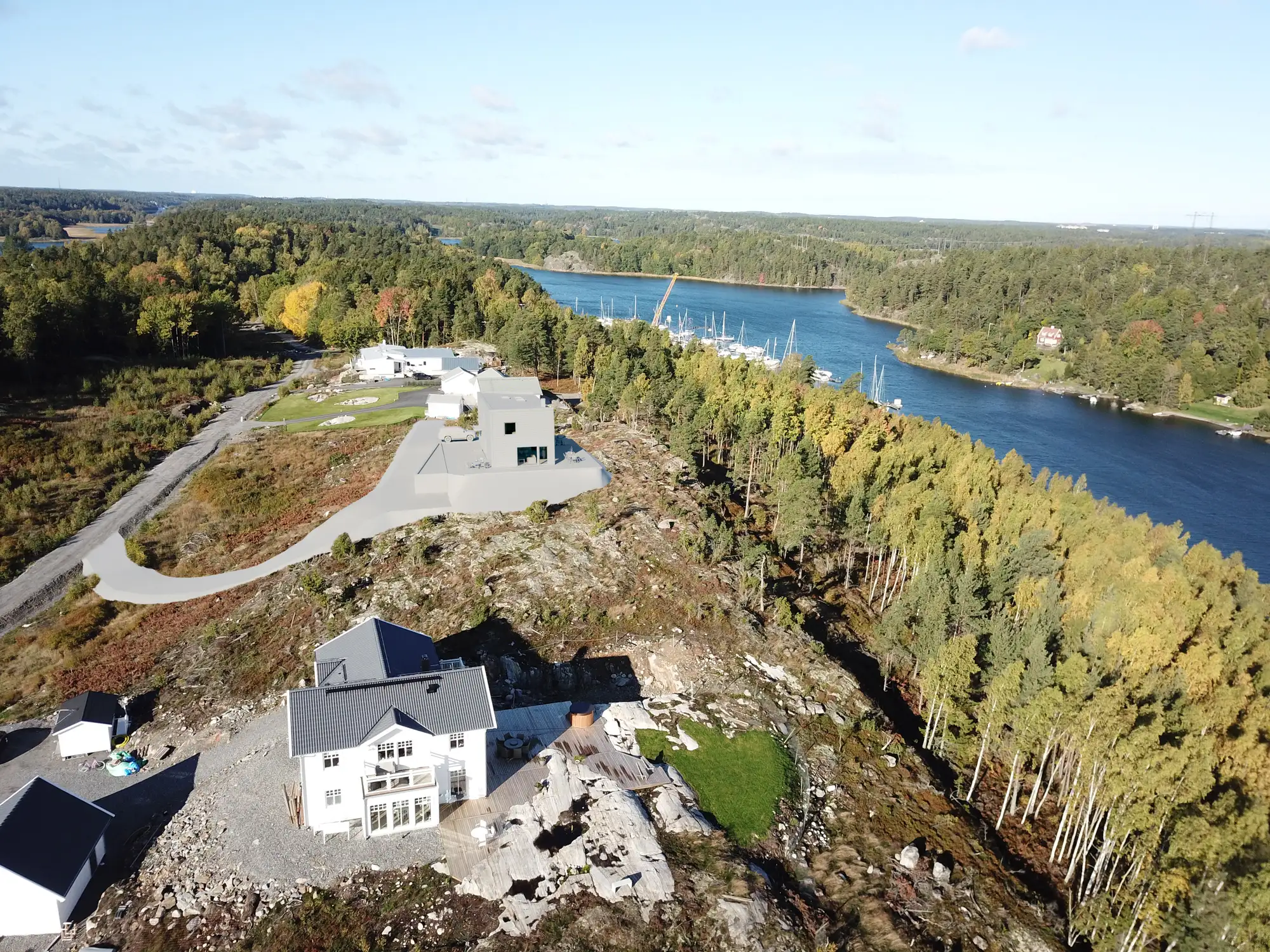
Skitseforslag og masseformning
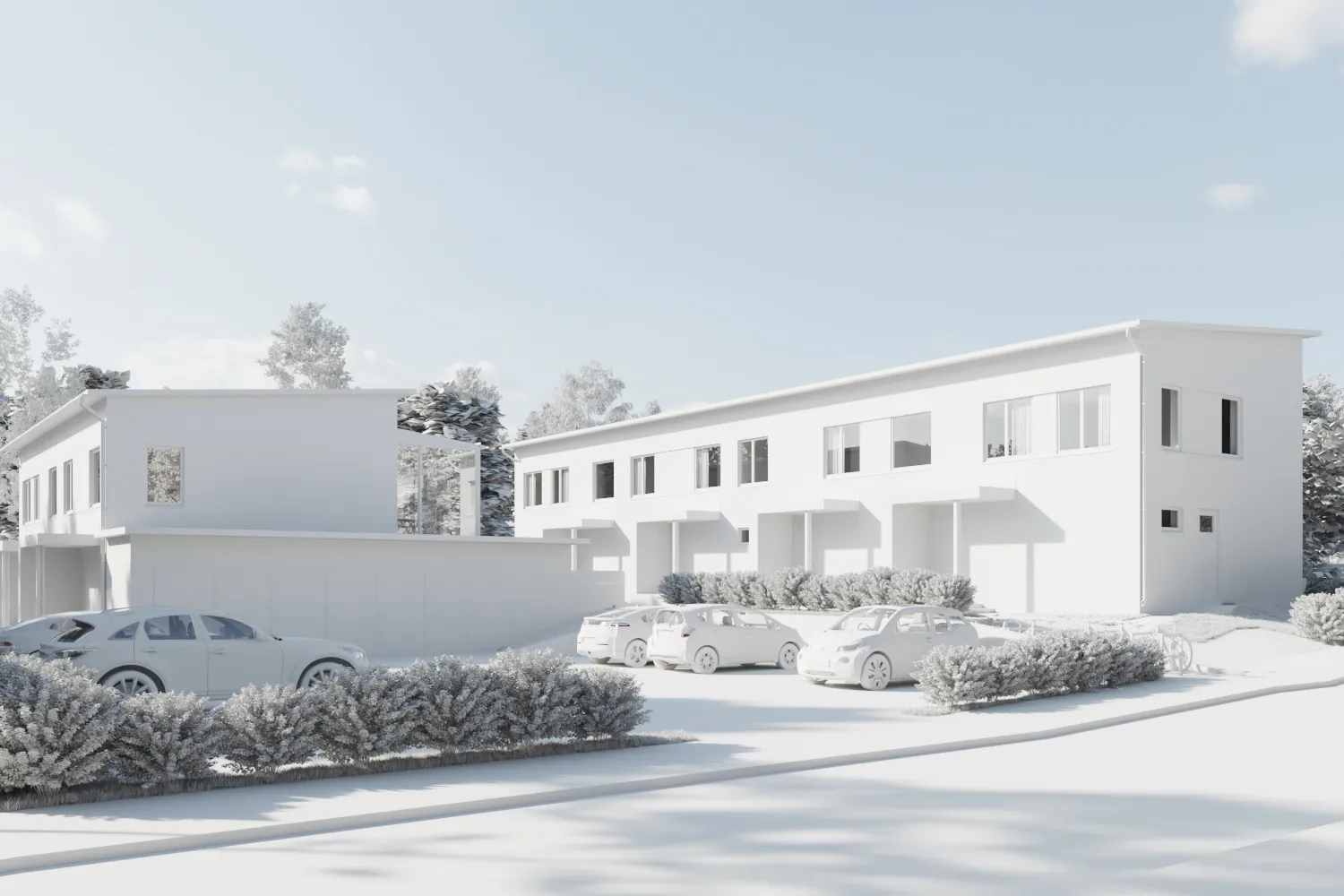
Før et projekt tegnes i detaljer, vil et forhåndsmøde med myndigheden eller en tidlig høring som regel have et ærligt svar på ét spørgsmål: hvordan passer det ind i det, der allerede er der. Et luftbillede af en gråmodel besvarer det uden at foregive at være et færdigt materialevalg.
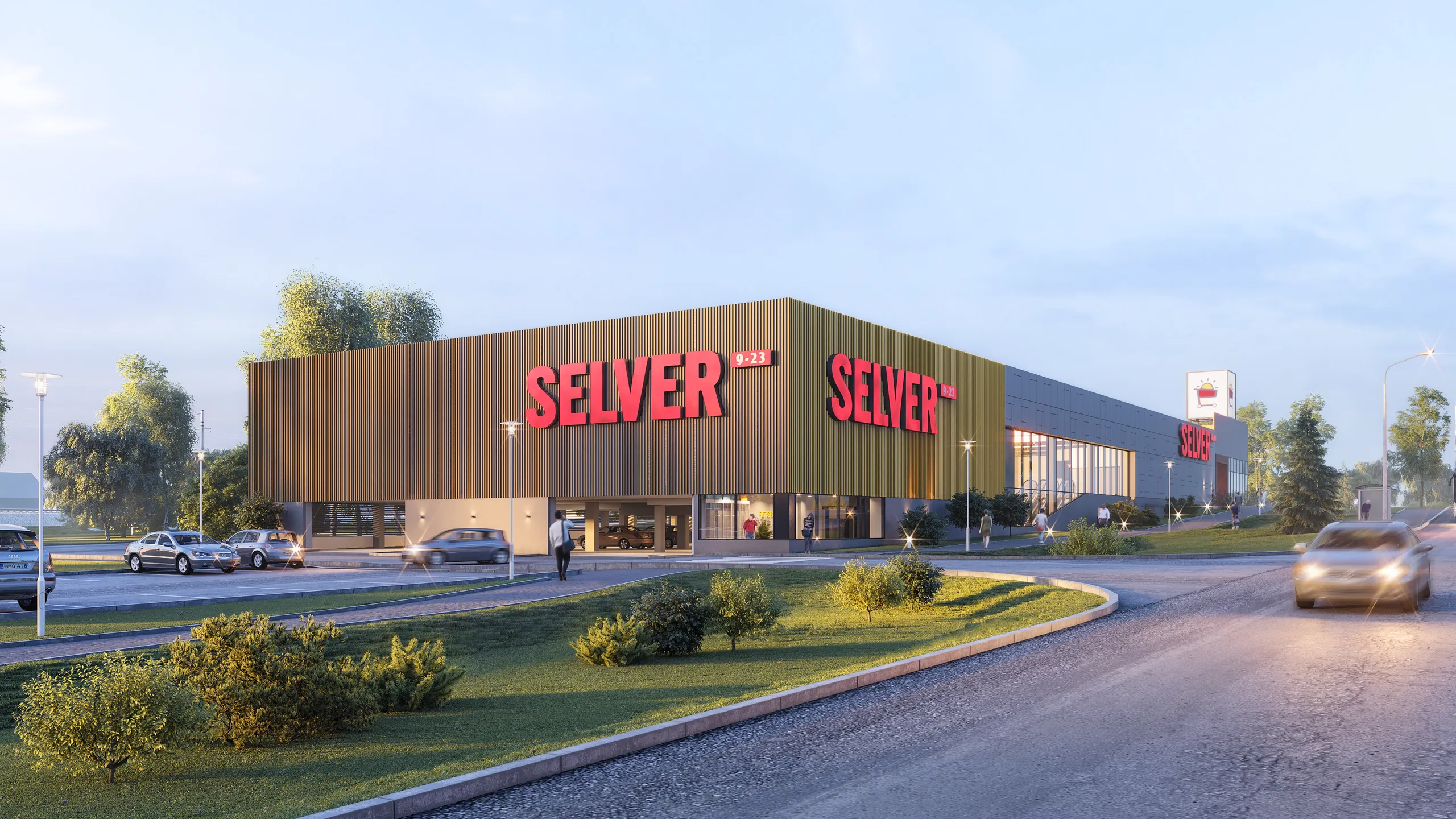
Fuld ansøgning og materiale til udvalget
Hovedparten af arbejdet på denne side: nummererede udsigtspunkter knyttet til en situationsplan, et luftbillede, der viser hele projektet, og et sæt med det offentlige rum, bygget til sagsbehandlerens rapport og det møde, der følger efter.
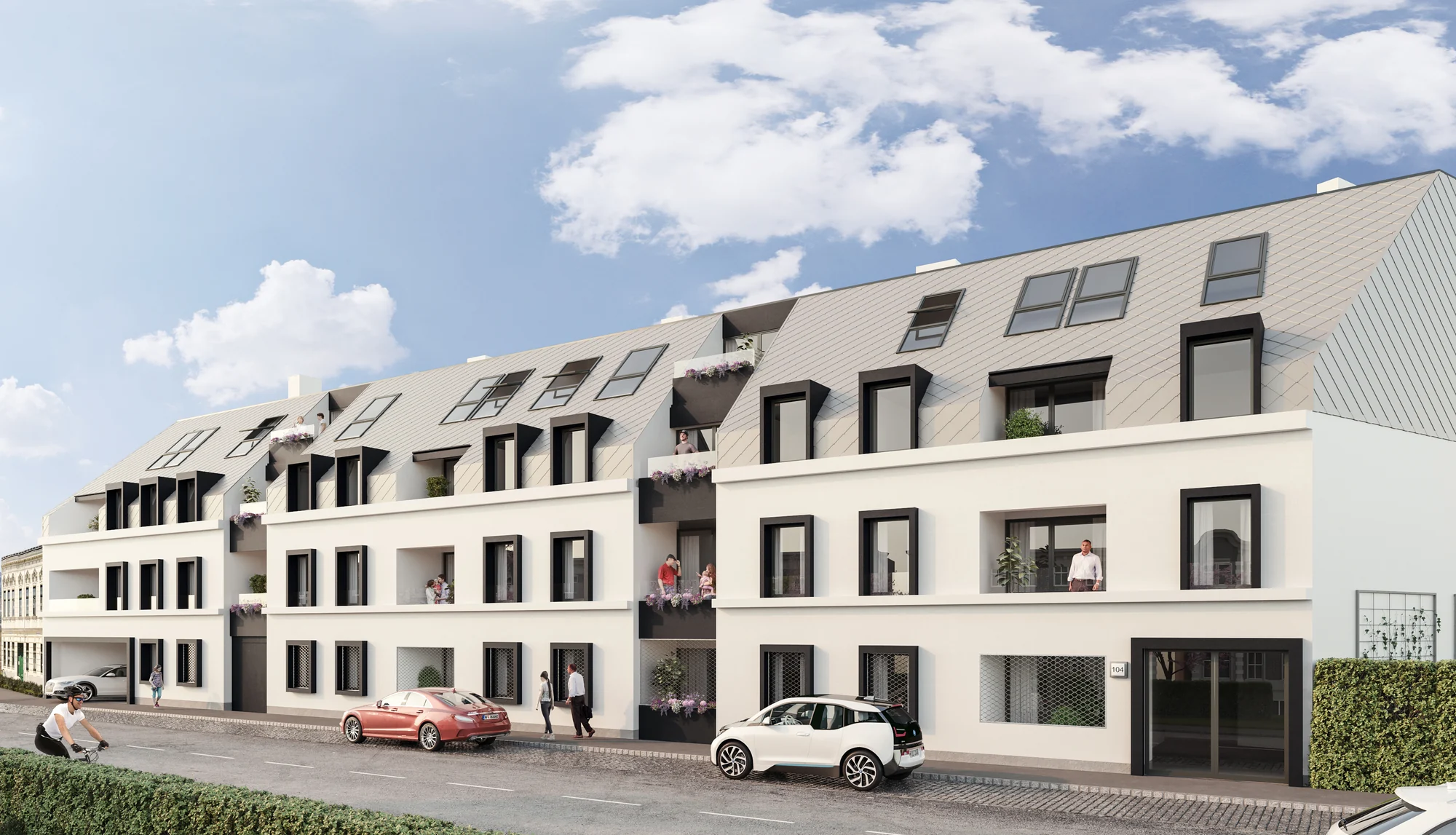
Genindsendelse, uden at starte forfra
Et afslag eller en ændret indstilling efter høring betyder ikke, at scenen skal bygges forfra. Konteksten, kameraerne og lyset er allerede sat, så en genindsendelse er et nyt sæt billeder fra den eksisterende model.
En studiepartner, ikke en renderfarm
Europæisk levering, praktiske tidszoner
Et estisk studie, der har arbejdet siden 2013 i Norden, Baltikum, Europa, Storbritannien, USA, Canada og Australien. Kommentarer om aftenen, et revideret billede næste morgen.

Fortrolighed som standard
Projekter uden byggetilladelse, konkurrencebidrag og uanmeldte lanceringer er kommercielt følsomme. Vi arbejder under NDA uden at blive bedt om det og offentliggør aldrig et projekt uden tilladelse.
Du briefer kunstneren, ikke en kø
Intet led med account managers. Send filerne, få en reel pris, og tal med den, der bygger scenen. Færre overdragelser er grunden til, at den første forhåndsvisning rammer tættere på målet.
Ét sammenhængende visuelt udtryk
Over et helt sæt eller over flere års gentaget samarbejde holder lyset, materialerne og kamerastilen. Ti freelancere kan ikke levere det, og det kan ses på side fire i en brochure.
Tre beslutninger, du bør træffe tidligt
Hvor mange udsigtspunkter myndigheden faktisk ønsker
En oversigt med to udsigtspunkter og en med fjorten er to forskellige opgaver. Spørg sagsbehandleren direkte, hvis der endnu ikke er udsendt nogen: gætter du for højt, spilder du budget, og gætter du for lavt, betyder det en runde mere før fristen.
Hvad du skal oplyse om antagelser
Hvor opmålingen stopper, starter en antagelse. At skrive den ned ved siden af billedet, før andre finder den, er mere værd for et udvalg end en fejlfri render, hvor noget i det stille mangler.
Om projektet sandsynligvis ændrer sig
Det er normalt, at et projekt stadig ændrer sig efter indsendelsen. Når scenen bevares, og hver runde ikke behandles som et nyt projekt, er et nyt sæt billeder hurtigt nok til at nå en frist for fornyet høring.
Fire faser, uanset hvad du har bestilt
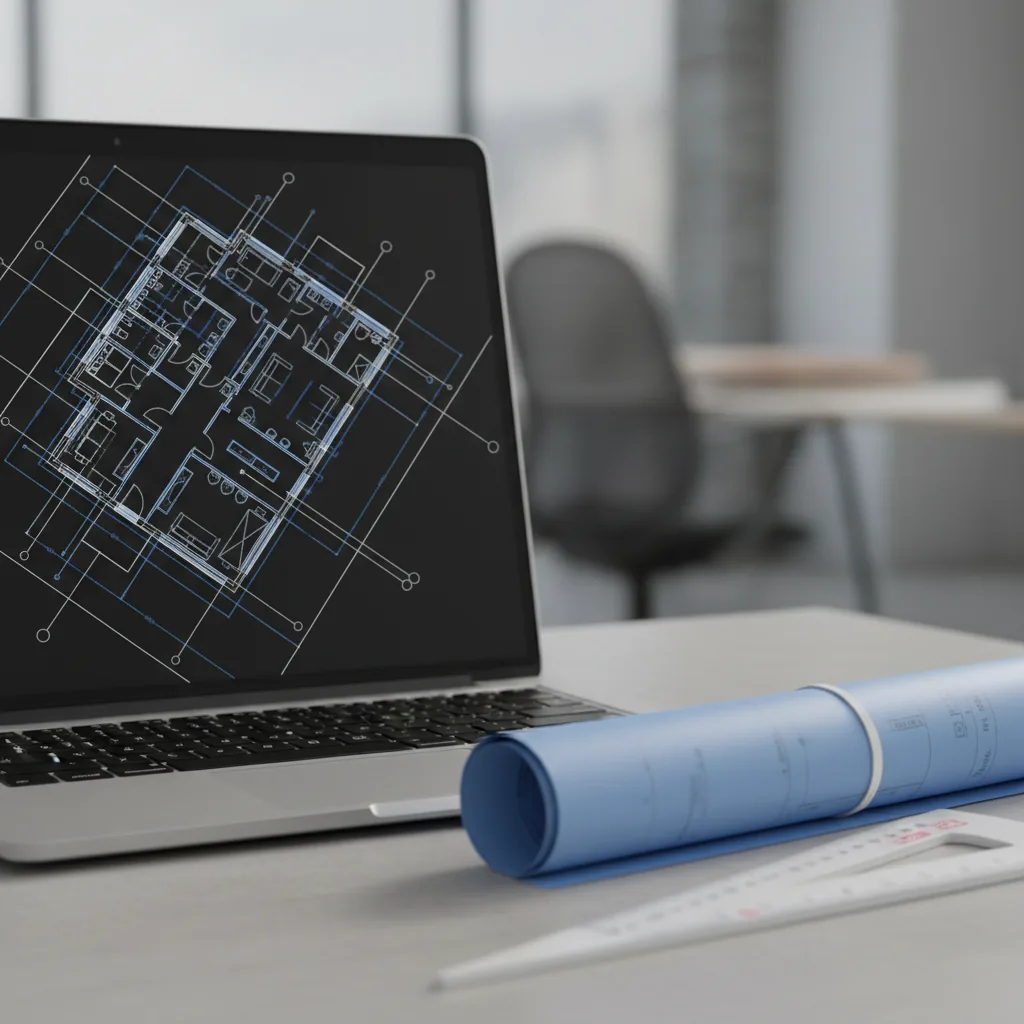
Briefing
Brief og fast tilbud
Upload CAD-, PDF-, Revit- eller SketchUp-filer, eller et foto af en skitse. Vi udarbejder briefet ud fra dine filer, så der er ikke noget spørgeskema. Du får svar inden for 30 minutter: én fast projektpris og en leveringsdato, eller de 1-2 spørgsmål, vi først skal have besvaret.
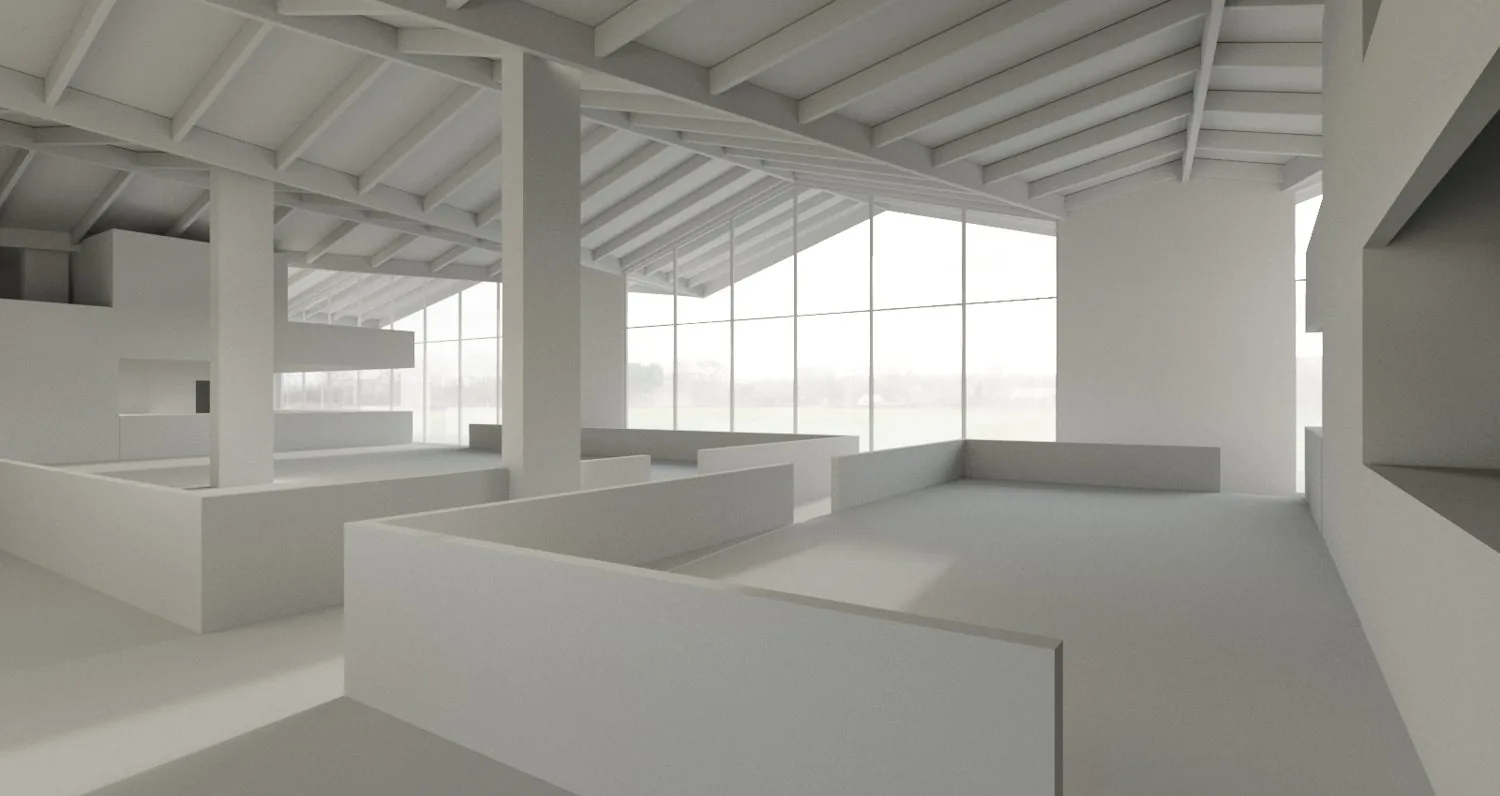
Dag 1-3
Gråmodel
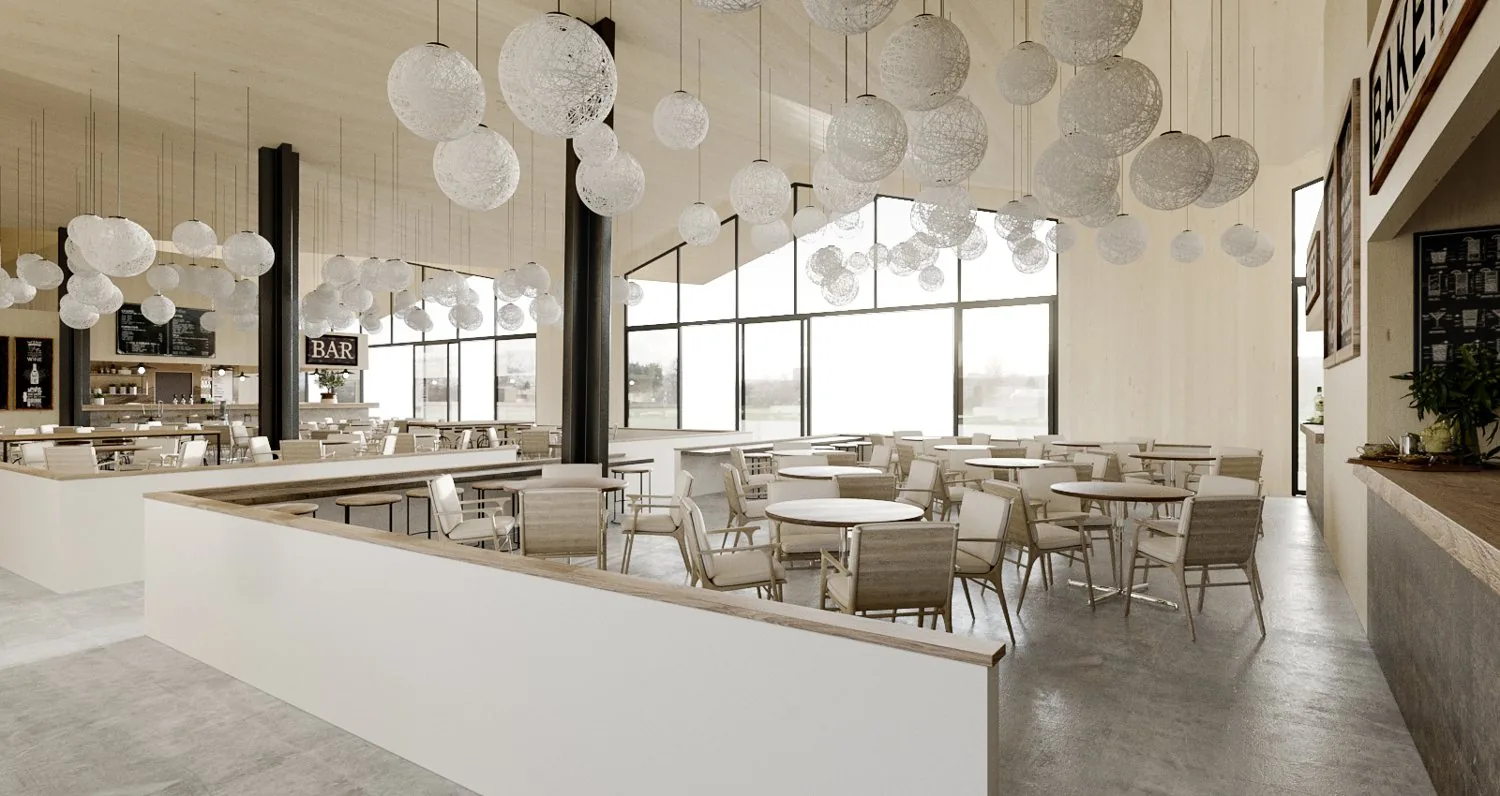
Vi bygger 3D-modellen uden materialer og placerer kameraet. Kameravinkel, objektiv, højde og tidspunkt på dagen aftales på gråmodellen, mens ændringer stadig er hurtige og billige.
Uge 1
Preview-rendering
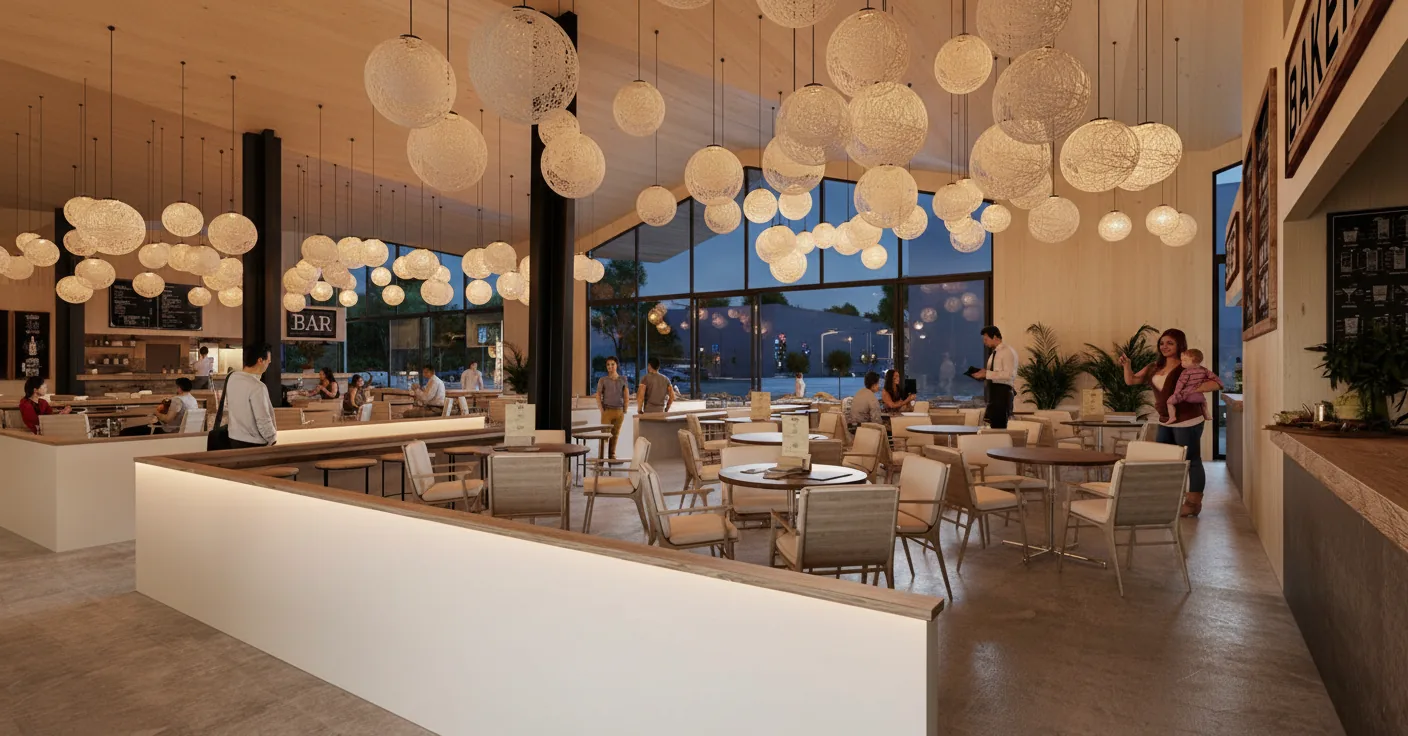
Den samme visning med materialer, belysning og omgivelser tilføjet. Du ser det tidligt, mens lyset og overfladerne stadig nemt kan ændres. 2 revisionsrunder er inkluderet, og vi fortsætter med at forfine, indtil du godkender.
Levering
Færdig rendering
Det godkendte billede, fuldt færdiggjort og leveret i 4K, med større størrelser til print på forespørgsel og fulde brugsrettigheder. Hver yderligere visning i sættet bruger den scene, der allerede er bygget, så hvert ekstra billede koster langt mindre end det første.
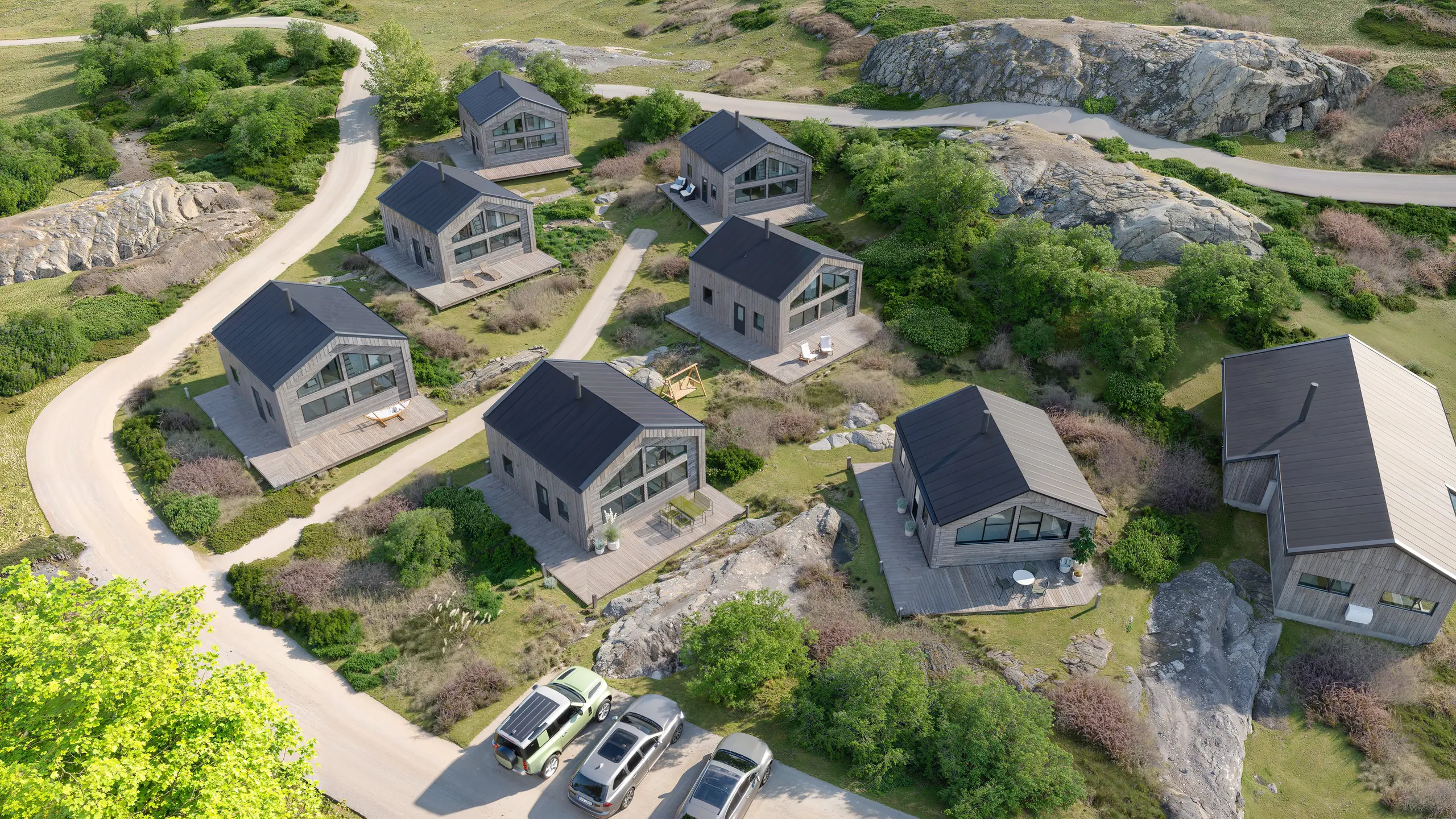
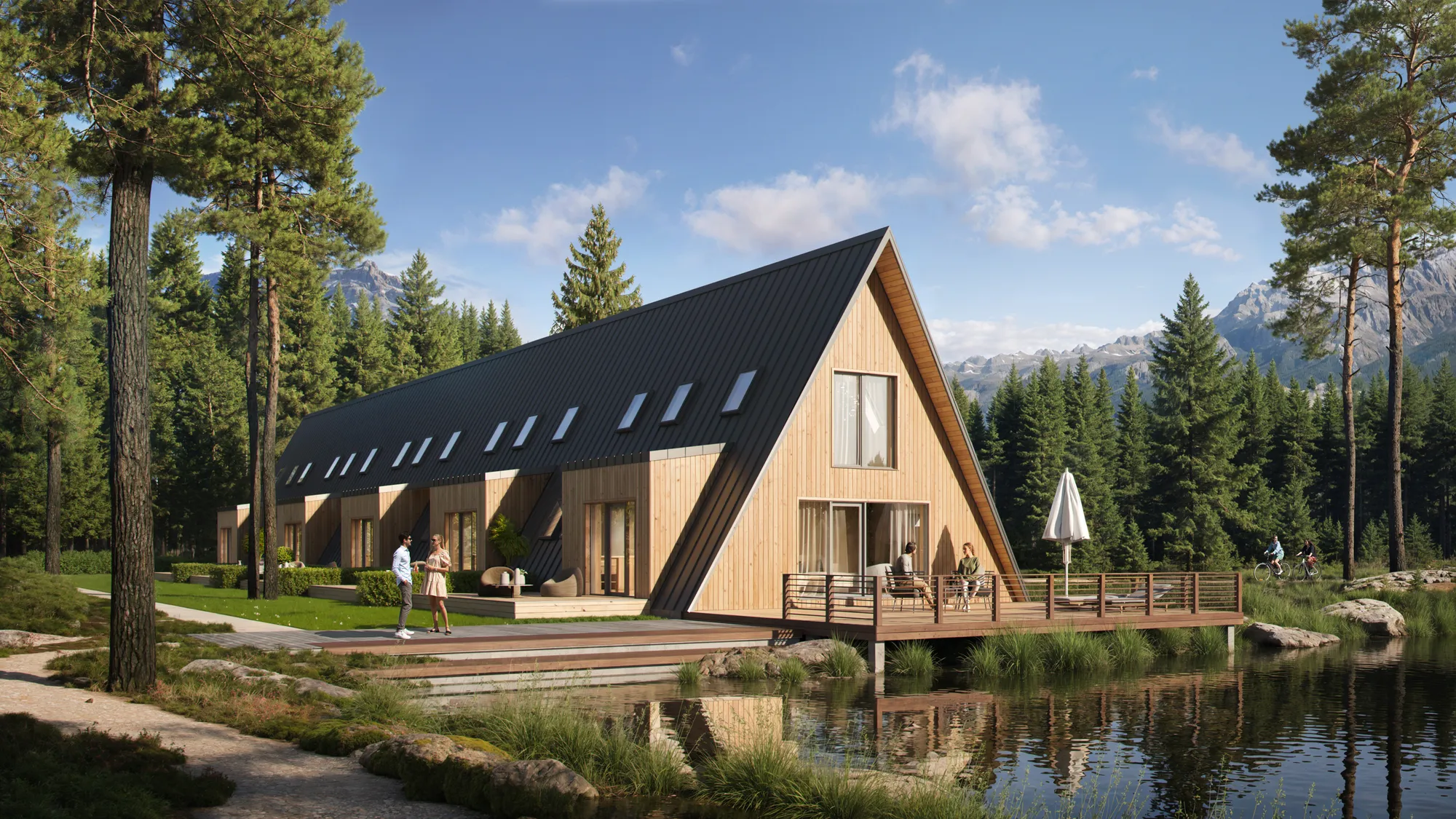
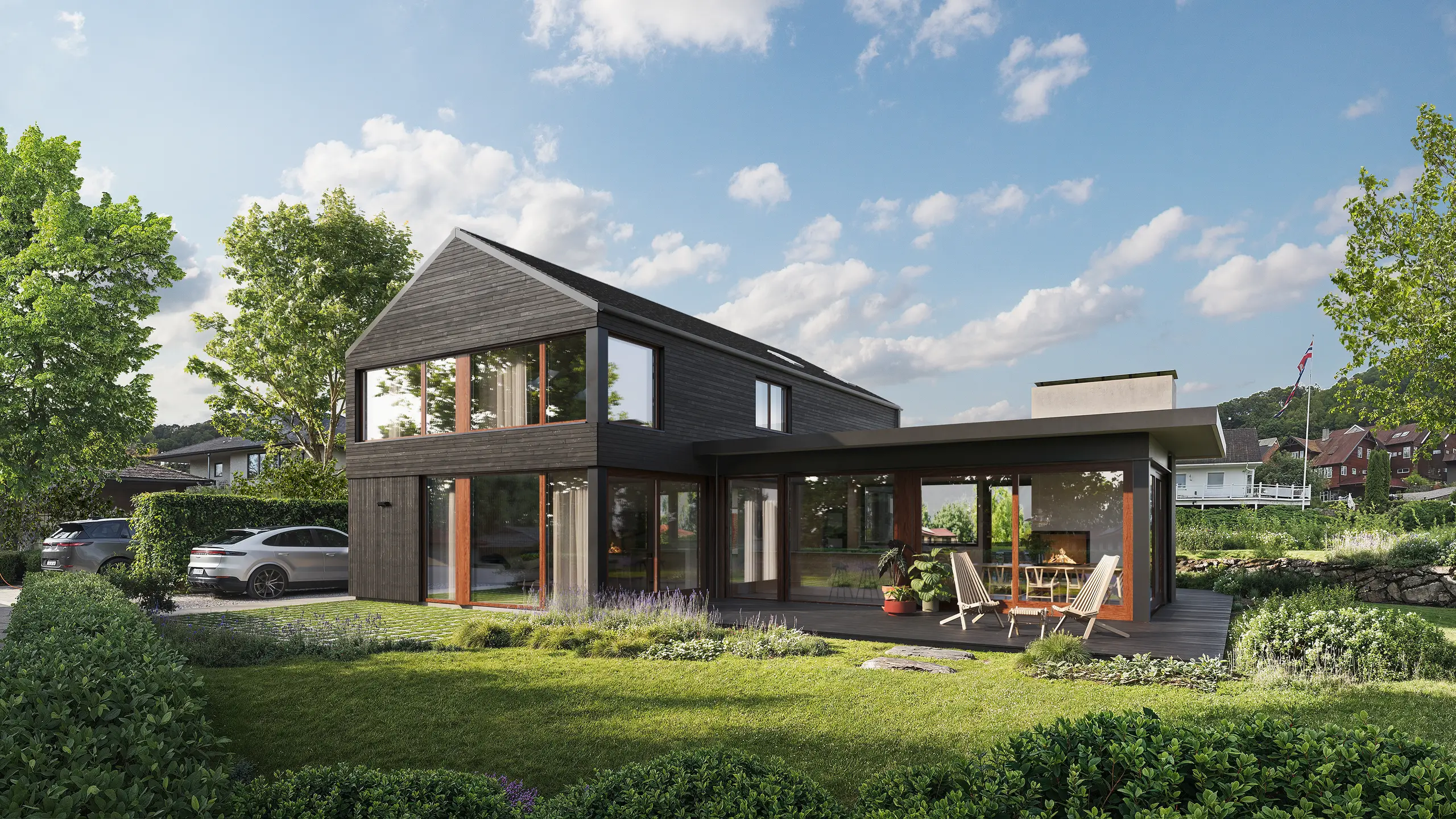
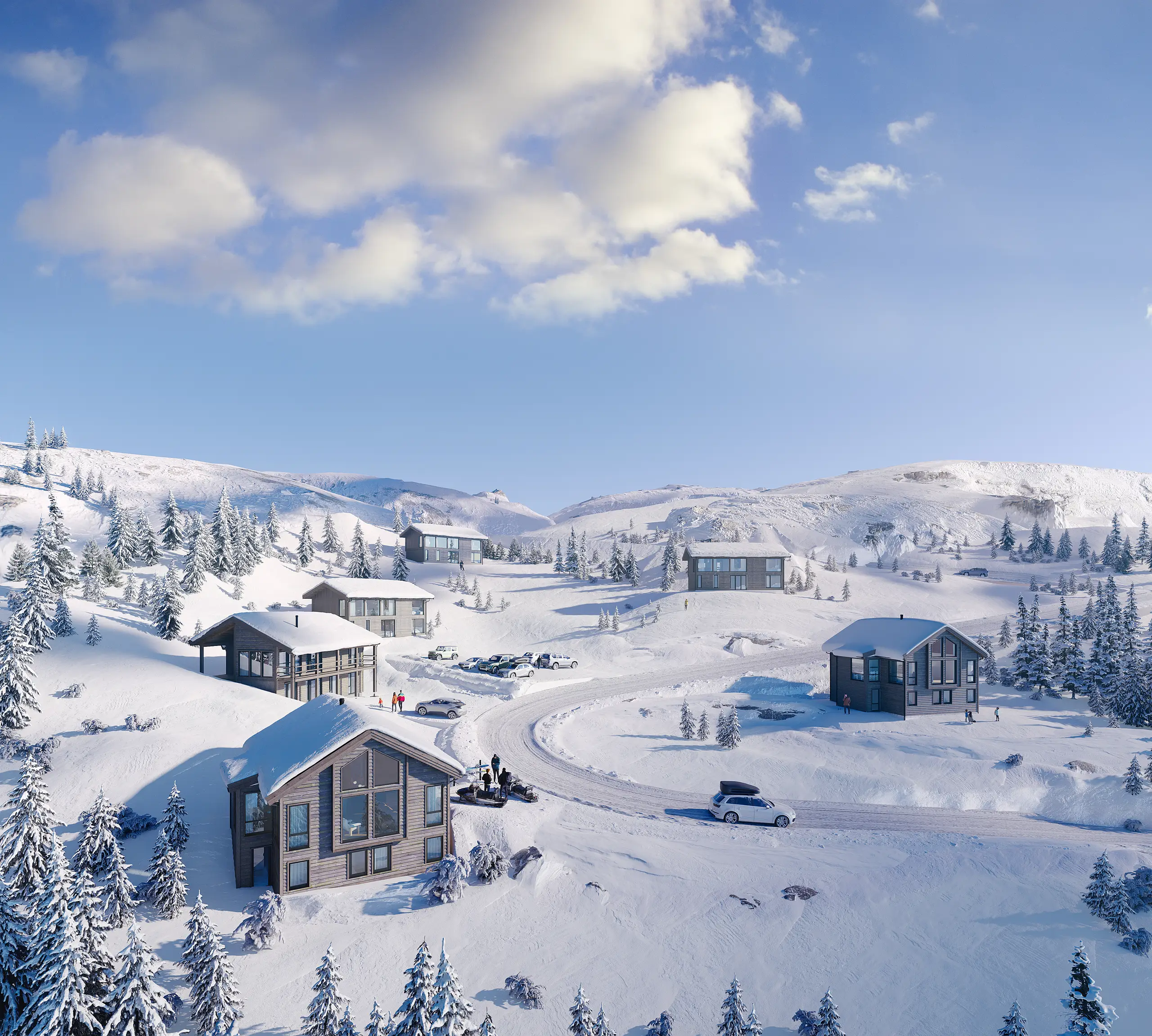
Grunde, ikke kun bygninger
Projekter, hvor jorden, grænsen og naboerne var lige så store en del af opgaven som arkitekturen.
Hvad der påvirker prisen på visualisering til byplanlægning
Prisen sættes pr. projekt og ikke pr. billede. Det er det, der ændrer tallet.
-
Grundens størrelse og kompleksitet
En enkelt byggegrund mellem eksisterende bygninger og en masterplan på fyrre hektar er to forskellige opgaver. Grundens afgrænsning og hvor meget af omgivelserne, der skal genskabes, afgør prisen på at bygge scenen, før et eneste udsigtspunkt er talt med.
-
Antal udsigtspunkter
En myndigheds oversigt kan angive to udsigtspunkter eller fjorten. Alle deler den samme underliggende scene, så det andet billede koster mindre end det første, og det tolvte koster endnu mindre.
-
Hvor komplet din opmåling er
En topografisk opmåling og et matrikeludtog giver os mulighed for at gå direkte i gang med at modellere. Manglende oplysninger skal vurderes skønsmæssigt og oplyses, og det tager tid, selv om det ikke øger honoraret meget.
-
Hvor mange runder processen kræver
Et projekt, der ændres efter høring, er en revision af en eksisterende scene og ikke en ny opbygning, så senere runder prissættes langt under den første.
Gratis guide
Køberguide til CGI i byplanlægning
Hvad der påvirker prisen, og hvad du skal sende for at få et hurtigt tilbud.
- Hvad der får et byplanlægningstilbud til at stige eller falde
- De præcise opmålinger og tegninger, der giver dig et svar inden for 30 minutter
- Sådan aftaler du udsigtspunkter med myndigheden, før nogen renderer noget
- Intet bureaukratisk spørgeskema, før tilbuddet lander i din indbakke
Åbner upload-formularen. Send det, du har; ingen salgssamtale.
Sådan passer vi ind i din arbejdsgang
Planlægningsopgaver kommer ind mere rodede end en marketingbrief og som regel med en indsendelsesdato, der allerede er fastlagt. Intet nedenfor forudsætter et ryddeligt filsæt.
Hvad vi accepterer
Oplysninger om grundenTopografisk opmåling, skel, et matrikeludtog eller OS-udtræk og fotos fra de udsigtspunkter, der betyder noget
ProjektetMasterplantegninger, blokplaner, snit, etagehøjder, eller en SketchUp-, Revit-, ArchiCAD- eller CAD-model
UdsigtspunkterMyndighedens oversigt over udsigtspunkter, hvis en sådan findes. Hvis ikke, foreslår vi et sæt, og du godkender det, før vi renderer.
KontekstAlt, hvad der findes: punktsky, dronefotos, en bymodel og tilladelser, der allerede er givet til naboen
BegrænsningerHøjder, beskyttede udsigter, bevaringsværdige træer og faser. Alt, hvad billedet ikke må modsige i det stille.
Hvad du modtager
Luftfotos og udsigtspunkter4K som standard, større på anmodning, i størrelser til A1-plancher og til PDF'en til indsendelsen
En antagelsesnoteEn kort skriftlig liste over, hvad vi har antaget, hvor dine oplysninger slap op, så det er oplyst frem for opdaget.
Planche- og printudsnitHvert billedformat skåret fra den ene scene: plancher, design- og adgangserklæringen, byggepladshegnet, pressemeddelelsen
KameradataPosition, højde og objektiv for hvert udsigtspunkt, så en visning kan kontrolleres mod opmålingen senere.
ScenenGemmes og genbruges. Rettelsen efter høring er en ændring af en eksisterende model og ikke et nyt projekt.
Hvad den samme grundmodel ellers kan levere
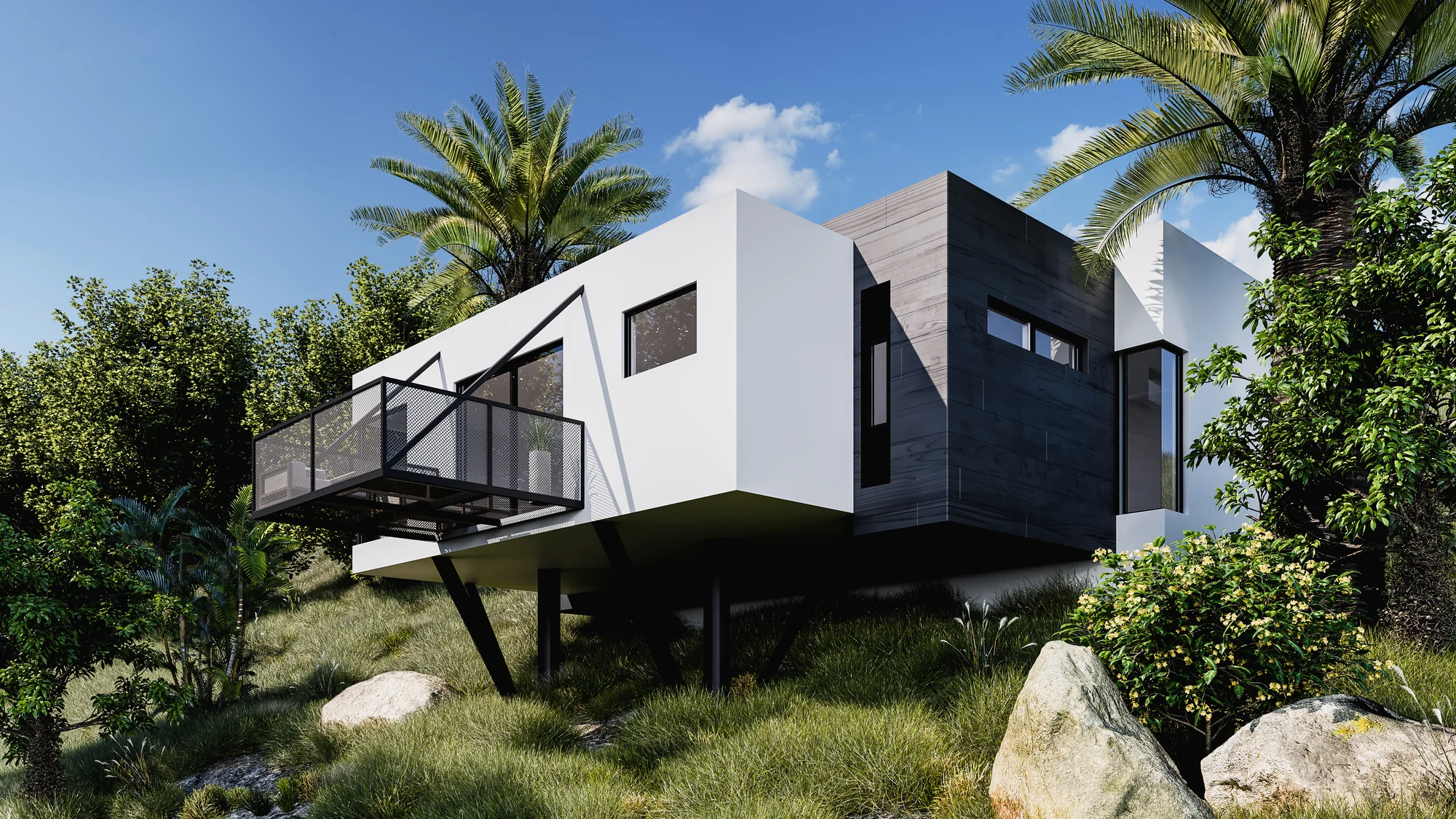
Eksteriørvisualisering
Enkeltbygninger i masterplanen, med den detaljegrad, en salgslancering kræver.
Eksteriørvisualisering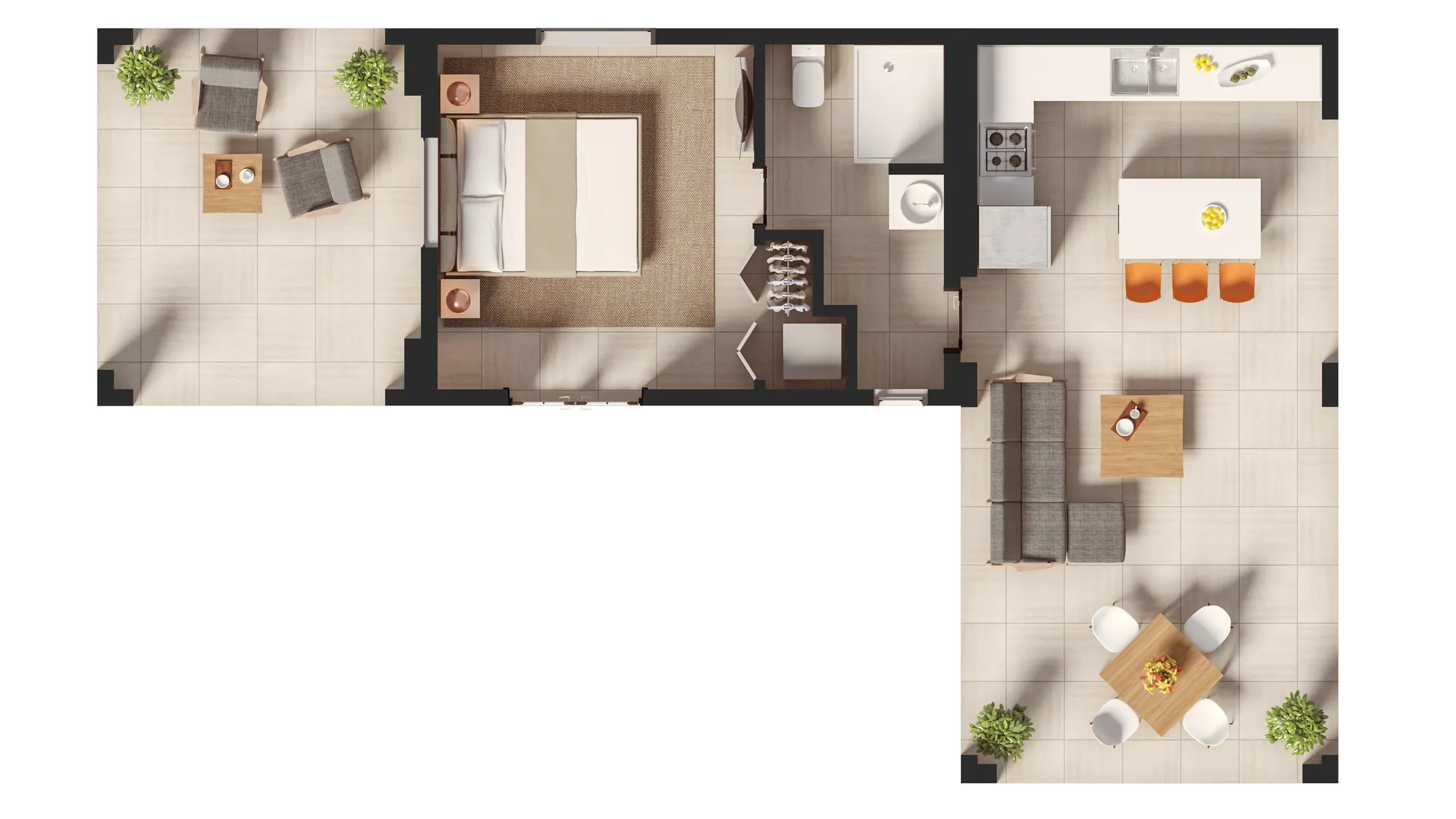
visualisering af situationsplan
Den tegnede version: farvelagt, med tekster og letlæselig for en, der ikke er arkitekt.
visualisering af situationsplan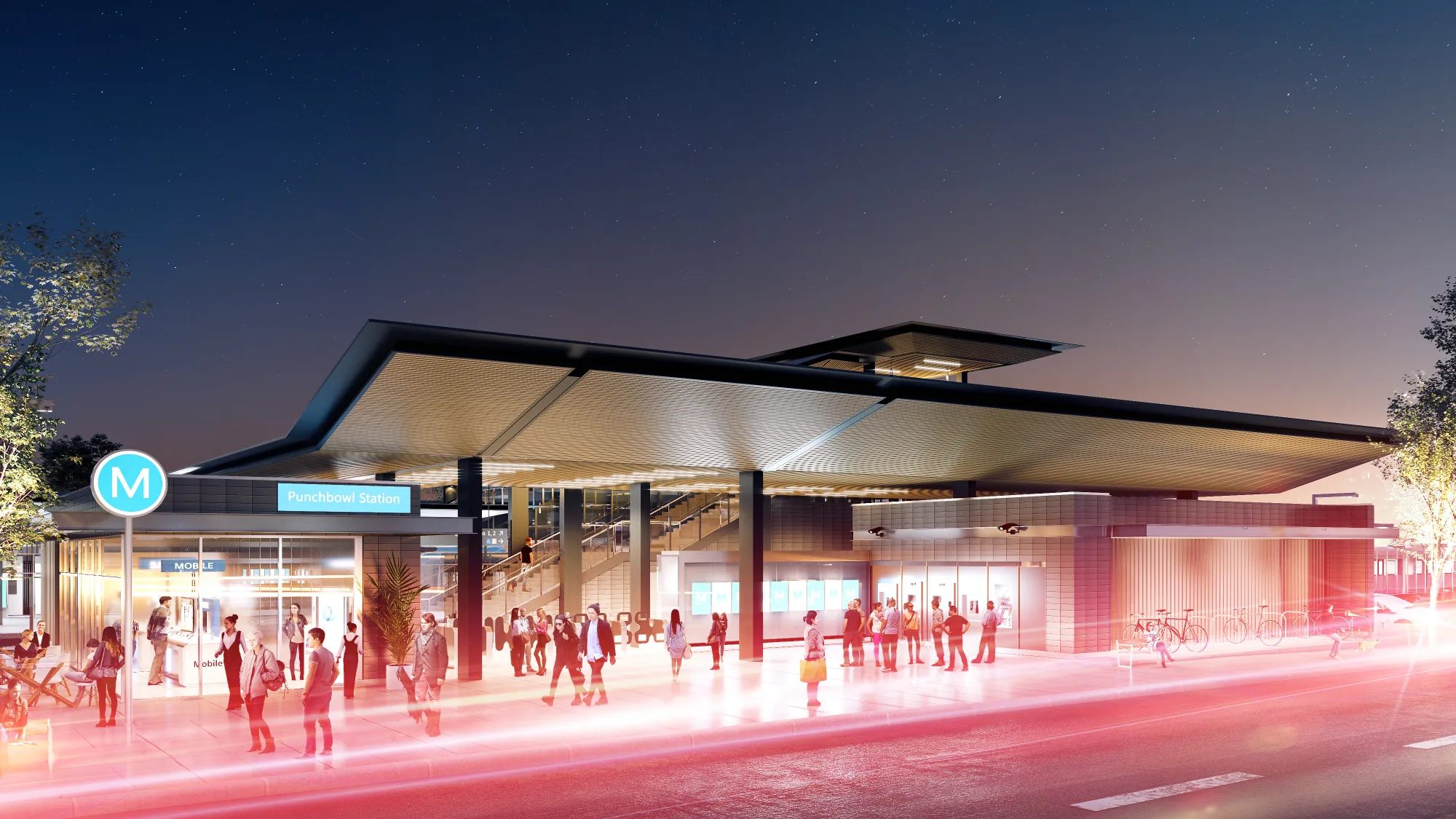
3D-animation
En gennemflyvning til høringsaftenen og udvalgets skærm, klippet ud fra samme scene.
3D-animation
Arkitektvisualisering
Hele spektret, til når projektet også kræver interiør og et marketingsæt.
ArkitektvisualiseringOfte stillede spørgsmål om 3D-visualisering til byplanlægning
Det, vi oftest bliver spurgt om, før et projekt starter. Stadig i tvivl? Send tegningerne, og vi fortæller dig, hvad vi ville gøre med dem.
Spørg os direkteHvad er masterplanvisualisering?
At bygge et helt område op som en 3D-model i stedet for en enkelt bygning og lave de billeder, en planlægningsproces har brug for, ud fra den. De foreslåede blokke udarbejdes ud fra dine masterplantegninger, omgivelserne ud fra opmåling og fotos, og begge holdes på samme terrænniveau, så projektet står på det rigtige sted i den rigtige højde. Leverancerne er luftbilleder, billeder i øjenhøjde fra aftalte positioner, billeder af det offentlige rum og faseringssæt.
Vil billederne holde for et planudvalg?
Det er netop det, metoden bygger på. Nabohøjder kommer fra opmåling og ikke fra øjemål, beplantning vises i størrelsen ved overdragelsen, medmindre du beder om andet, kameraerne står, hvor oversigten angiver, og vi sender dig de koordinater, vi har brugt. Hvor oplysninger manglede, skriver vi antagelsen ned og afleverer den sammen med billederne, så du selv kan oplyse den, i stedet for at den bliver fundet for dig.
Producerer I verificerede visninger eller nøjagtige visuelle repræsentationer?
Vi bygger ud fra de kamerapositioner, en landmåler giver os, og vi sender position, højde og objektiv tilbage for hvert billede, så visningen kan kontrolleres mod opmålingen bagefter. Opmålingen på stedet og den tredjepartsgodkendelse, som nogle myndigheder kræver, før en visning tæller som verificeret, kommer fra en landmåler og ikke fra os. Oplys i tilbudsfasen, hvilken standard der gælder, for det ændrer, hvad vi har brug for fra dig.
Hvordan viser du beplantning og landskab?
Som standard i den størrelse, planterne har ved overdragelsen. Halvvoksne træer og planter tegnes i den højde, de faktisk leveres i, ikke i den højde, de når om tyve år, for en trækrone, der ikke kunne findes på dag ét, er let for en indsiger at pege på. Hvis du også vil have den fuldvoksne version, kommer den som et tydeligt mærket andet billede og ikke i det stille som hovedbilledet.
Modellerer I de eksisterende omgivelser, og ud fra hvad?
Ja, og i en planlægningssag er det som regel den største del af arbejdet. Først opmåling, punktsky eller en eksisterende bymodel. Hvis ikke, kommer drone- eller gadefotos plus et matrikeludtog langt det meste af vejen. Vi spørger også til tilladelser, der er givet ved siden af, for et projekt, der bedømmes ud fra en kontekst, som allerede er forældet, er en diskussion, man ikke vil have.
Projektet vil ændre sig efter høringen. Betyder det, at vi skal starte forfra?
Nej. Scenen forbliver hos os, samlet, så en ændret volumen, en fjernet etage eller en flyttet blok er en ændring af noget, der allerede findes. Kontekst, kameraer og lys er stadig sat, og derfor koster den anden runde en brøkdel af den første, og derfor er før- og efterbillederne reelt sammenlignelige.
Hvor lang tid tager et masterplan-sæt?
Ét enkelt luftbillede tager cirka en uge. Et indsendelsessæt på seks til tolv billeder tager to til tre uger. Den lange del ligger i starten, for konteksten skal være på plads, før noget kan bedømmes op imod den, så send opmålingen tidligt, også selv om projektet stadig er i bevægelse. Du ser en gråmodel inden for få dage, og det er dér, volumener, terrænniveau og kameraer bliver fastlagt.
Hvordan prissættes det?
Pr. projekt og ikke pr. billede. Det, der driver prisen, er grundens størrelse, hvor meget kontekst der skal genskabes, antallet af udsigtspunkter, og hvor komplet din opmåling er. Yderligere billeder af en grund, der allerede er bygget op i modellen, koster markant mindre end det første. Send det, du har, og du får svar inden for 30 minutter: ét fast tal og en dato eller vores spørgsmål, med fuld brugsret inkluderet.
Må vi bruge billederne ud over indsendelsen, og hvem ejer dem?
De er dine uden forbehold, uden en licens pr. brug. Et sæt, der er lavet til et udvalgsmateriale, fungerer lige så godt på byggepladshegnet, i markedsføringen, når der er givet tilladelse, eller i en senere fases egen indsendelse, fordi det kommer fra den samme bevarede scene. Vi offentliggør ikke et projekt uden din tilladelse, for et projekt er ofte fortroligt, indtil det er formelt indsendt.
Kan I arbejde på et projekt i mit land?
Ja. Vi har arbejdet på distancen siden 2013 og leveret til 17 lande, i Norden, Europa, Storbritannien, USA, Canada og Australien. Planlægningsarbejde kan sagtens udføres på afstand: opmåling, tegninger og oversigten over udsigtspunkter kommer som filer, og billeder og kameradata går tilbage på samme måde. Det, der ændrer sig fra land til land, er verifikationsstandarden, så nævn den ved tilbudsfasen.
Send opmålingen og projektet, få en fast pris før indsendelsesdatoen
Planlægningskonsulenter, ejendomsudviklere og myndighedsteams: ét tal og en leveringsdato, svar inden for 30 minutter, udsigtspunkter aftalt, før noget renderes.
Vi tager imod et begrænset antal projekter hver måned.