What Is CGI? Computer Generated Images in Architecture and Property
CGI stands for computer-generated imagery. In architecture it means a picture of a building made from a 3D model. See the types, where you see them and what they cost.
In this article
- CGI means computer-generated imagery. In architecture it is a picture of a building rendered from a 3D model, not a photograph.
- CGI, 3D rendering and visualization usually name the same product: CGI is the image, and rendering is the step that makes it.
- The main types are exterior and interior stills, aerial views, CGI floor plans, animations, 360 tours and verified views.
- A CGI image follows the drawings but is still an impression, so check finishes and planting before you publish it.
CGI stands for computer-generated imagery. In architecture and property, a CGI image is a picture of a building, an interior or a site that is made on a computer from a 3D model, not taken with a camera. A computer generated image, a CGI image, a CGI render and “3D CGI” all describe the same thing.
You see these images on site hoardings, new-build listings, planning applications and sales brochures. They show a building before it exists. Architects who need images for planning, a competition or a client can see our CGI renders for architects. Developers and estate agents who sell new homes can read about our new-build CGI for sales.
What CGI means for buildings
CGI is the umbrella term for any image made with computer graphics. In film, it usually means effects that artists add to footage. In architecture, it nearly always means one thing: a picture rendered from a 3D model of a building. The model is built from the architect’s drawings, so the picture shows the real design and not a sketch of it.
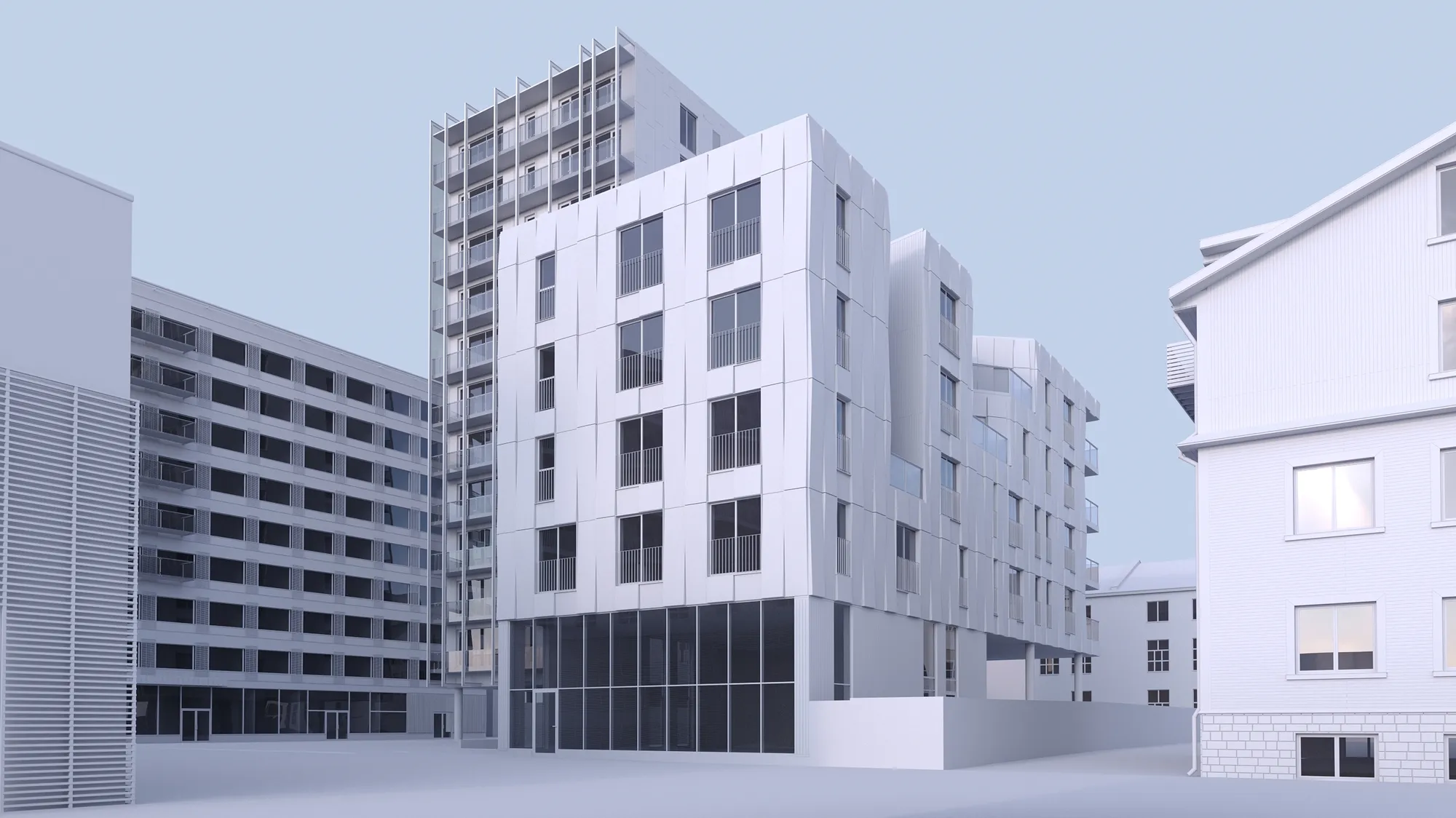
A CGI house or a CGI apartment block is made in 4 steps:
- A 3D model is built from plans, elevations and sections.
- Materials are added: brick, timber, glass, paint, flooring.
- Light is set: the sun, the sky and the lamps in the scene.
- A camera is placed, and software renders the picture.
CGI is not the same as an AI image. CGI is built from a 3D model by a person, and an AI image is generated from a prompt. Our guide to the difference between CGI and AI explains how to tell them apart.
How CGI, rendering and visualization differ
These words describe the same job from different angles. The choice mostly depends on the country and the person speaking.
- CGI is the common word in the UK for the finished image. Developers, estate agents and planners say “the CGI”.
- Rendering is the step where software turns the 3D model into a picture. In the US, “a rendering” is the usual word for the finished picture too.
- Visualization (visualisation in UK spelling) is the name of the service or the field, as in “architectural visualization”.
So “CGI images”, “3D renderings” and “visualizations” usually name the same product. When you ask a studio for a quote, any of the 3 words is understood.
CGI architecture: types of CGI images and who uses each
Not every CGI image is a still of a facade. The table lists the main types, and the sections below it explain each one.
| Type | What it shows | Who uses it |
|---|---|---|
| Exterior still | The building from street level or a human eye height | Developers, architects, estate agents |
| Interior still | A room with finishes, furniture and light | Developers, interior designers, estate agents |
| Aerial and masterplan | The scheme from above, with its site and surroundings | Developers, planners, investors |
| CGI floor plan | A furnished plan of one home, seen from above or at an angle | Estate agents, developers, buyers |
| Animation and fly-through | A moving camera through or around the building | Developers, hotels, investors |
| 360 image and virtual tour | A view the user can turn in every direction | Sales suites, agents, websites |
| Verified view and photomontage | The new building placed into a real photograph of the site | Architects, planning consultants |
Exterior stills
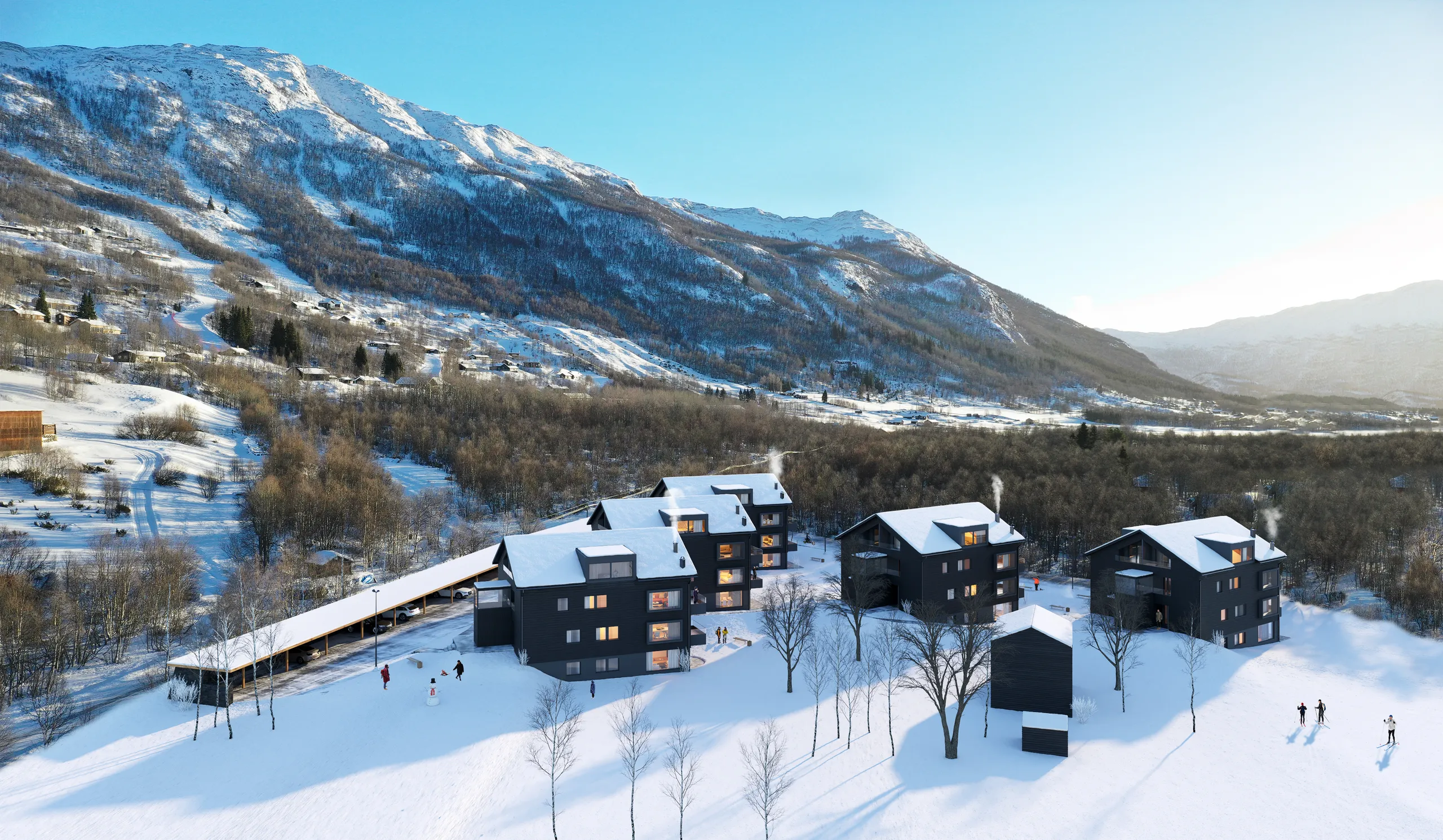
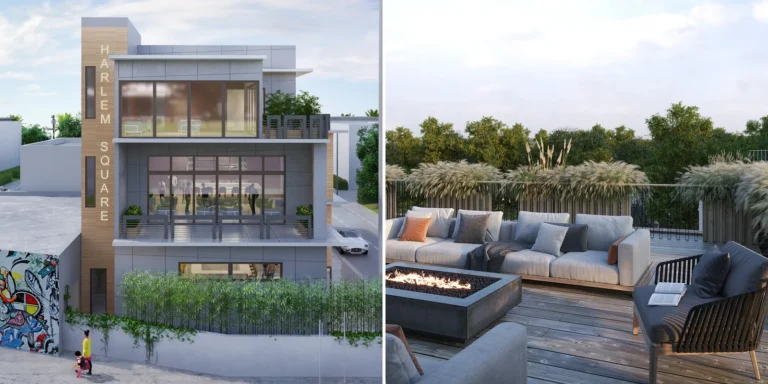
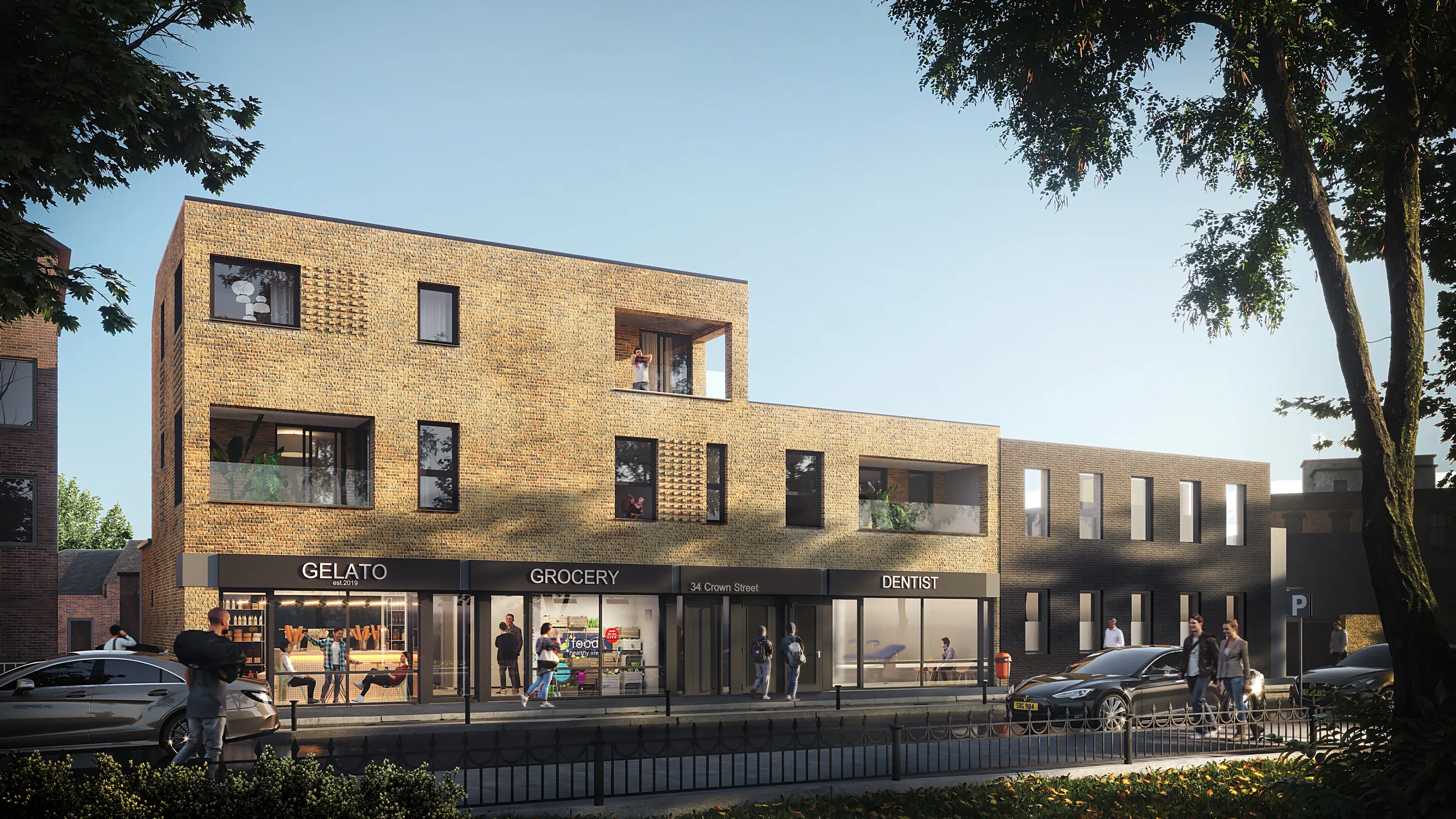
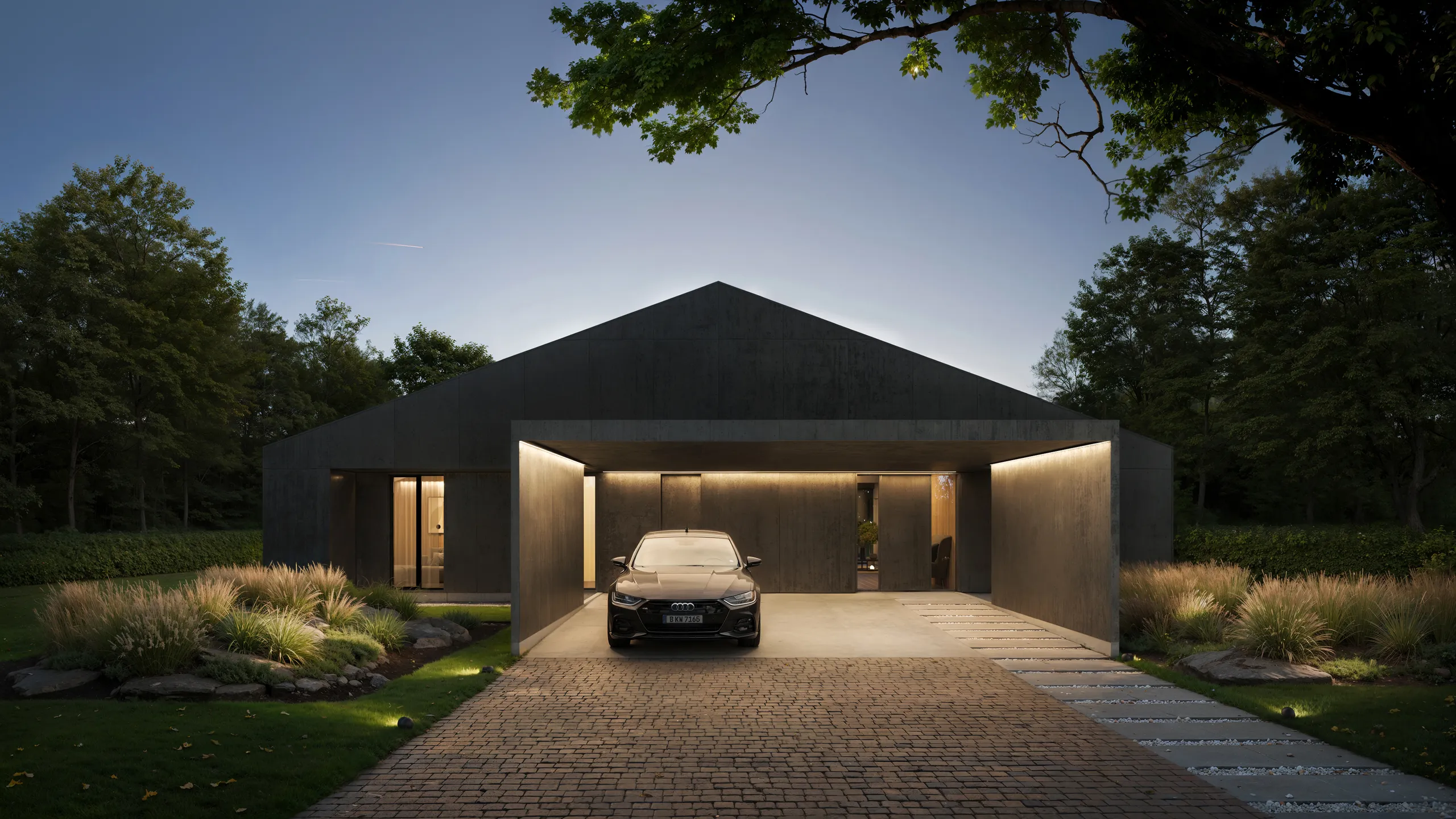
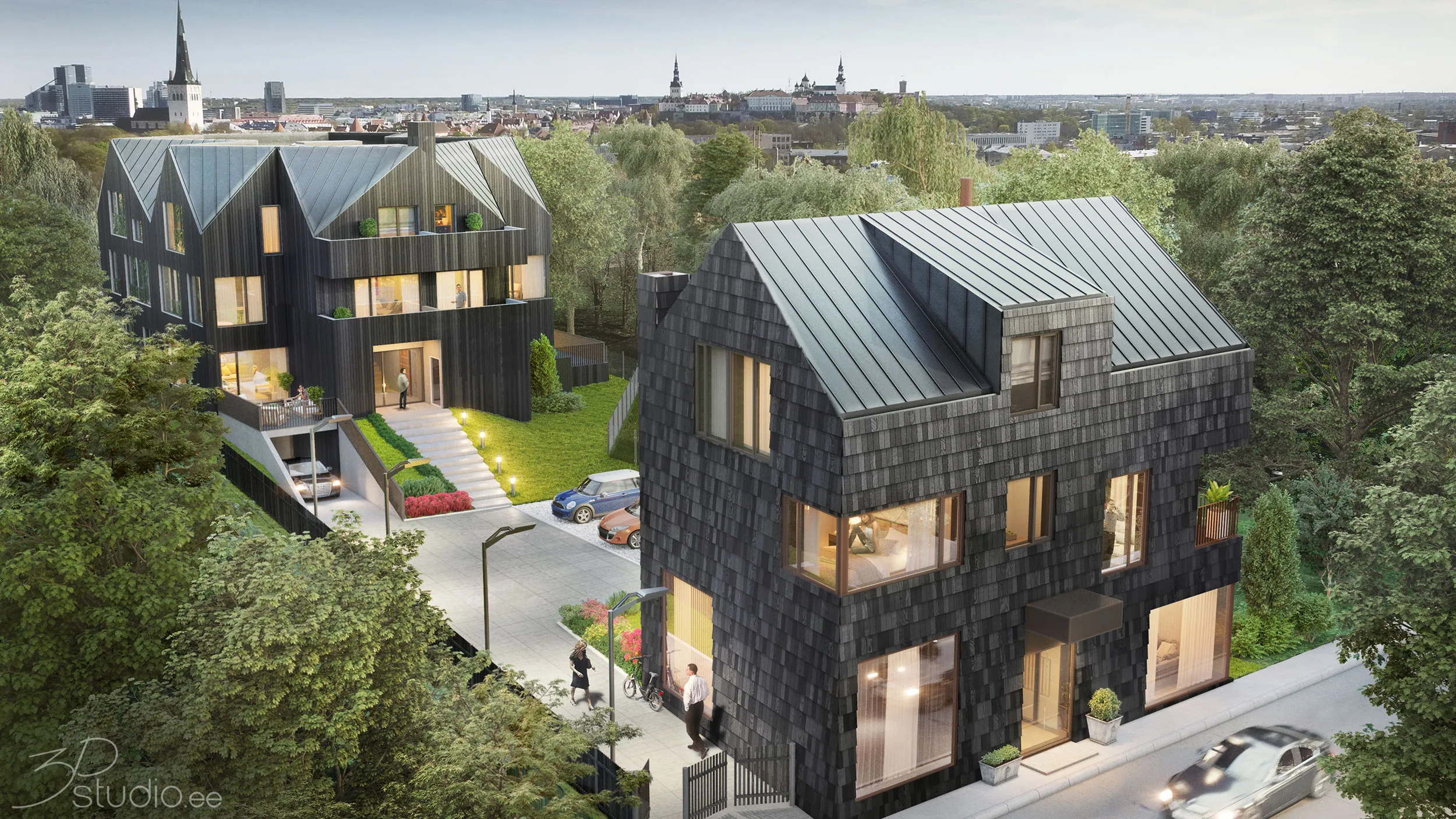
An exterior still is the hero image of most projects. It shows the facade, the entrance, the landscaping and the street, often at dusk because lit windows make a building look occupied. Our exterior rendering service produces these.
Interior stills
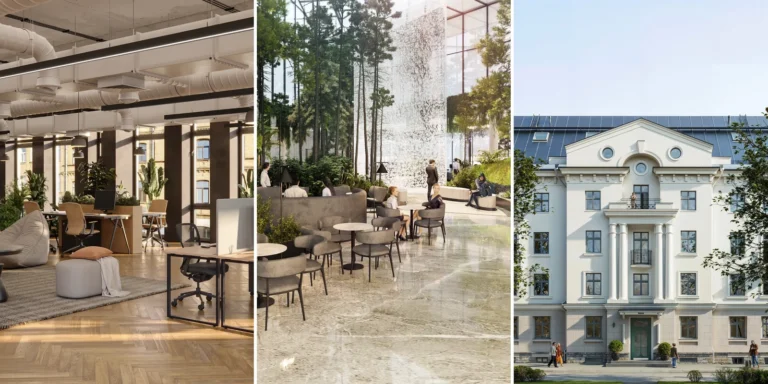
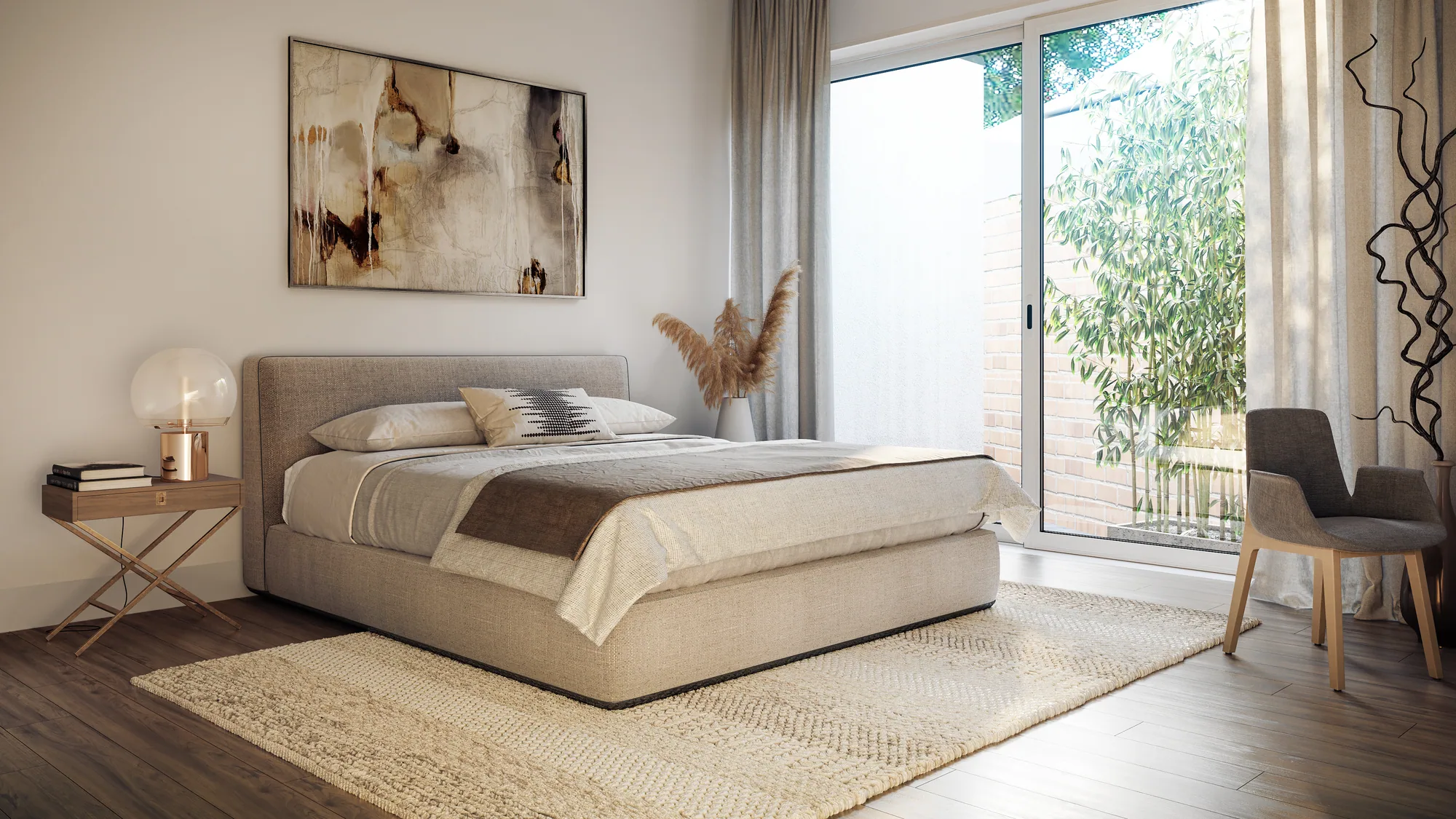
An interior still shows a room as the buyer will use it: materials, furniture, daylight and the view from the window. Developers use interiors to show what the finish level looks like. See our 3D interior rendering services.
Aerial and masterplan views
An aerial view shows how a scheme sits in its site: roads, neighbors, green space and parking. A masterplan view does the same for a whole development with several buildings.
CGI floor plans
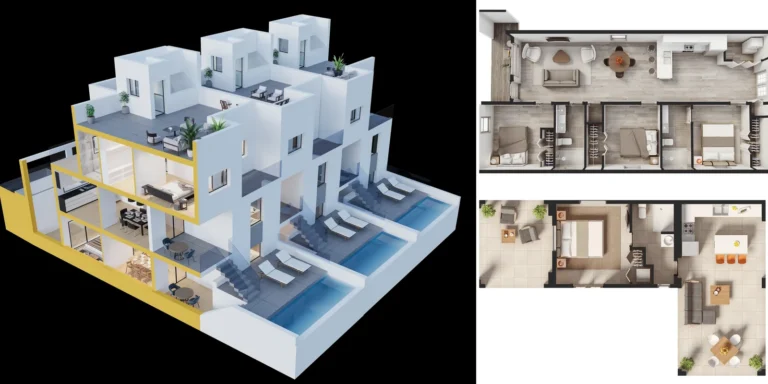
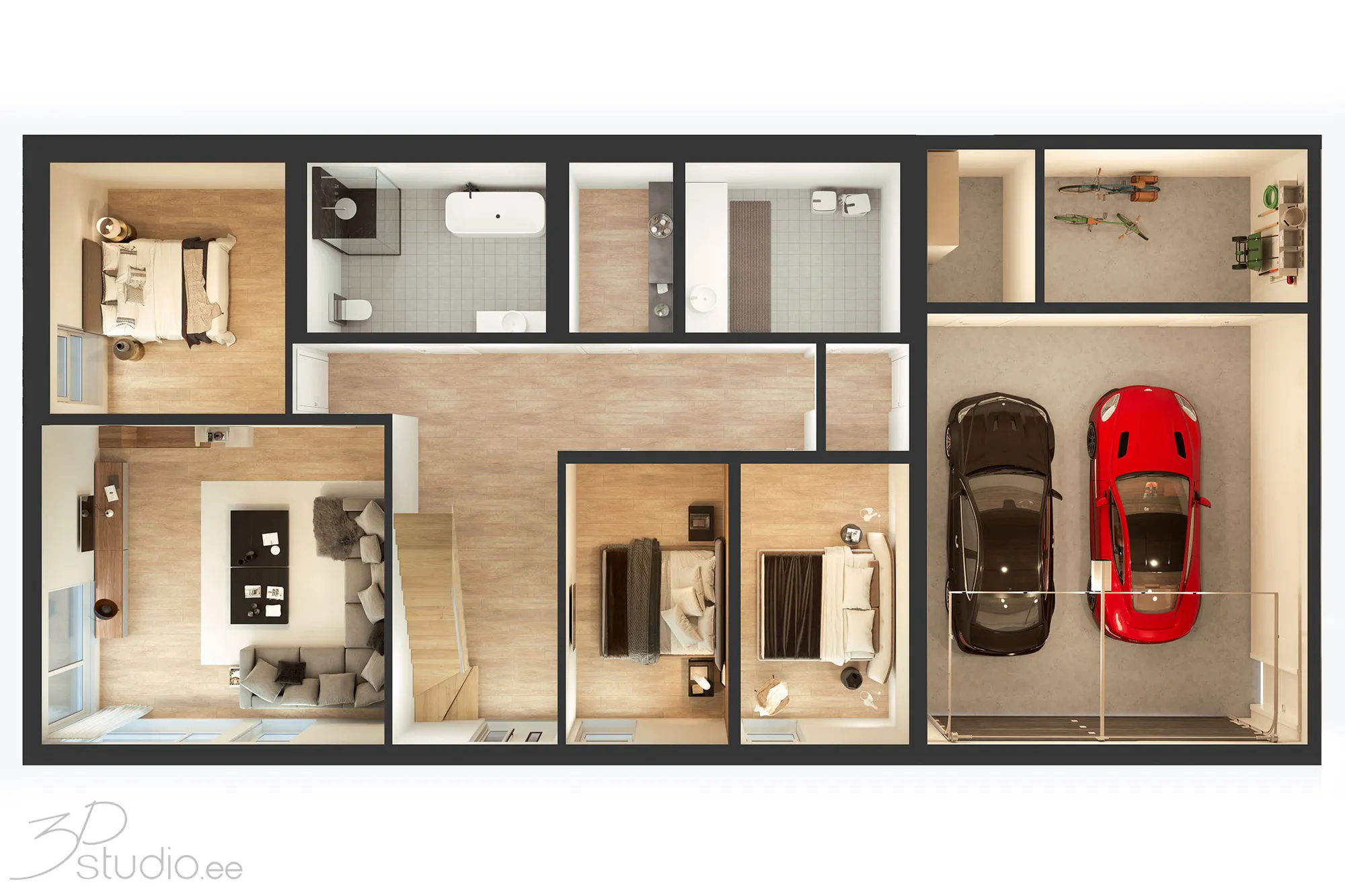
CGI floor plans are plans made from a 3D model: furnished, with textures and shadows, from above or at an angle. A buyer can read a plan like this without training. Each home type gets its own plan. Read more on 3D floor plans.
Animations, fly-throughs and 360 tours
An animation moves a camera through or around the scene and is delivered as a video file. A fly-through shows the building from the air and a walkthrough shows it from inside. A 360 image lets the viewer turn in place, and a virtual tour links several 360 images together. See 3D animation for the video side.
Verified views and photomontage
A photomontage combines a real photograph of the site with a render of the new building, so the street and the neighbors in the image are real. A verified view is a photomontage that a planning authority can check. A surveyor records the camera position and fixed points in the photograph, and the 3D camera is matched to that data. In UK planning, these images are also called accurate visual representations (AVRs). In London, the London View Management Framework describes AVR levels from 0 to 3, from an outline of the building’s position and size to a fully rendered view with materials. The survey itself is done by a surveyor. Ask the case officer which level and method the authority expects before you order. Our guide to CGI vs photography for architecture explains when to use a photograph, a render or both.
Where you see CGI images
The same 3D model can serve the whole life of a project. These are the places where you will meet CGI images:
- Planning applications and consultations. Neighbors and committees read an image faster than a set of drawings.
- Site hoardings. The large picture on the fence shows what will be built behind it.
- Property portals. New-build listings on sites such as Rightmove often carry CGI images and CGI floor plans, because the homes are sold off-plan.
- Brochures and sales websites. The cover, the location page and the home types are usually CGI.
- Sales suites and show-home suites. Screens and printed boards show the finished building before the show home exists.
- Architecture competitions and client presentations. The images explain the design to people who do not read drawings.
Developers who need renders, 3D floor plans, a video and a sales website from one 3D model can see our sales launch package.
How accurate CGI images are
A good CGI image follows the drawings. The proportions, the window positions, the floor levels and the layout come from the model, and the model comes from the plans. That is why a studio asks for drawings and not only a description.
Even so, a CGI image is an impression of a design, not a record of a finished building. These things can differ from the real result:
- Finishes. A material on a screen or in print can look different from the real product.
- Planting. Trees in an image are often shown at a size they reach years later.
- Furniture and styling. Items in a render may not be included in the sale.
- The lens. A wide-angle view makes a room look larger than it feels.
- Changes on site. The design can change after the image is made.
This is why new-build images carry small print such as “CGI for illustration purposes only” or “computer generated image”. The note tells the viewer that the picture is an artist’s impression of the design and not a photograph. The note does not make a misleading image acceptable. Under the UK advertising code, small print may explain an ad but must not contradict it, so the image itself should match what is sold. If an image shows upgrades that are not included in the price, UK guidance on new-home advertising says the ad should state this. Check the rules where you advertise. This is not legal advice.
Tip: Ask the studio which parts of the image are assumed, such as planting, people and surroundings, and which come from your drawings. Then check the assumed parts before you publish.
What a studio needs to make CGI images
A studio can start from the same files an architect already has. The more complete the files, the fewer questions come back:
- Plans, elevations and sections, as CAD (.dwg) or PDF.
- A 3D model if one exists: SketchUp, Revit, ArchiCAD, 3ds Max or IFC.
- Material and finish specifications, and reference images for the mood.
- The site: a location, a map or photographs, because the surroundings are part of the image.
- A list of the views you need and where they will be used.
Even a photo of a hand sketch is enough to get a quote. At 3Dstudio.co, the files you send are the brief, so there is no questionnaire. You get a reply within 30 minutes of sending them: a fixed price and a delivery date, or the 1-2 questions we need answered first. See how a CGI project runs, from the grey model to the final images. A single view takes about a week, and a medium set takes 2 to 3 weeks. Images are delivered in 4K as standard, and larger sizes for large-format print are available on request.
How much does CGI cost
The cost of CGI depends on the project, not on a rate per image. We price each project as one fixed price agreed before work starts. Projects start at €1,000. A single-building launch set typically costs €3,000 to €6,000. Multi-building developer packages typically run €5,000 to €15,000.
These things move the price:
- The number of views.
- The size and complexity of the scene.
- How ready your files are.
- The resolution and format.
- How much art direction and styling the images need.
- Whether the scene already exists from earlier work.
The first view of a scene carries the cost of building it, and further views of the same scene cost much less. See our pricing page and the 3D rendering cost guide for what drives the price.
Questions about CGI images
Is a CGI image the same as a 3D rendering?
Yes. In architecture, a CGI image and a 3D rendering both mean a picture made from a 3D model. CGI is the more common word in the UK, and rendering is more common in the US.
What does CGI mean on a hoarding or a Rightmove listing?
It means the picture is computer generated and not a photograph. The building is not finished, and the image shows the design as planned. The small print usually says the image is for illustration purposes only.
Can a CGI house look different from the finished house?
Yes. A CGI image follows the drawings, but finishes, planting and furniture can differ in the real building, and the design can change on site. Compare the image with the specification before you buy or approve.
Can CGI images go in a planning application?
Yes, as supporting material. Some authorities ask for a verified view, which is a photomontage with a camera position fixed by a surveyor. Ask the case officer which standard applies before you order.
How long does it take to make a CGI image?
About a week for a single view and 2 to 3 weeks for a medium set. For larger sets, the delivery date is agreed in the quote.