

3D architectural animation,
before it is built
3D architectural animation services for architects and developers: walkthroughs, flythroughs and product films built from your drawings. The route is agreed on a rough cut before anything is rendered.
- Fixed price quote in 30 minutes, storyboard before any render
- Rough cut on a grey model, so the camera route is settled while it is cheap
- The finished film as an MP4, with shorter cuts on request
We take a limited number of projects each month, so no film is rushed.
1,247
Projects completed
13
Years in business
17
Countries delivered to






★★★★★
Rated 5.0 on Clutch · See our reviews
Architects, developers & interior designers
Working for 215 companies since 2013
125 of 220 clients came back
More than half of our clients have hired us again
What are 3D architectural animation services?
Building a scene from your drawings, putting a camera in it and rendering a film that moves through the finished building, across the site or around a product before any of it exists.
The scene comes off your drawings. The camera route is planned on a grey model and agreed as a rough cut. Only then is anything rendered at full quality, so the costly step happens once.
Architectural animation is the moving counterpart of a still. A still is one carefully chosen viewpoint. Architectural animations take the viewer along the whole route: the approach to the building, the entrance, the turn into the courtyard, the rooms in the order a visitor would meet them. It is the format for anything that has to be understood in sequence, such as how a site is entered or how one room opens onto the next.
What decides whether it holds up is the camera. Height, speed and the order of views make a film read as a person arriving rather than a drone crossing a model, and all of it is settled on the grey version of the scene long before materials and light go on.
How it differs from a still, a 360 tour or a real-time model
A still shows one moment and leaves the viewer to imagine the route. A 360 tour lets someone look around from fixed points but not travel between them at a pace you set. A real-time model can be explored freely, but it needs the viewer's own machine and usually gives up some image quality for the freedom. Our animation is pre-rendered video: one route, full quality, playable anywhere a video plays. For viewers who want to look around on their own, our 360 virtual tours are the better tool.
Walkthrough, flythrough and product animation
Three deliverables sit under the one name and are worth telling apart. A 3D walkthrough animation moves at eye height through a building, inside or out. A flythrough lifts the camera above the site to show the scheme in its surroundings. Product animation shows a single object turning, opening or coming apart. They use different cameras and different pacing, so each has its own section below.
Where a film gets used
Most films are paid for at the moment something has to be decided: a planning hearing, a funder's meeting, a launch. After that they work as a walkthrough video on a listing, a sales-suite loop, social posts and the opening slide of the practice's own pitches. One scene usually serves all of these, each cut to its own length.
Choosing a format? Start with walkthroughs, flythroughs or product animation, then see what moves the cost.
Three moments where a film does more than a still
01
Consultation and planning
A route through the scheme shows what one view hides: how tall the building feels from the street, how the entrance meets the pavement, what a neighbour sees from their window. A committee or a public consultation can follow it without reading a drawing.
The surroundings go in as they are, at their real height. Leave out the awkward neighbour and the audience notices before you do.
02
Buyers who cannot visit yet
Off-plan buyers commit to something they cannot walk into. A film gives them the arrival, the entrance and the rooms in the order they will live in them, which a brochure of separate images does not.
It also loops on a screen in a sales suite, where it does the job of a model and never gets bumped.
3D architectural walkthrough services, inside and out
3D architectural walkthrough services move at eye height, at walking pace, along one route. These are the six routes we are asked for most.
Exterior walkthrough
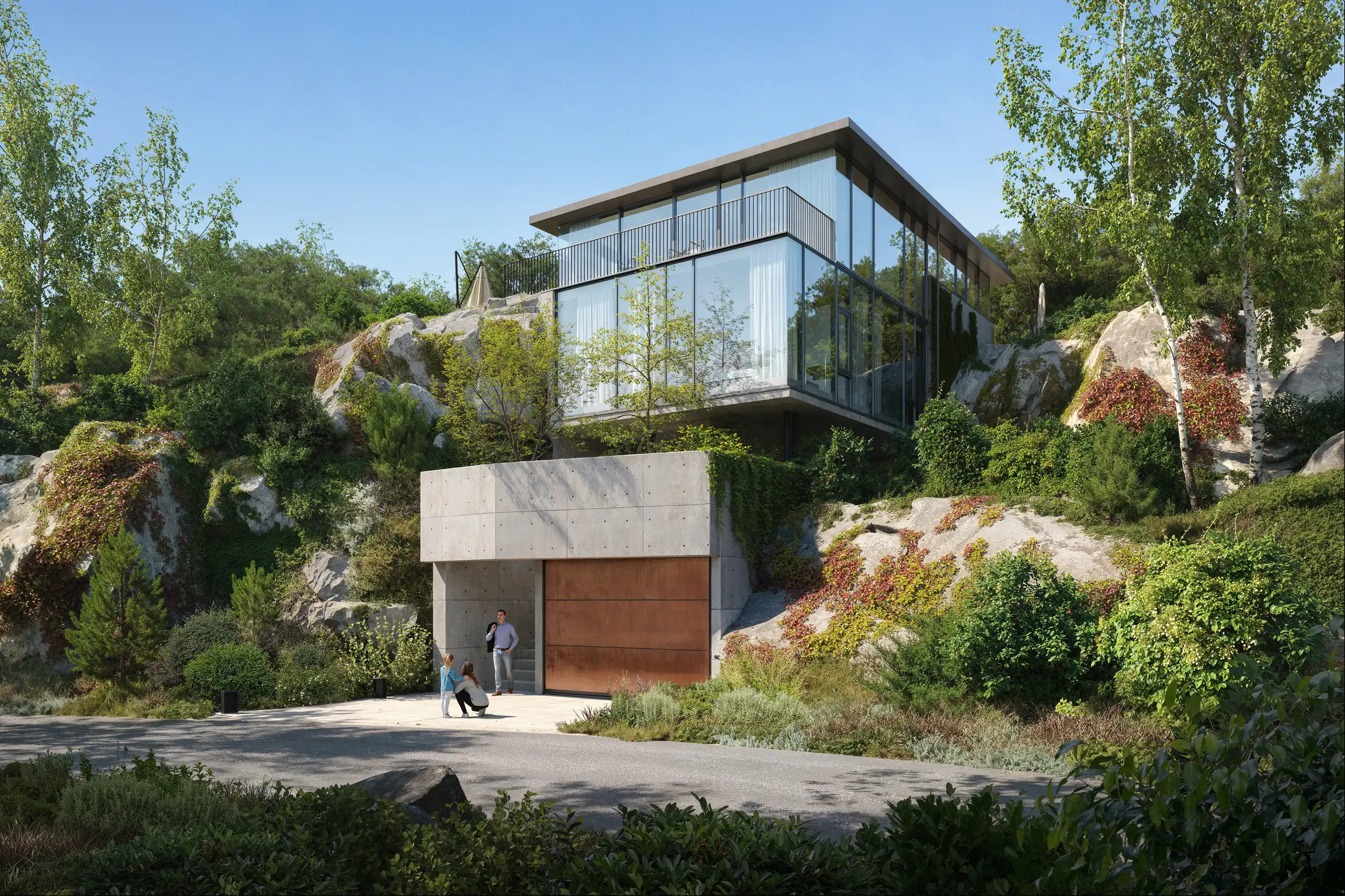
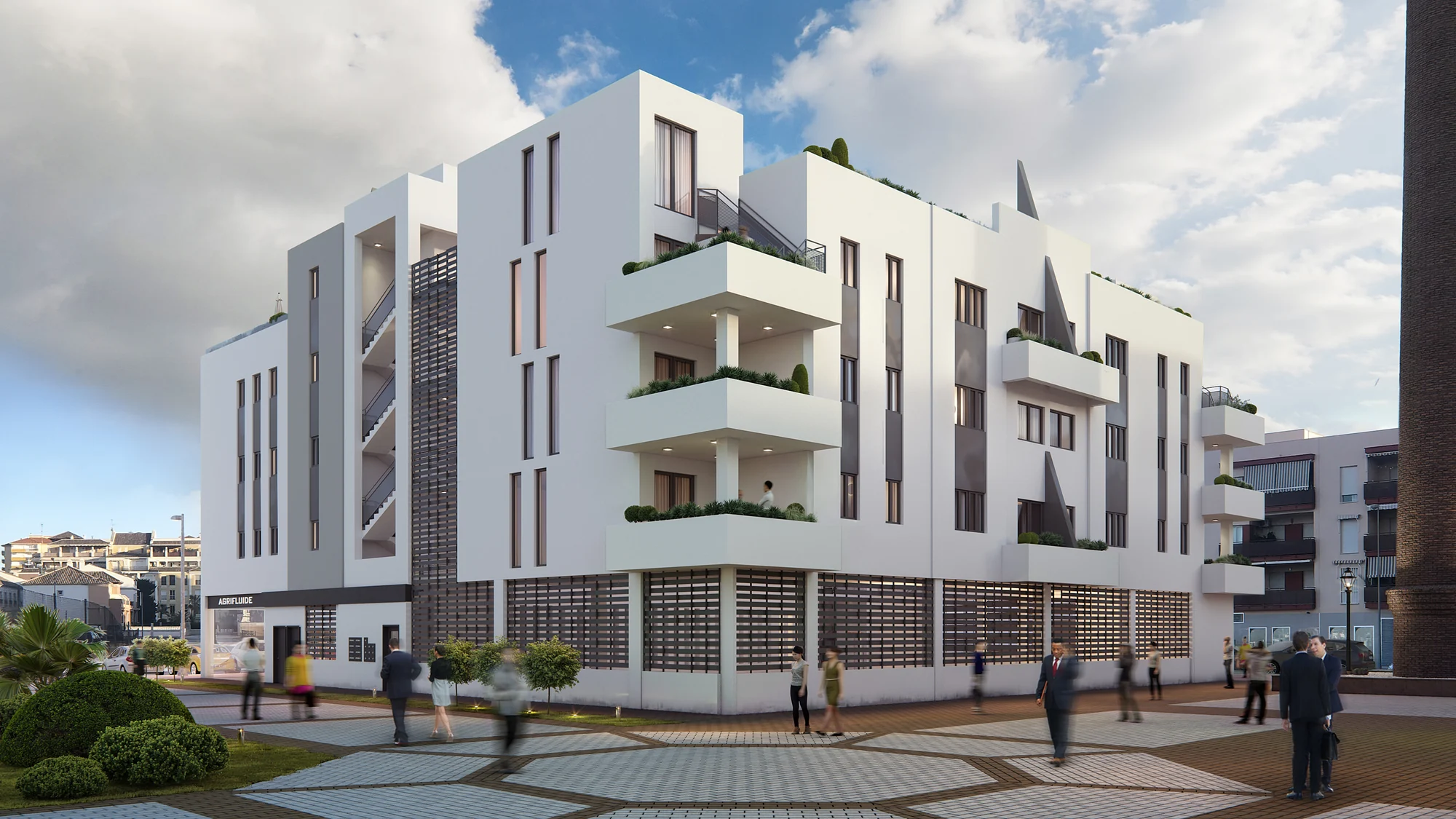
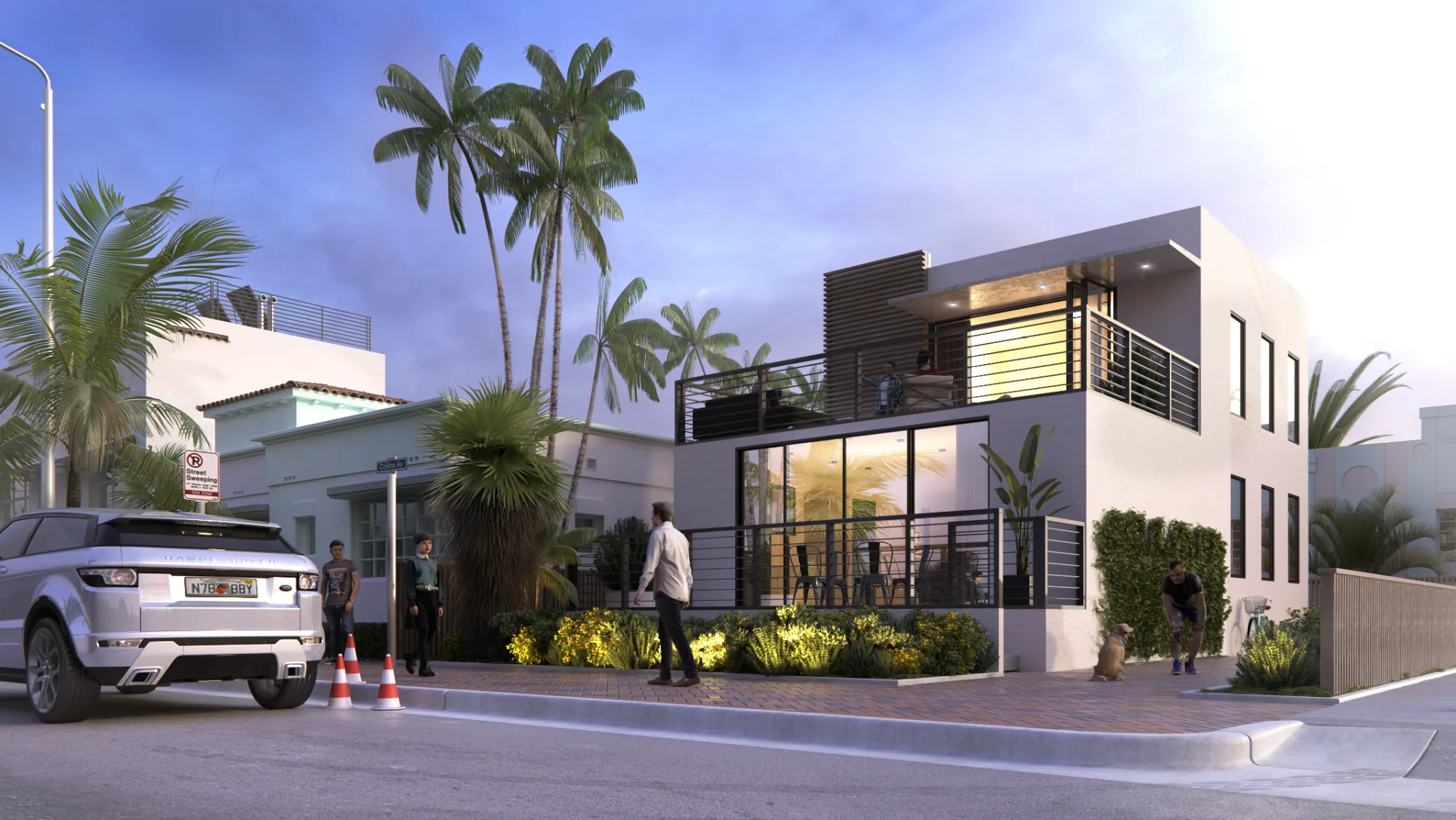
The arrival: the street or the drive, the entrance, the courtyard, the terrace. The camera stays at standing height and moves at the pace a visitor would walk, in the planting and the light of a chosen hour.
Office and workplace walkthrough
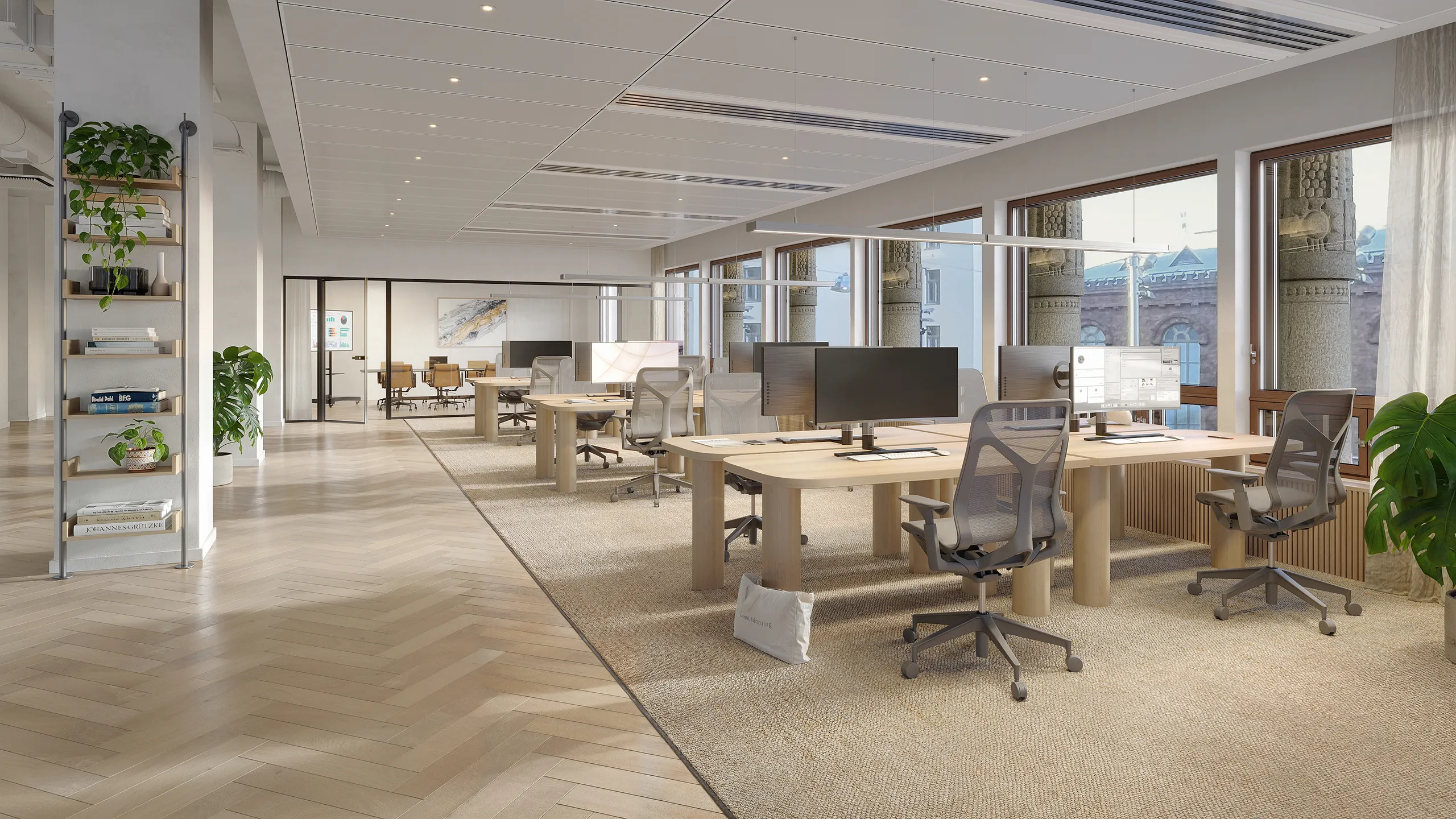
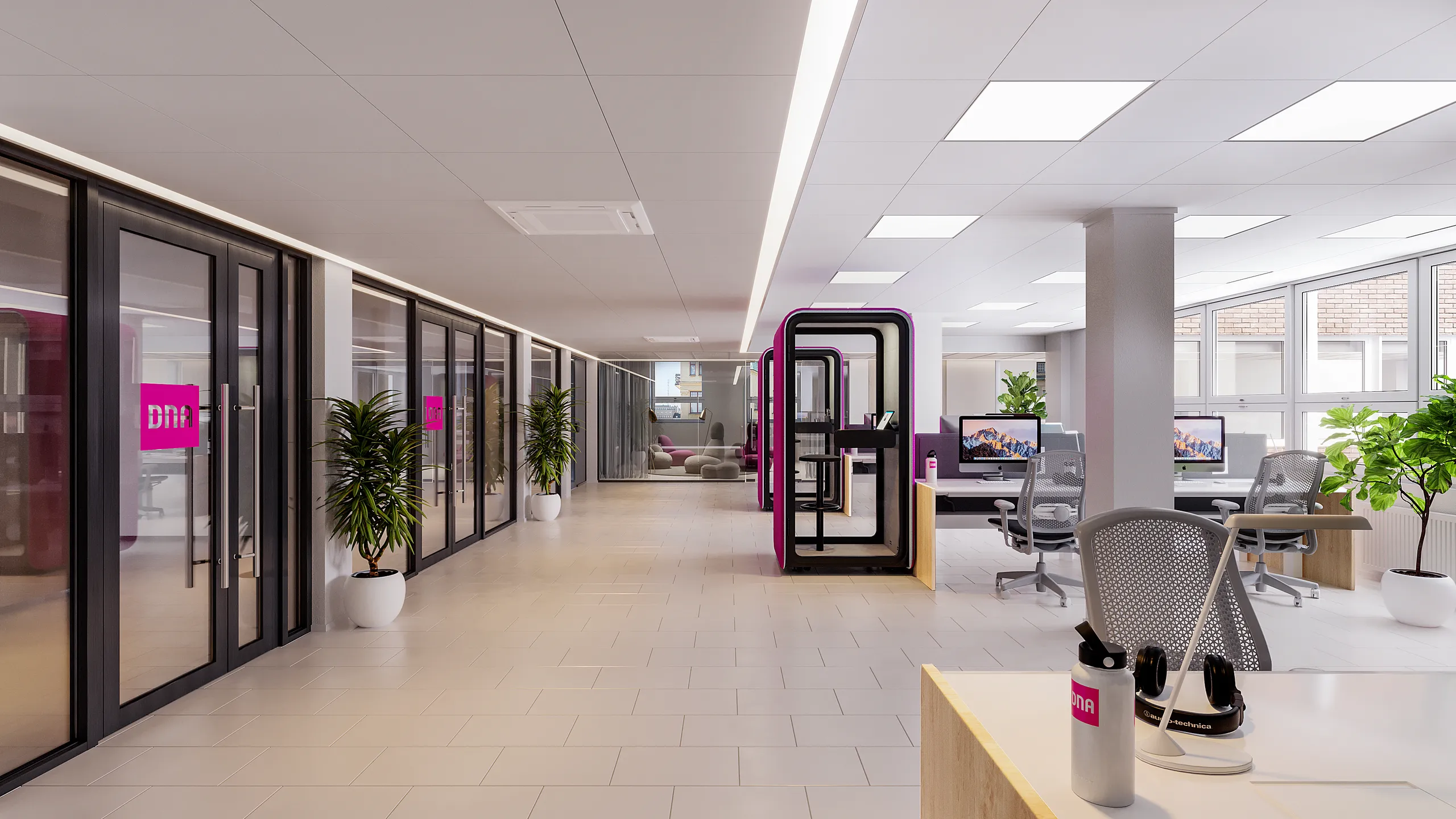
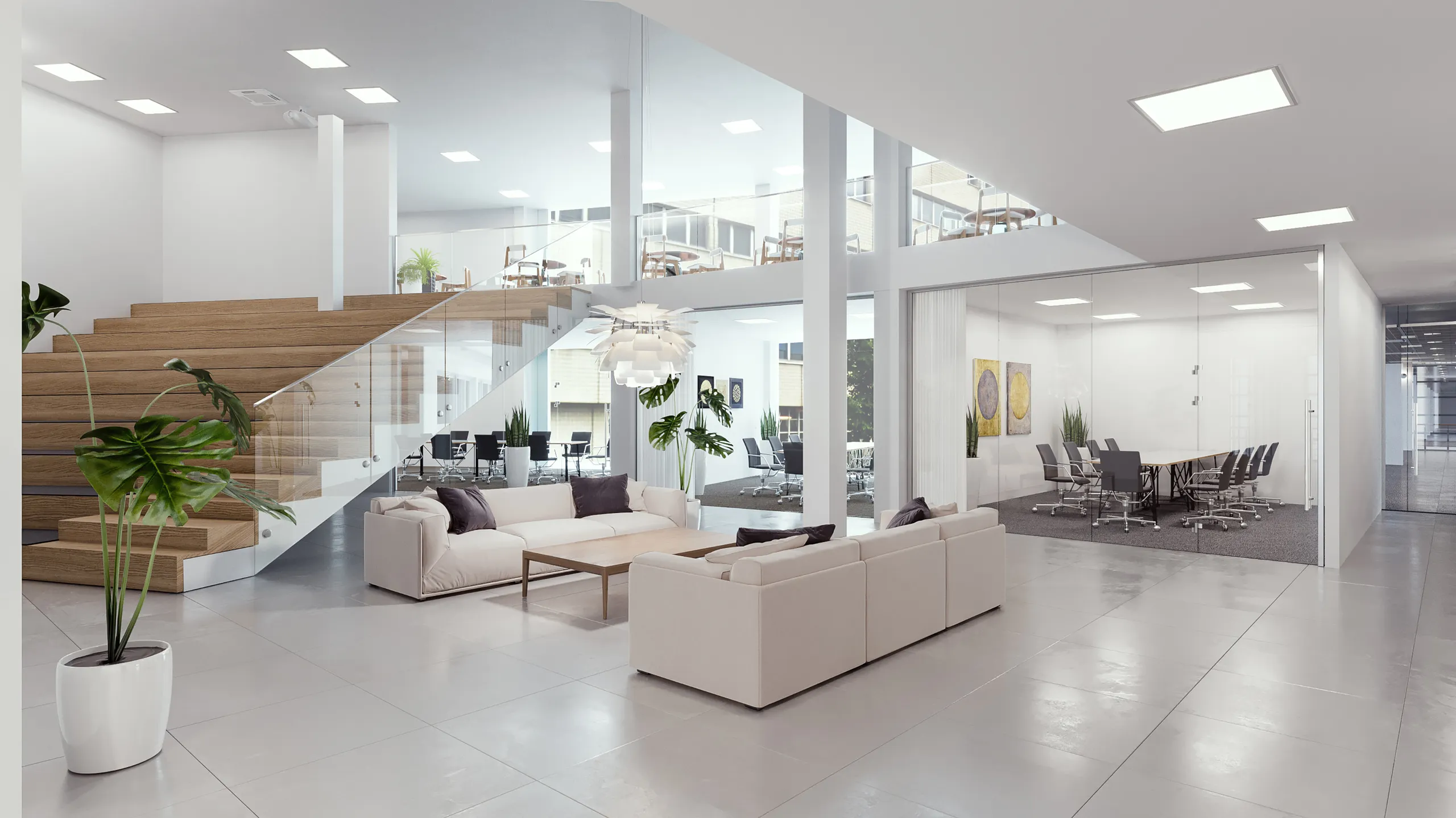
Reception, corridors, meeting rooms and the open floor, in the order a new tenant would see them. Useful for leasing a floor before the fit-out exists.
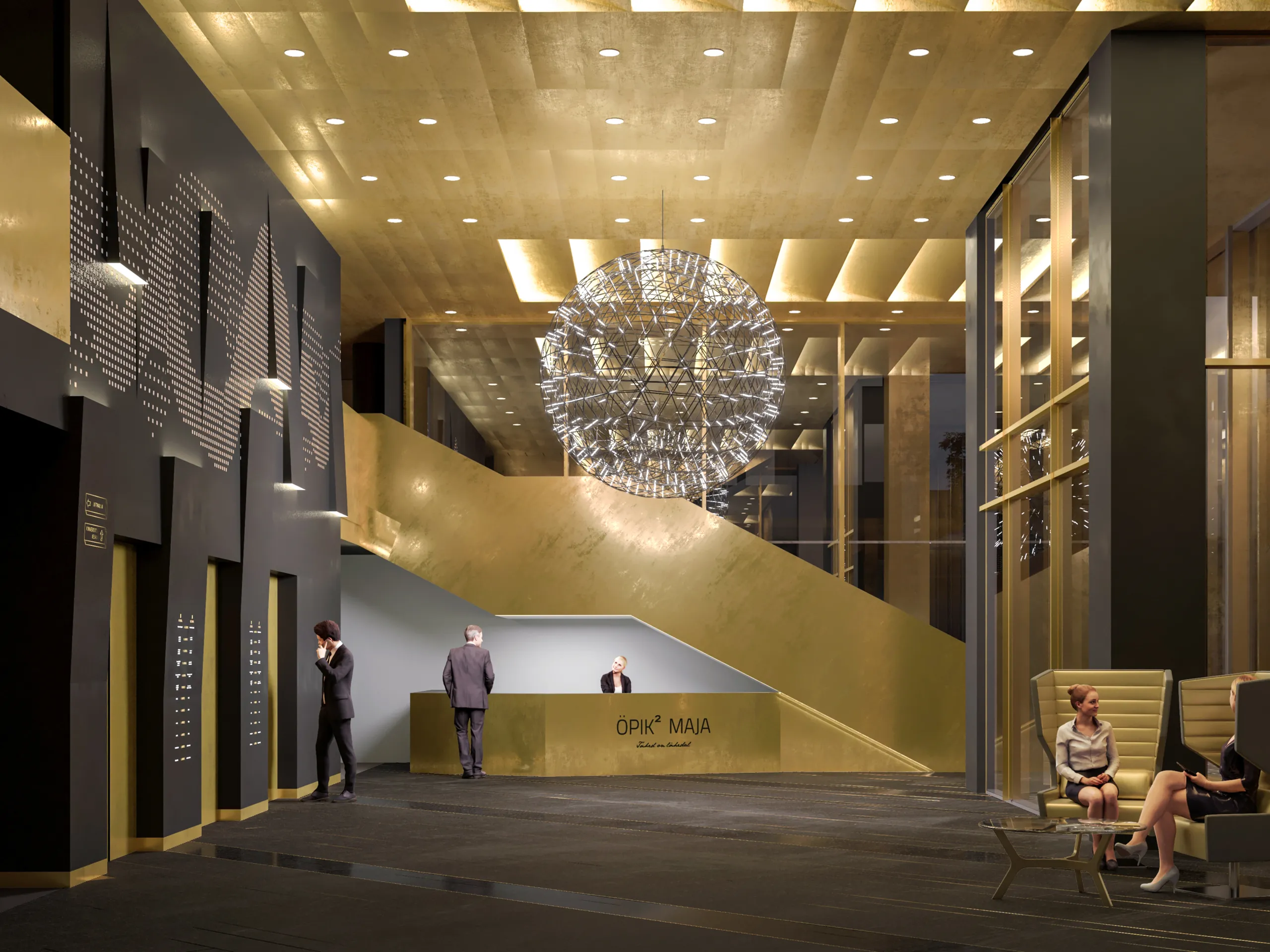
Lobby and hospitality walkthrough
The arrival at the door, the desk, the stair and the lounge, lit for the hour guests will actually see it. Suited to hotels, offices and apartment buildings that sell on a first impression.
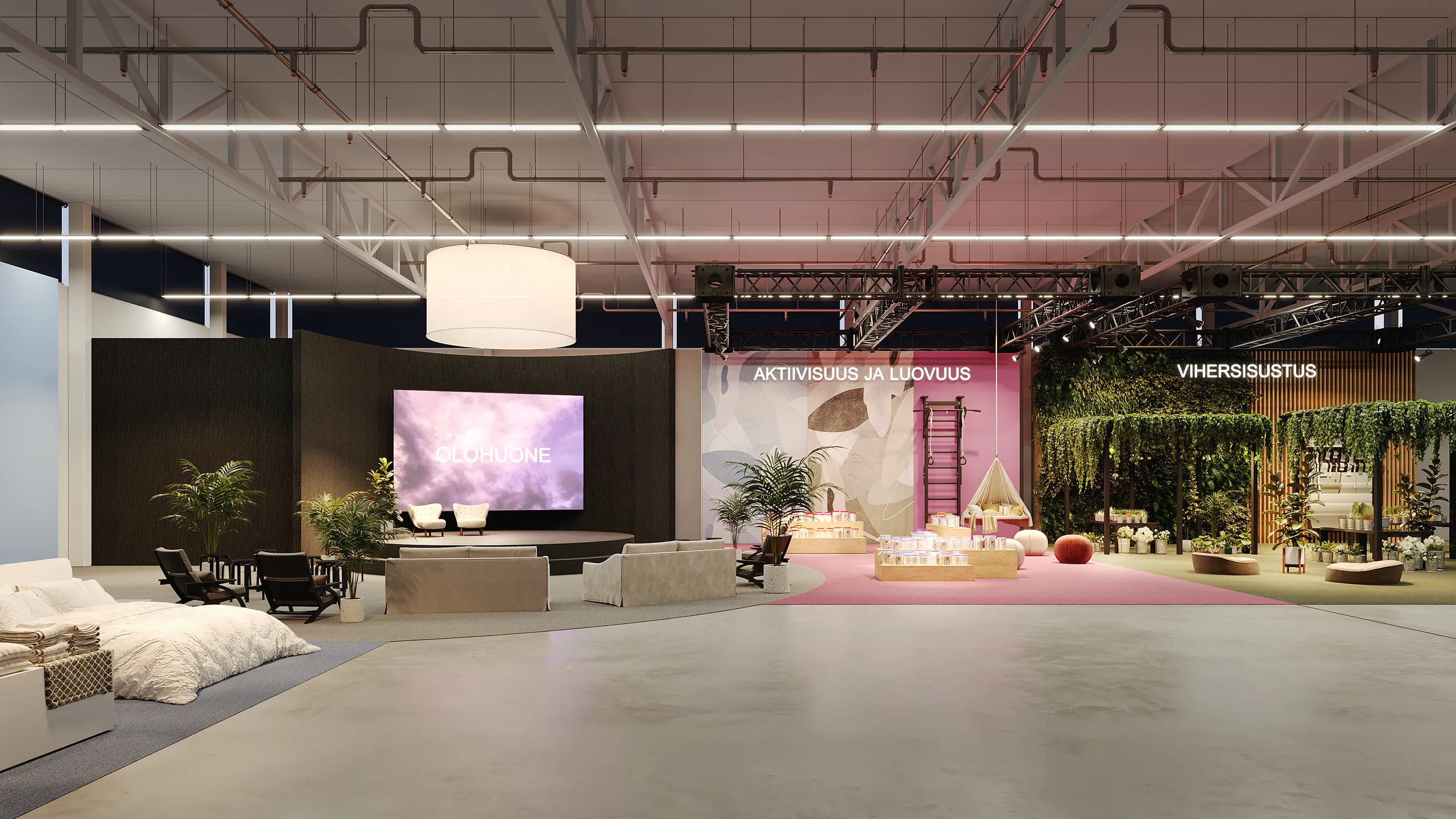
Exhibition and event walkthrough
A trade-fair stand or a pop-up walked before it is built: the entrance, the screen wall, the meeting corner, seen at the height of a visitor. Useful when the stand has to be approved by a client who will not see it until the hall opens.
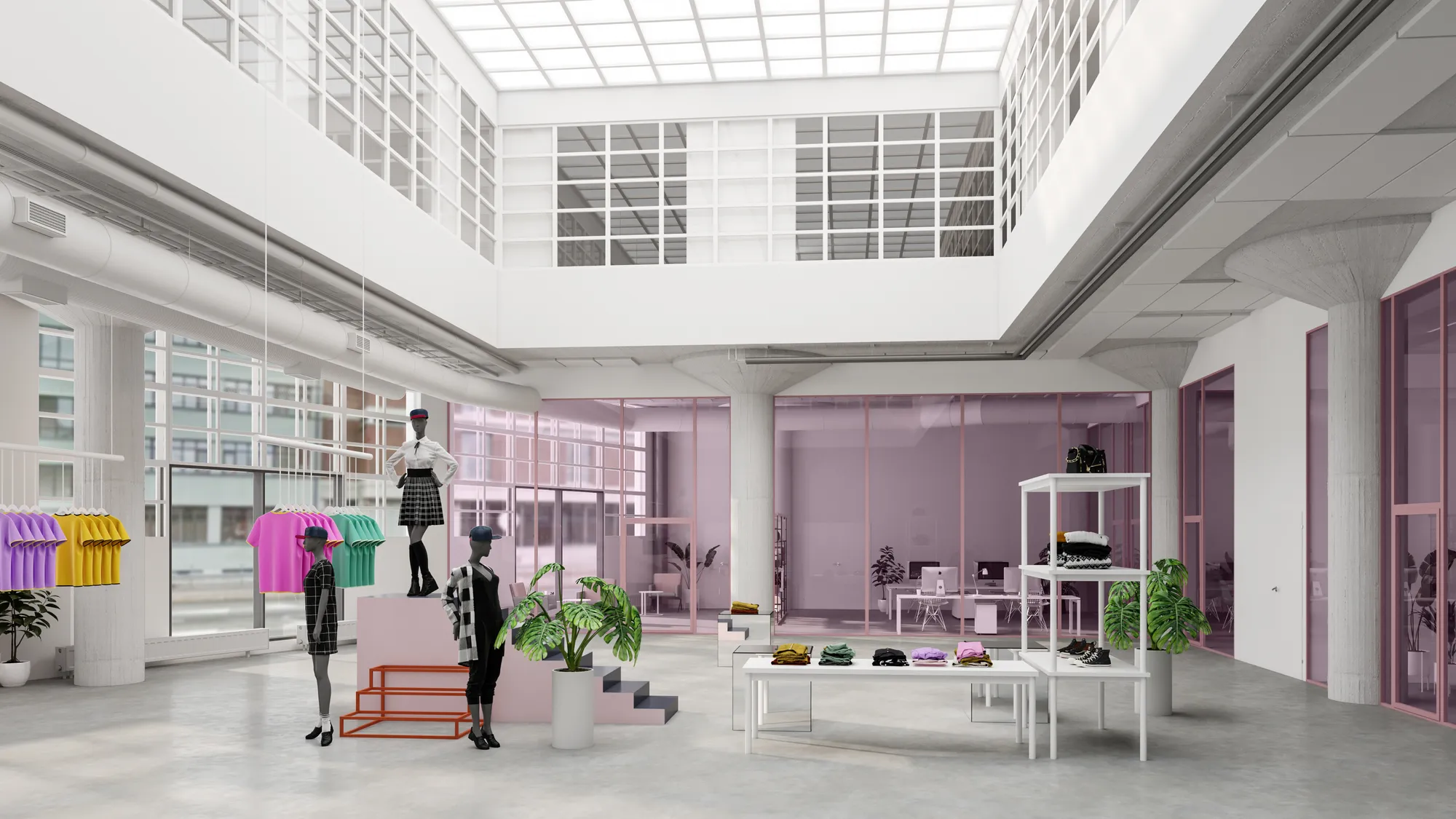
Retail and showroom walkthrough
From the shopfront to the till, with the fixtures, the signage and the light that will be there on opening day. Sized to run on a screen in the unit or to open a pitch to the landlord.
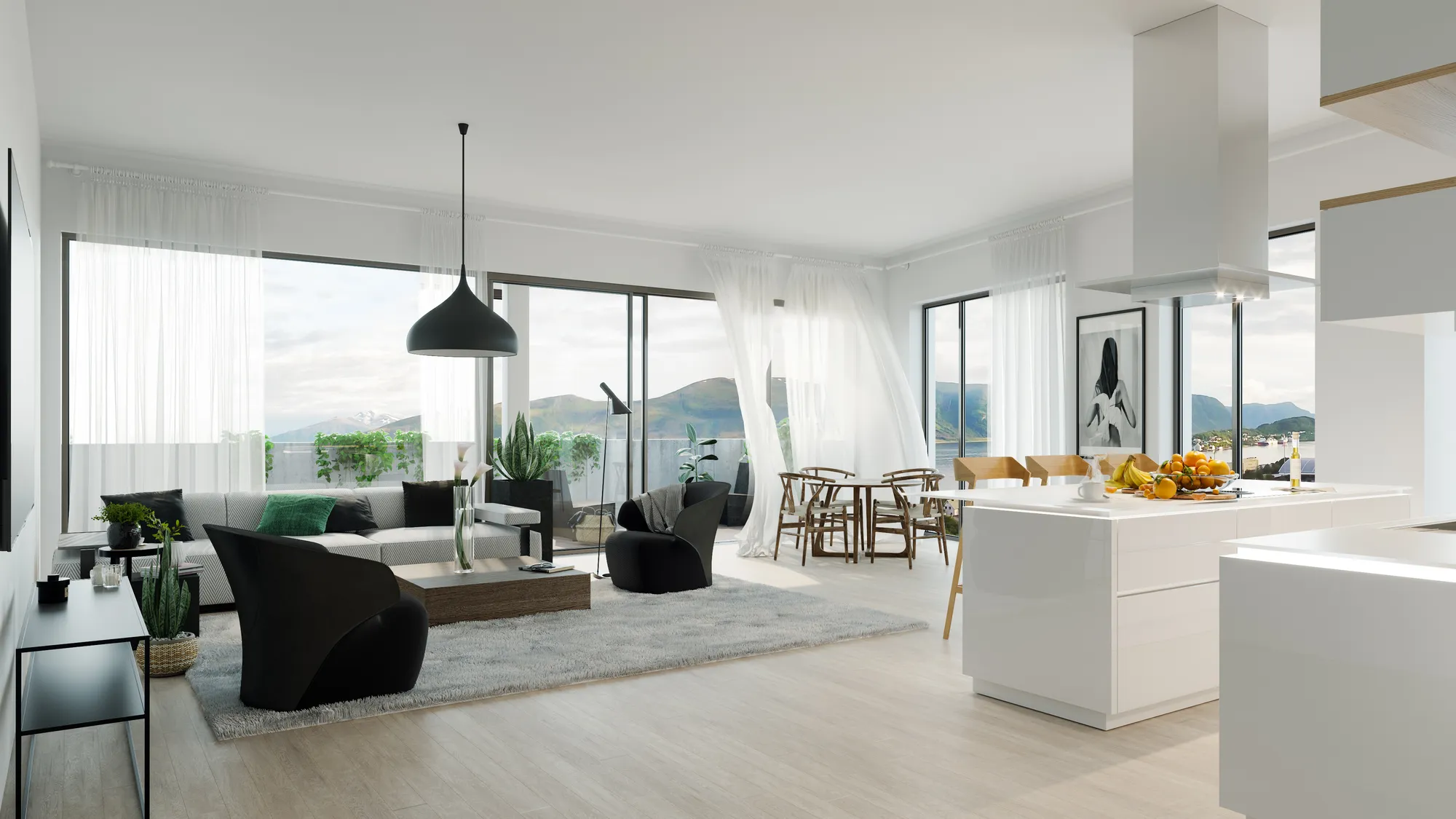
Residential interior walkthrough
The front door, the hall, the living room and the kitchen, walked in the order a buyer would see them on a viewing. Furnished and lit for the hour that sells the home, before the walls are built.
Flythroughs: the whole site in one move
A flythrough lifts the camera above the scheme and answers what a walkthrough cannot: where the boundary runs, how the access works and what the neighbours look like.
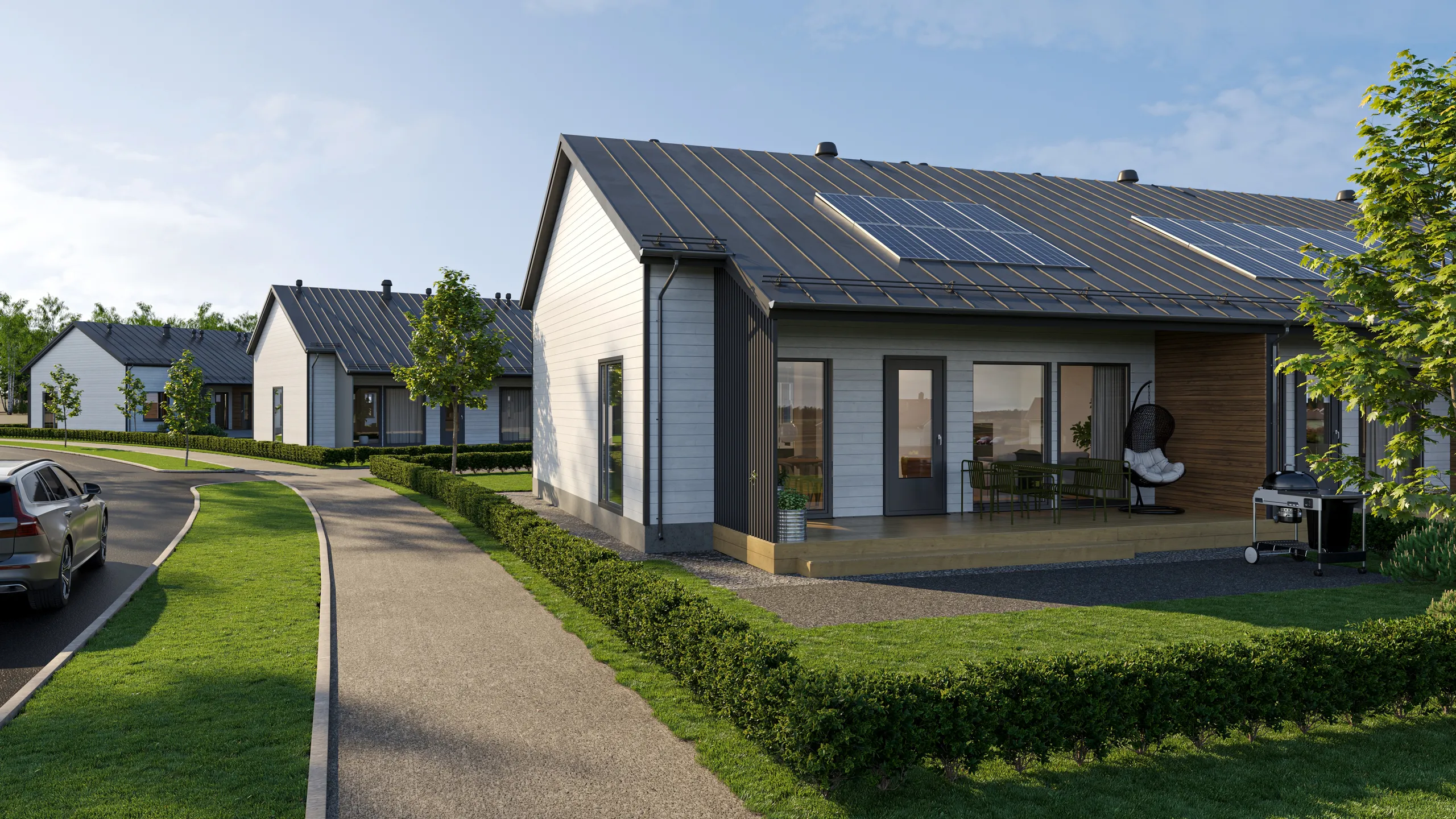
Housing schemes
The street, the shared path and the plots, first from a low pass along the road and then from higher up. It sells a phase of houses before the first one is built.
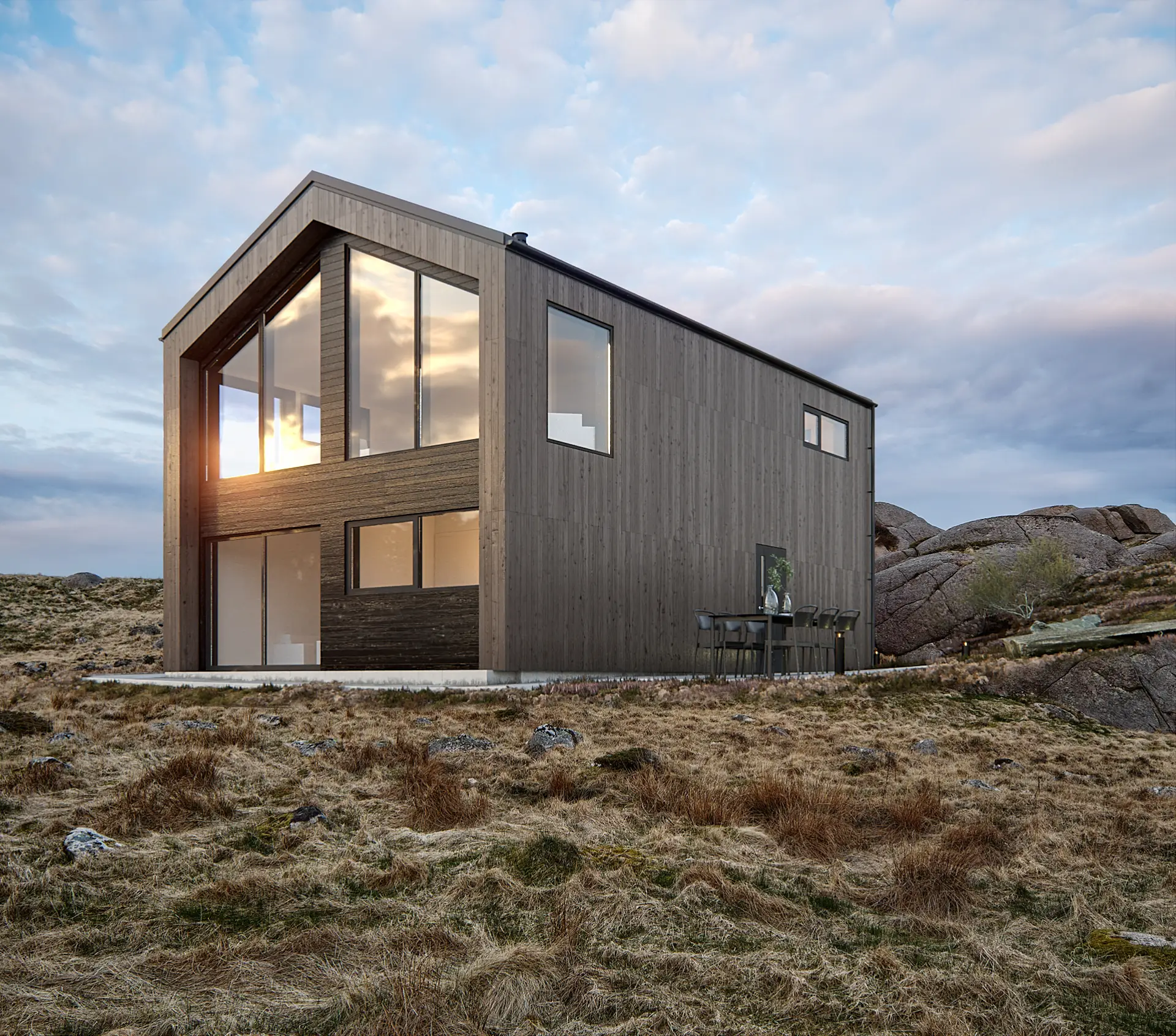
Landscape and rural sites
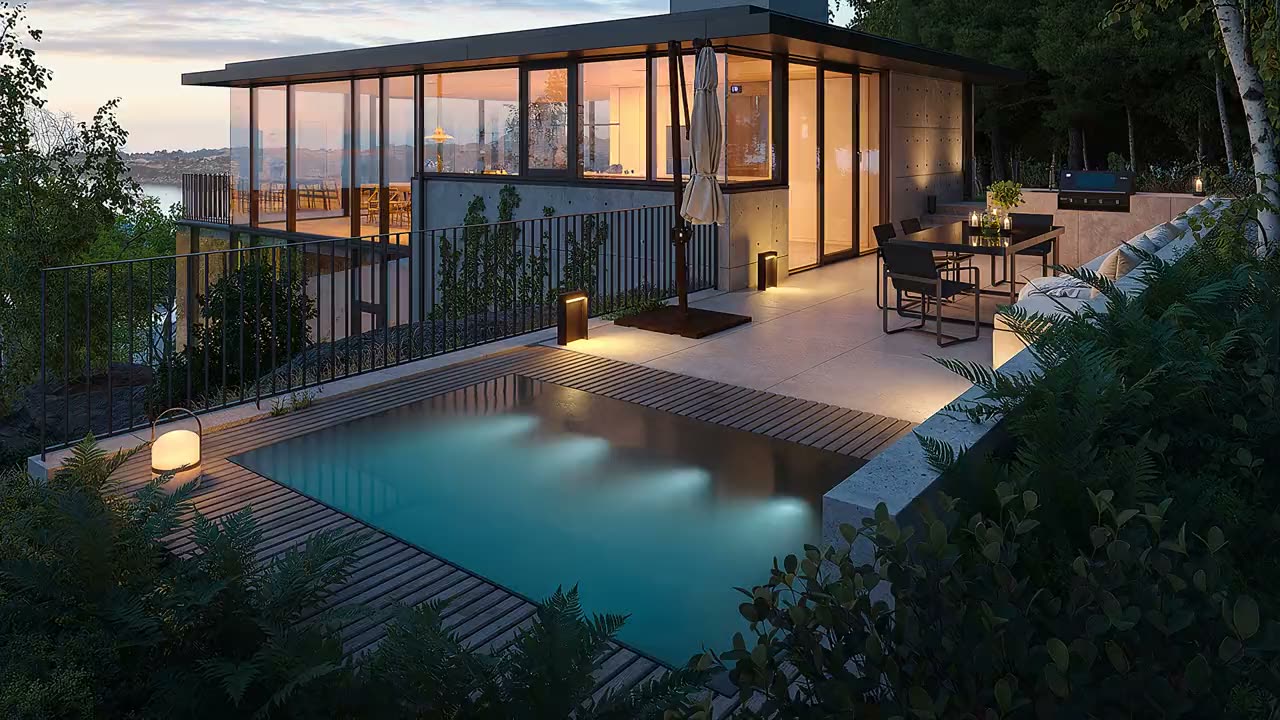
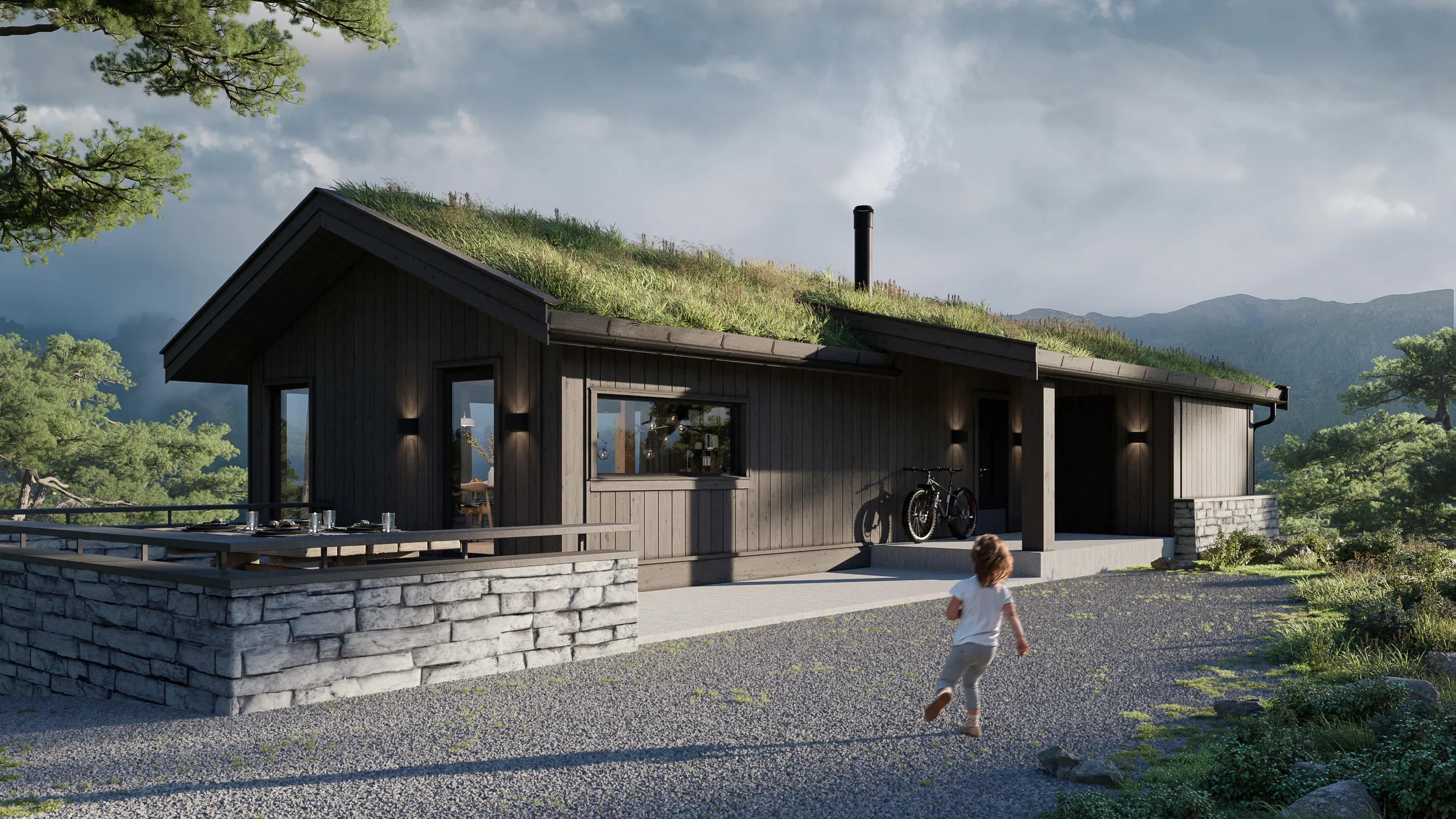
Where the site is most of the story: rock, heather, the slope to the water. The camera stays close to the ground, so the setting does the persuading.
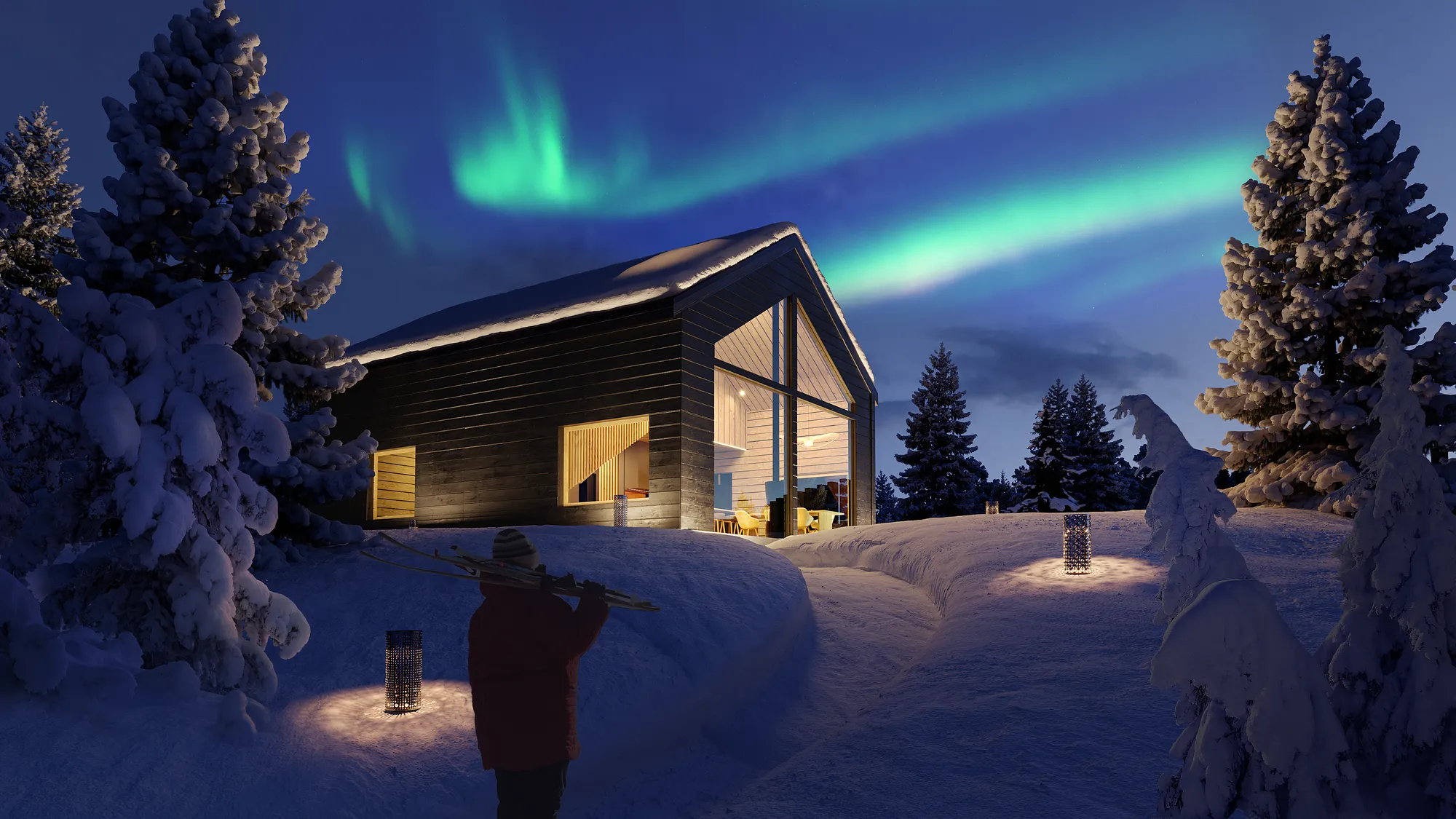
Resorts and clustered lodges
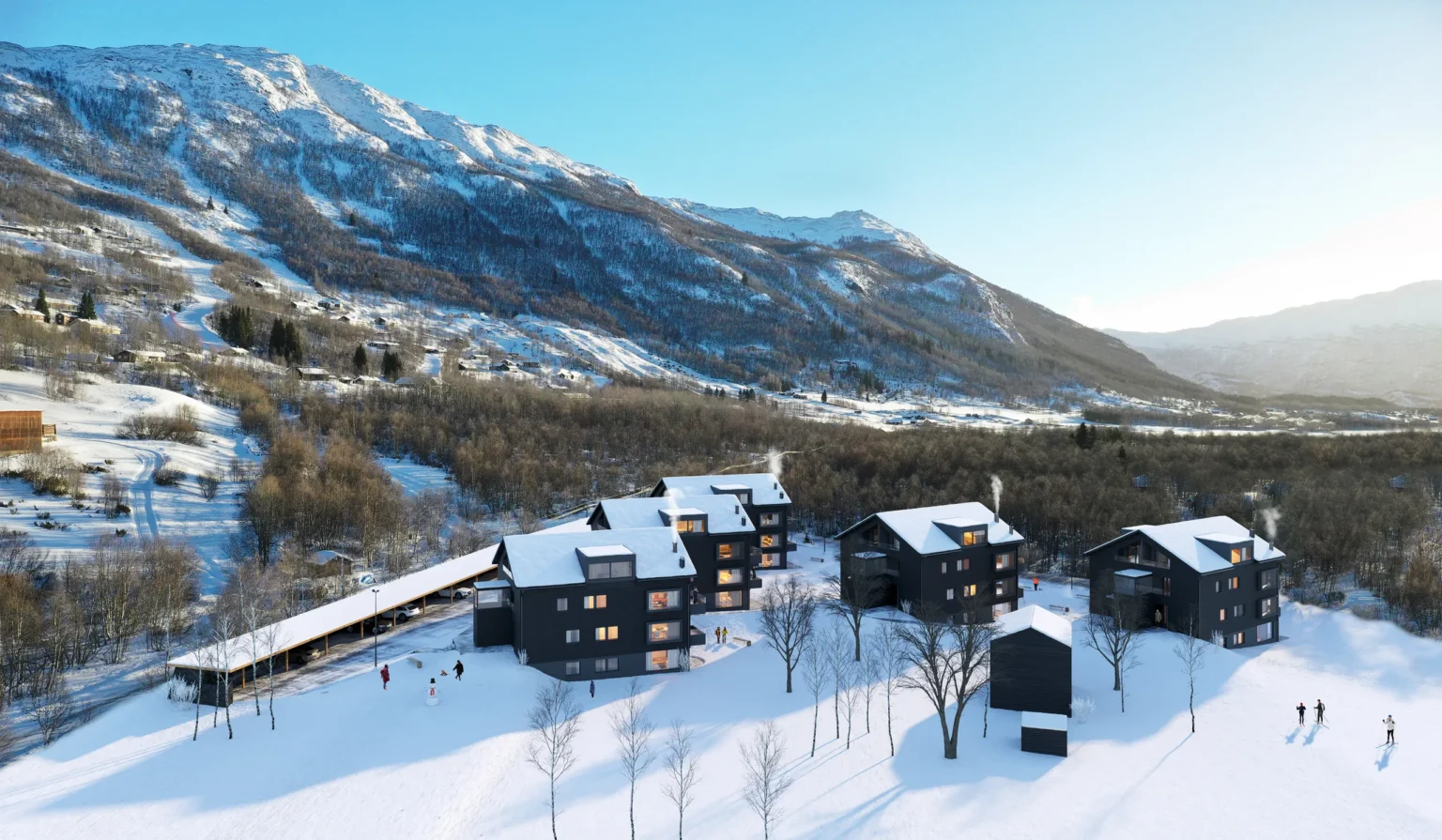
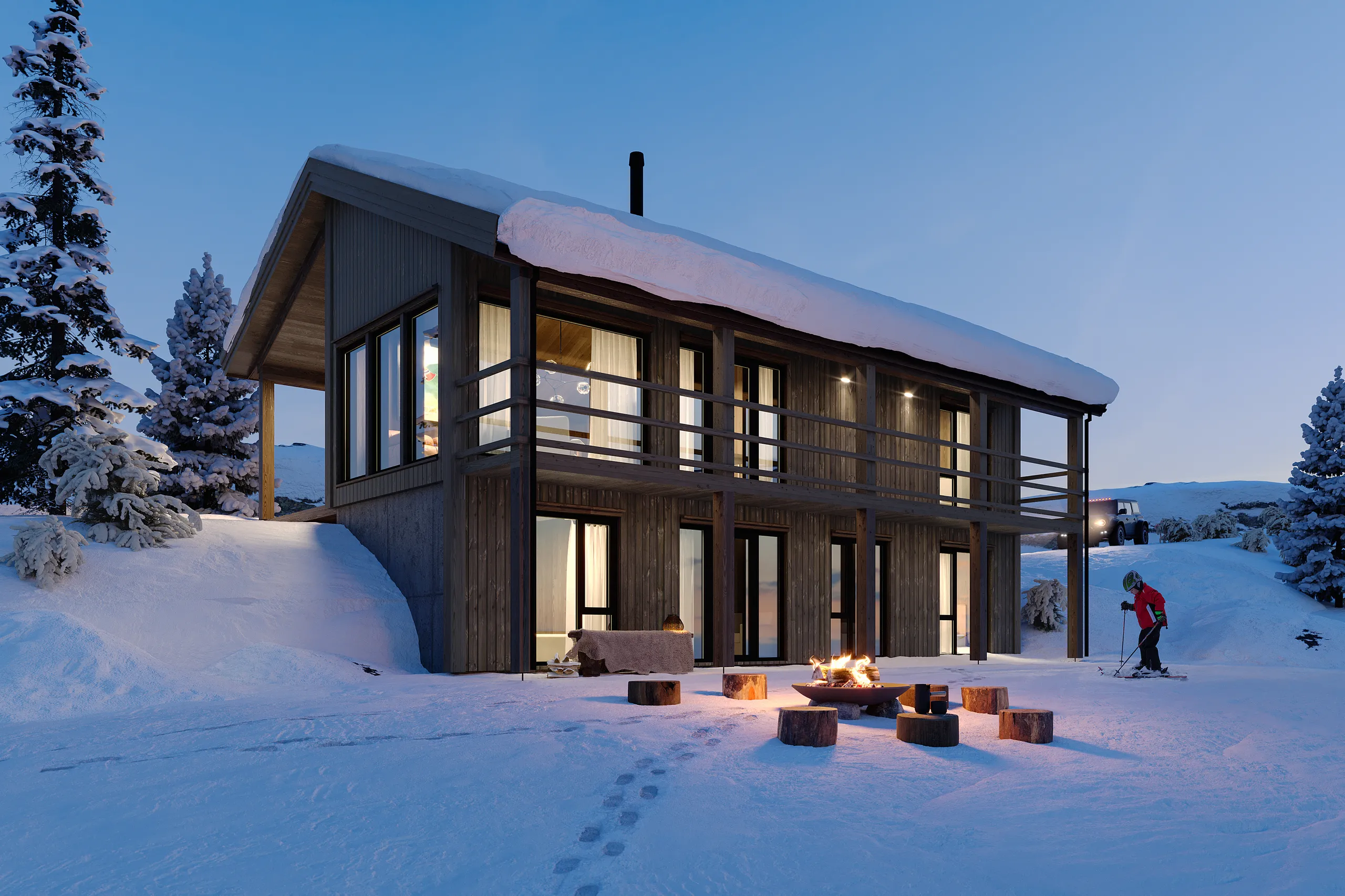
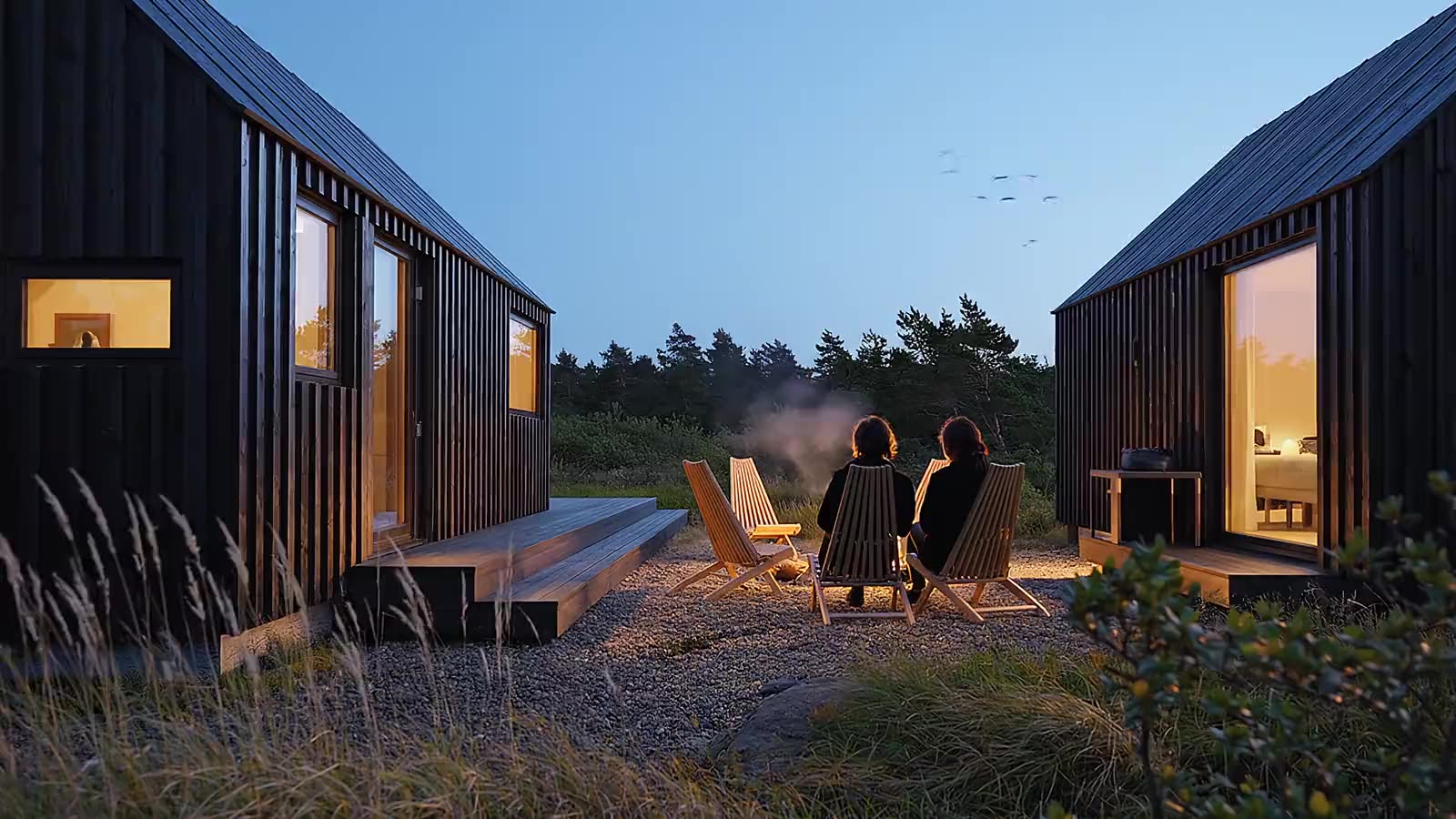
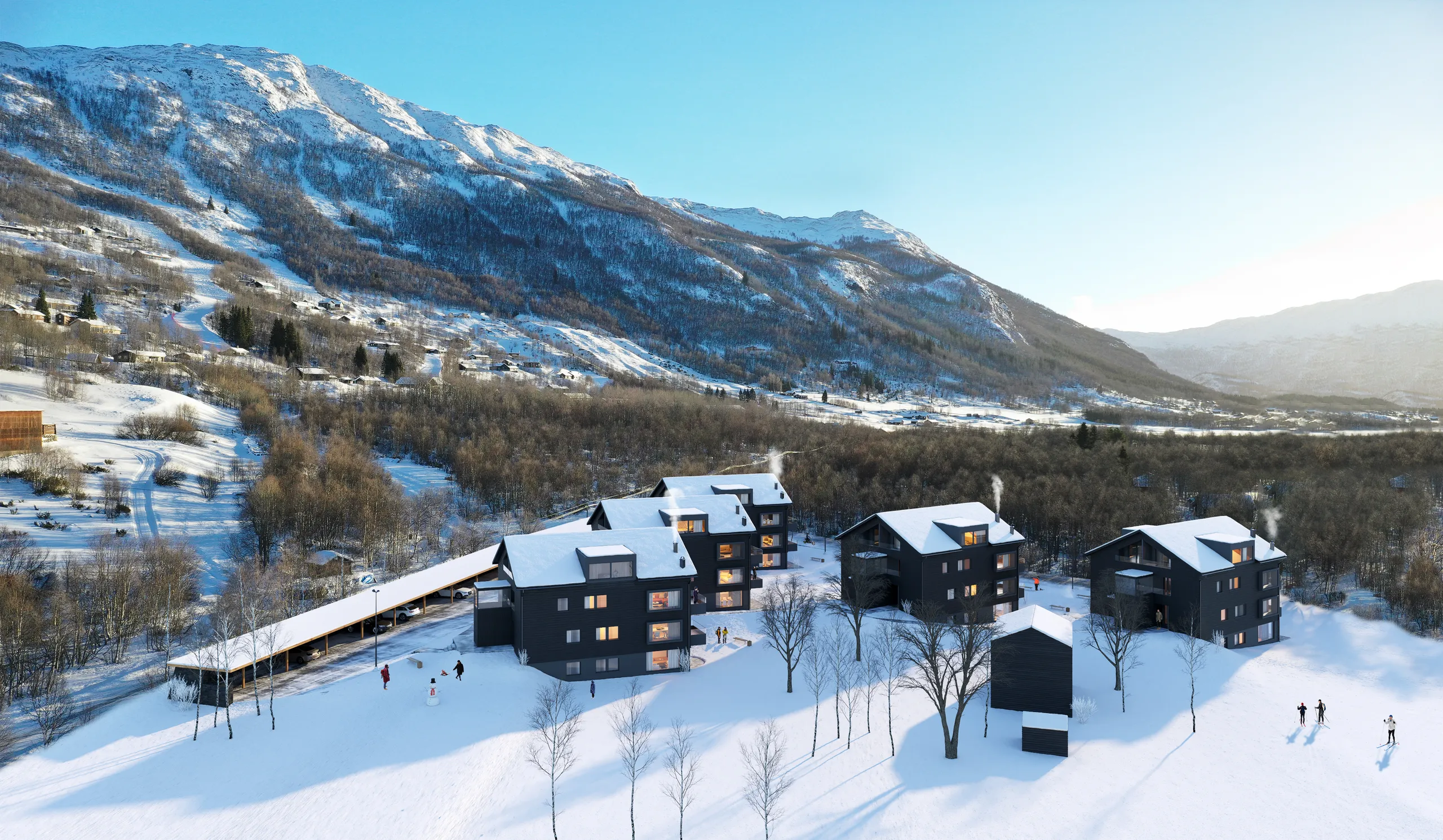
A group of lodges or a hotel and its grounds. The same scene can be lit for day, dusk or a snowy night, which matters when the guest is choosing a season.
Product animation: one object, moving
The same craft on a smaller subject. A product film turns, opens or comes apart so a buyer sees what a still cannot, built from your CAD file or from a model we make first.
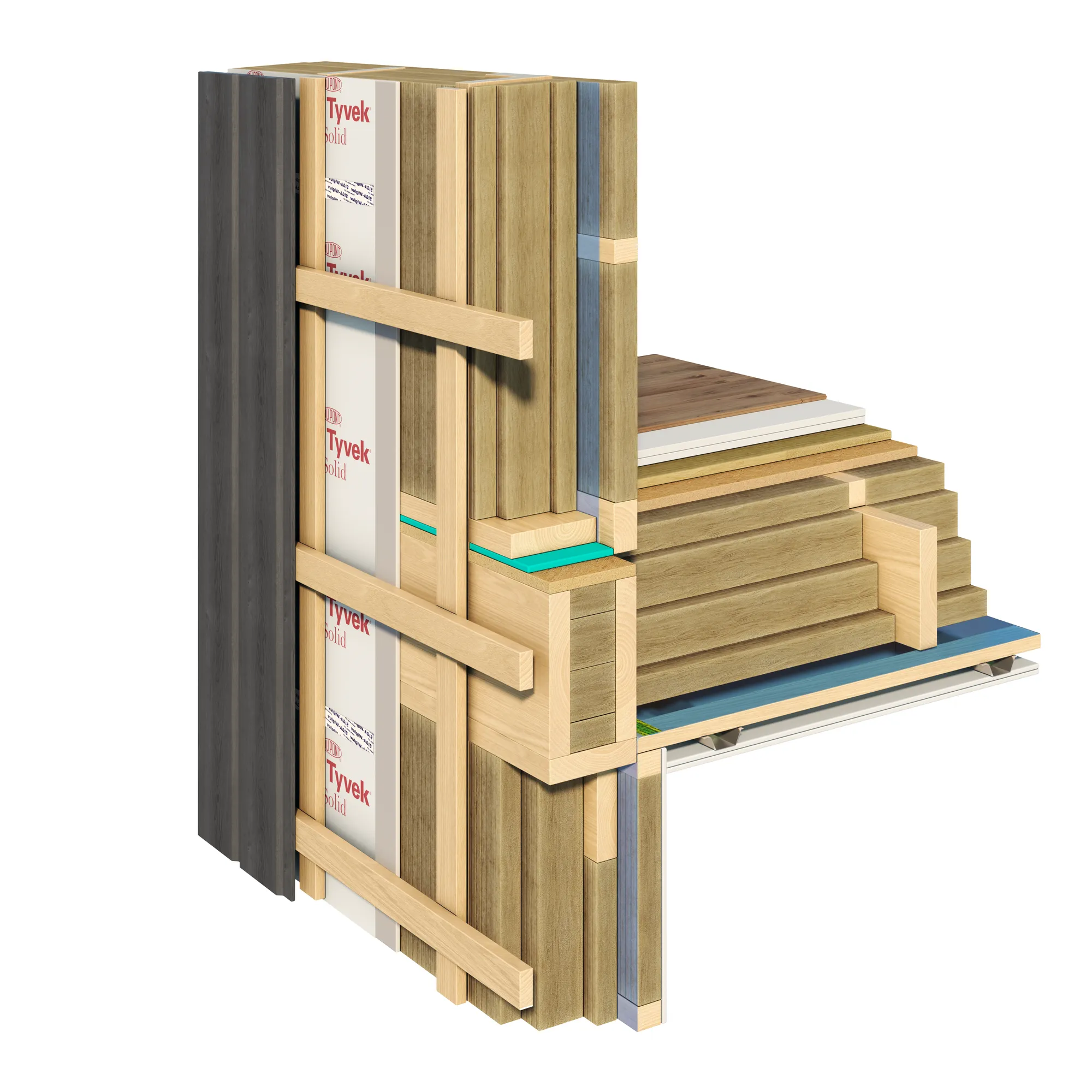
Cutaways and build-ups
A wall or floor junction shown layer by layer, with the camera travelling along the section. Suited to construction products and system suppliers explaining a build.
Turntables and reveals
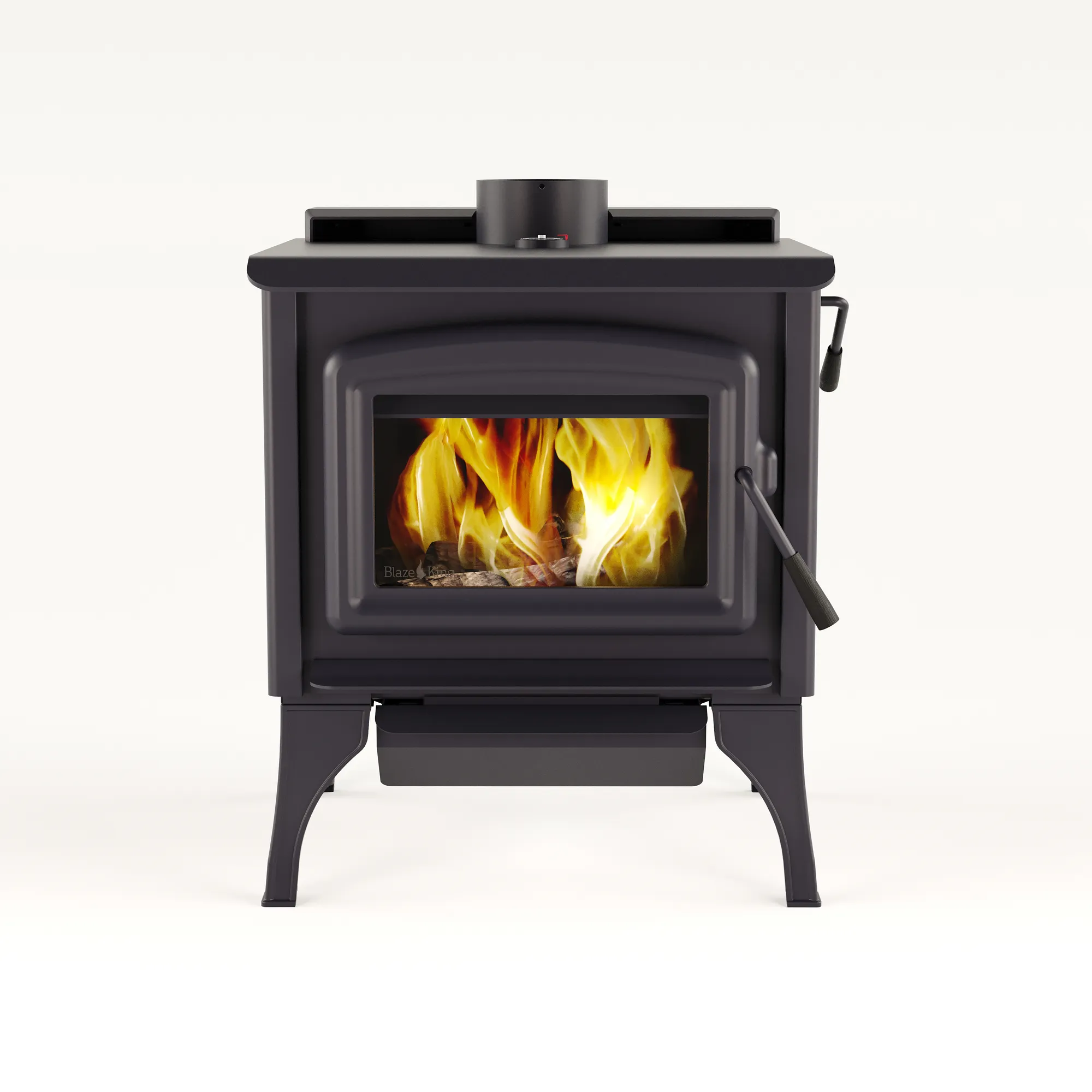
The object turning on its base while the light moves across it, or the door opening on the fire. Short, loops well and is easy to reuse on a product page.
Vehicle and compact interiors
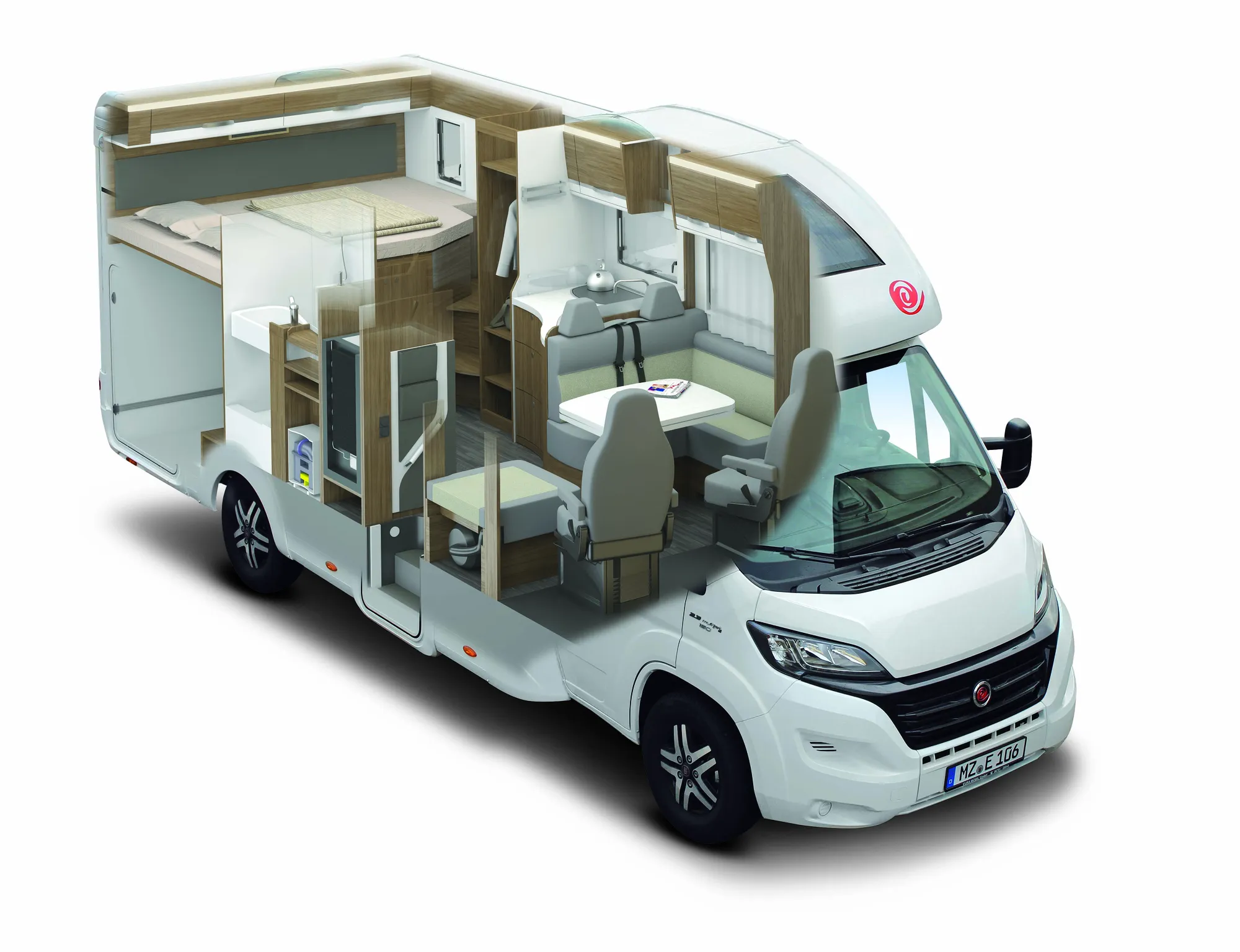
A cabin or a vehicle opened up so every space is visible at once, then the camera moves through it. It works for anything where the layout is the selling point.
A studio that shows you the route before it renders
Overnight turns across time zones
Notes you send at the end of your day are a revised rough cut on your desk at the start of the next. Nordic clients share our hours, and clients in North America get the overnight turn. We have worked this way since 2013.
NDA before the first file
An unpublished scheme, an entry to a competition or a site not yet exchanged should not turn up online. NDA is standard without being asked, and a film goes on our own channels or into our portfolio only when you say so.

The person moving the camera reads your notes
There is no account manager in the middle paraphrasing you. The note about the door that should stay closed reaches the artist planning the route, in your words.
Film two matches film one
A second film for a later phase should sit beside the first. Lens, sun position and pace carry over, so a launch campaign can be extended instead of restarted.
What makes a moving image hold up, and what gives it away
A camera that behaves like a person
A camera gliding at one fixed height and one steady speed reads as a drone over a model. People slow at doors, turn towards what they are approaching and hold at a threshold. We plan height, speed and pauses on the grey model, then hand you a rough cut to watch before a single frame is rendered.
Light that stays consistent
Light that shifts between shots tells the viewer the film is stitched from separate images. The sun position, the hour and the exposure are fixed for the whole route. When a film has to move from day to dusk it does so as a designed transition, not a jump.
People and traffic that move properly
A still can freeze a passer-by mid-stride. A film cannot. Figures walk at walking pace, cars move at the speed of the road, and neither is looped so plainly that the viewer spots the repeat. A few well-placed people beat a crowd on rails.
Length
Set at the storyboard and cut to where it plays
Format
MP4, with shorter cuts on request
Changes
Route and pacing on the rough cut, then refined to sign-off
Source files
CAD · PDF · SketchUp · Revit · ArchiCAD
From drawings to finished film
Fixed price first, then the storyboard and camera route on a grey model, then a rough cut, and only then the full render. Every change that is cheap to make is made before the render starts.
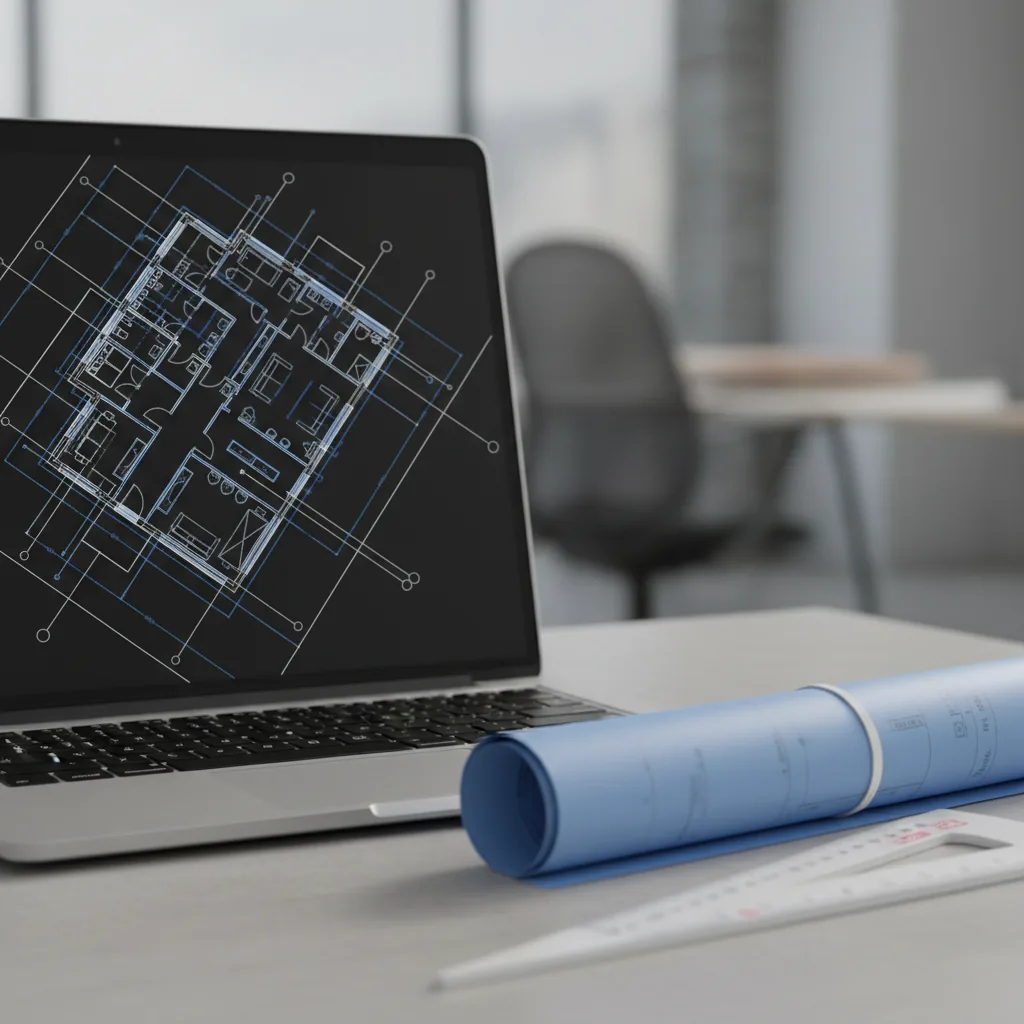
Brief
Brief, fixed quote and storyboard
Send the drawings, the scene from your stills if you have one, and where the film will be shown. We reply with a fixed price for the whole film and a delivery date, then sketch the route as a storyboard: what the camera sees, in what order, and for how long.
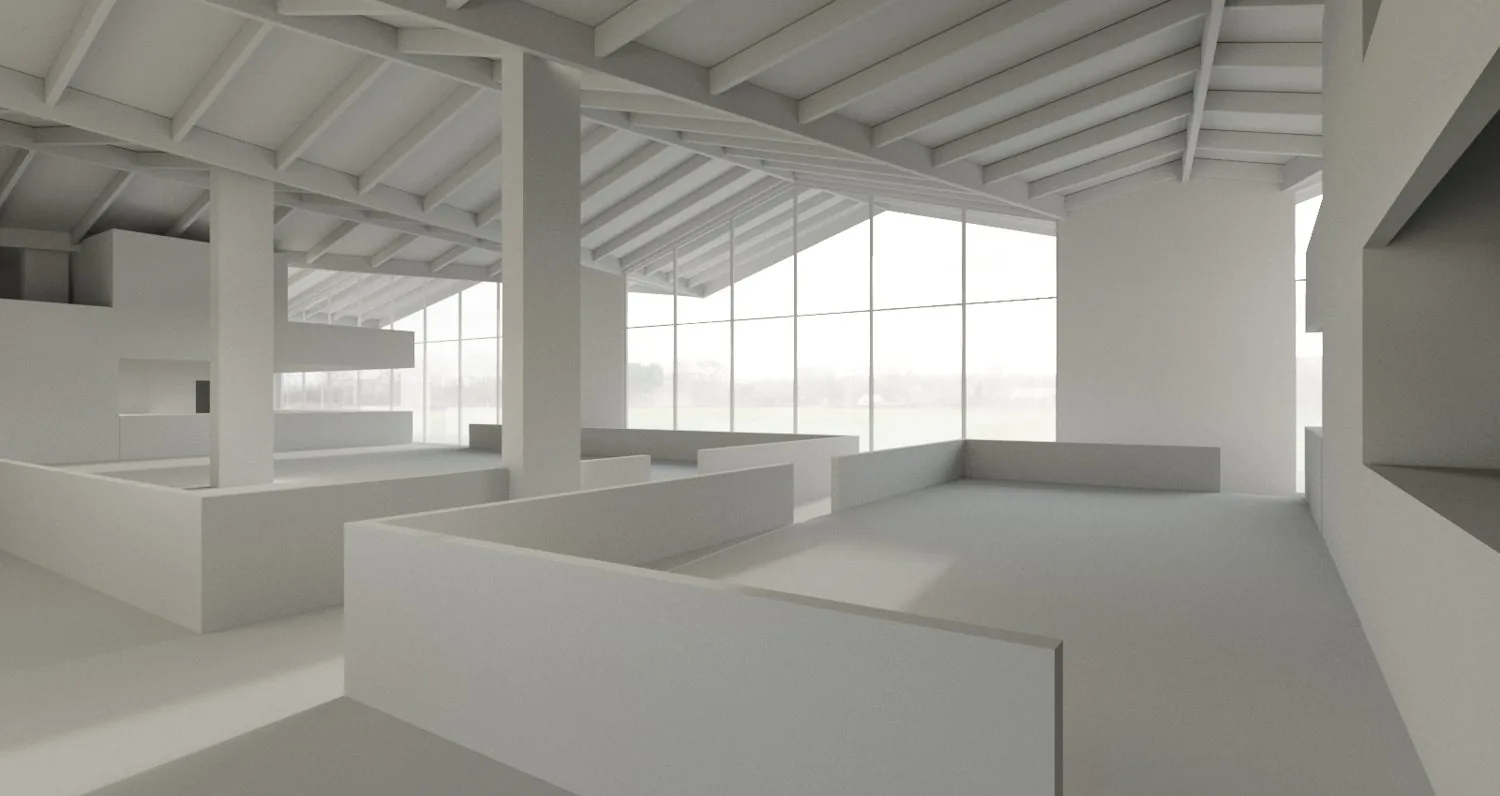
Camera route
Camera route and rough cut on the clay
The building goes up as grey geometry among the real surroundings and the camera route is drawn through it. You watch it as a rough cut, with no materials and no light. Route, height, speed and length change here, where a change costs minutes.
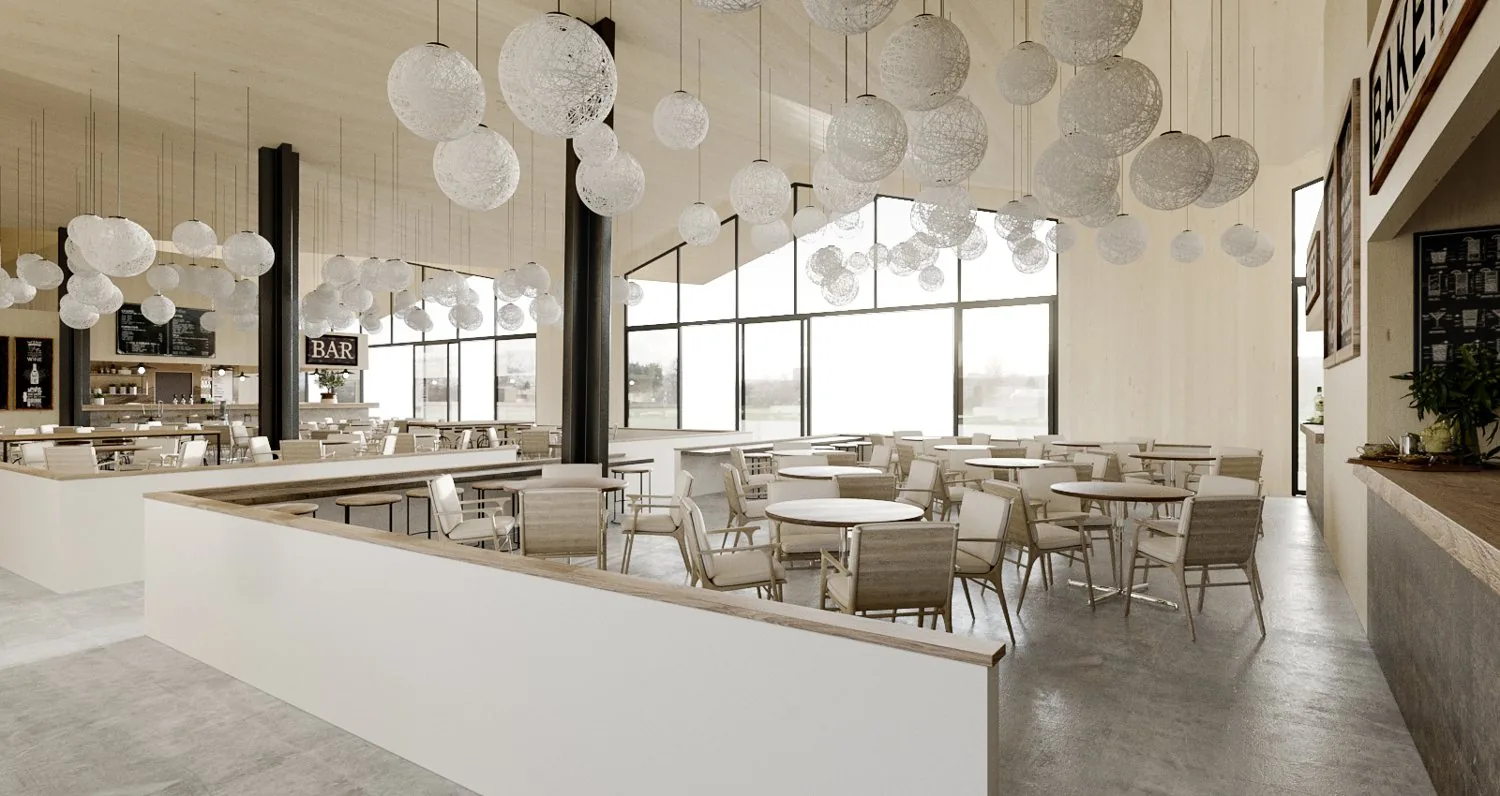
Test frames
The look, on a few frames
Materials, light and context go on, and a handful of frames from along the route are rendered at final quality for approval. The hour, the weather and the finishes are agreed on these, before the whole film is committed to rendering.
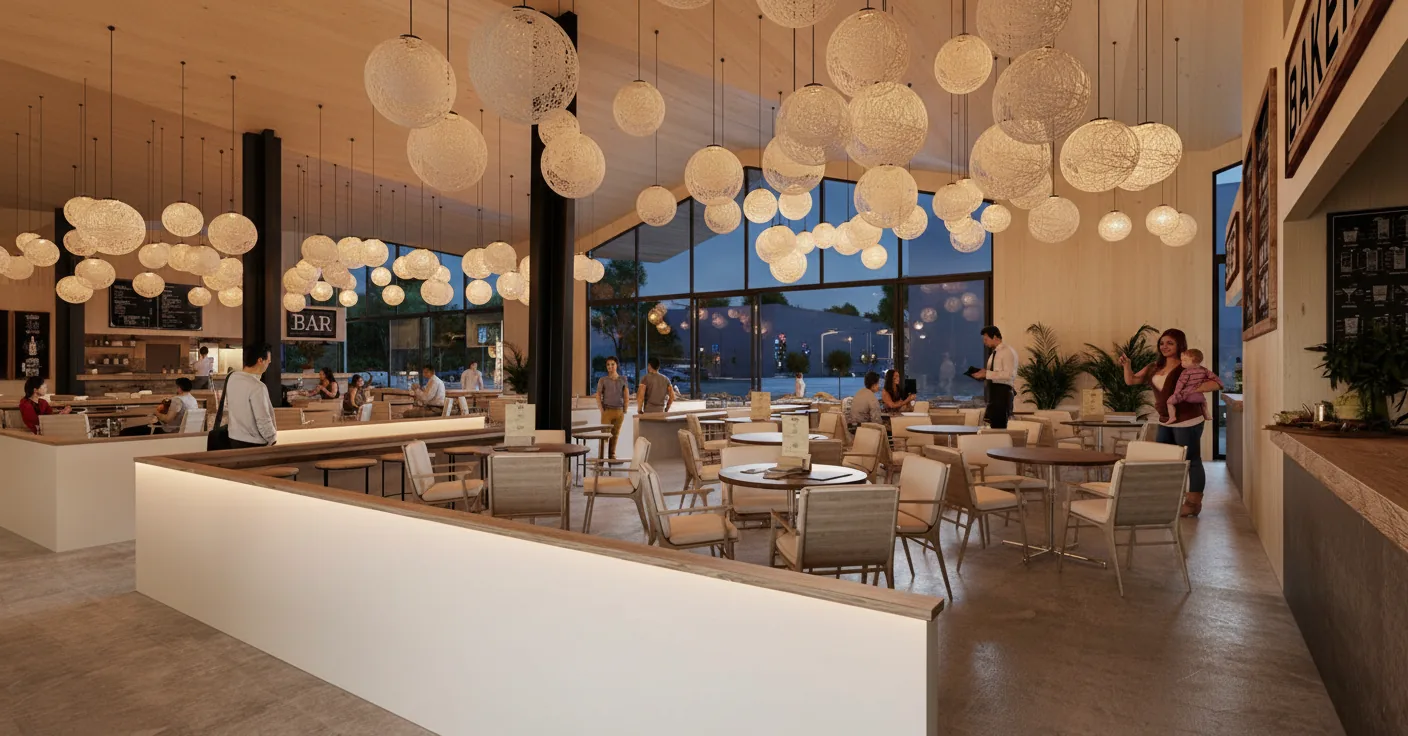
Delivery
Full render, edit and every cut
The film renders in full, is edited to length and is delivered as video. The aerial leg and any social cut-downs come off the same scene, and stills of the key views can be pulled from the same frames.
Route, pacing and length are signed off on the rough cut. The finished film is refined until you sign off, and delivered on the date we agree.
Sites seen from above
Aerial views from schemes across the Nordics, the Baltics, Europe, the UK and the US. A flythrough starts from a scene like these. Filter by market or by hour.
Nothing matches those filters yet.
What decides the cost of an architectural animation
Priced per film rather than by the second, because a short film through a scene that already exists and a long one through a scene built for it are different jobs. These are the seven things that move an animation quote.
-
Number of shots
Every extra shot is another move to plan and another set of frames to render. How many different places the camera goes matters more than how long the film runs.
-
Inside, outside or both
A route that stays outdoors needs the facade and the site. One that goes indoors needs every room on the route furnished, lit and finished.
-
How much of the scene exists
If we built your stills, the scene is there and the film is cut from it. If not, the film pays for building it.
-
People, traffic and planting in motion
Moving figures, vehicles and trees in wind add work to every second they are on screen. A quiet route with few of them costs less.
-
Hour, weather and transitions
A move from day to dusk, or a snowy version of the same route, is a second lighting pass over the whole film.
-
Resolution and formats
The resolution the screen it plays on needs, and how many cuts you need, agreed in the quote.
-
Edit, titles and stills
Titles, an end card, an edit to your own track, and stills pulled from the same frames.
Free guide
The Architectural Animation Buyer's Guide
What decides the quote for a film, and what to send so it comes back fast.
- Why a film cut from finished stills costs a fraction of one built from scratch
- What to send: drawings, a route sketch and where the film will play
- How to choose the camera height and the hour before the rough cut
- No sales call, one fixed price back in 30 minutes
Opens the upload form. Send what you have; no sales call.
Who asks for a film, and why
Nobody commissions a film for its own sake. It is bought because someone has to explain a building to people who cannot visit it.

Architecture studios
Competition entries and client presentations where the jury or the board watches a route instead of reading a board, cut from the same scene as the stills.
Read more
Property developers
Launch films for off-plan schemes, the loop on the sales-suite screen, and the flythrough an investor watches before reading the appraisal.
Read more
Agents and marketers
Listing films for homes that are not built yet: a walk from the gate to the terrace, cut to the length a portal will play.
Read more
Hotels and resorts
A guest chooses a place by imagining the stay: the arrival, the lobby, the room and the view. A film puts them in that order, in the season you want to sell.
Read moreHow we plug into your workflow
Send whatever the project has produced so far, from a DWG set to a photographed sketch, plus one line on where the film will play. We work out the rest.
What we accept
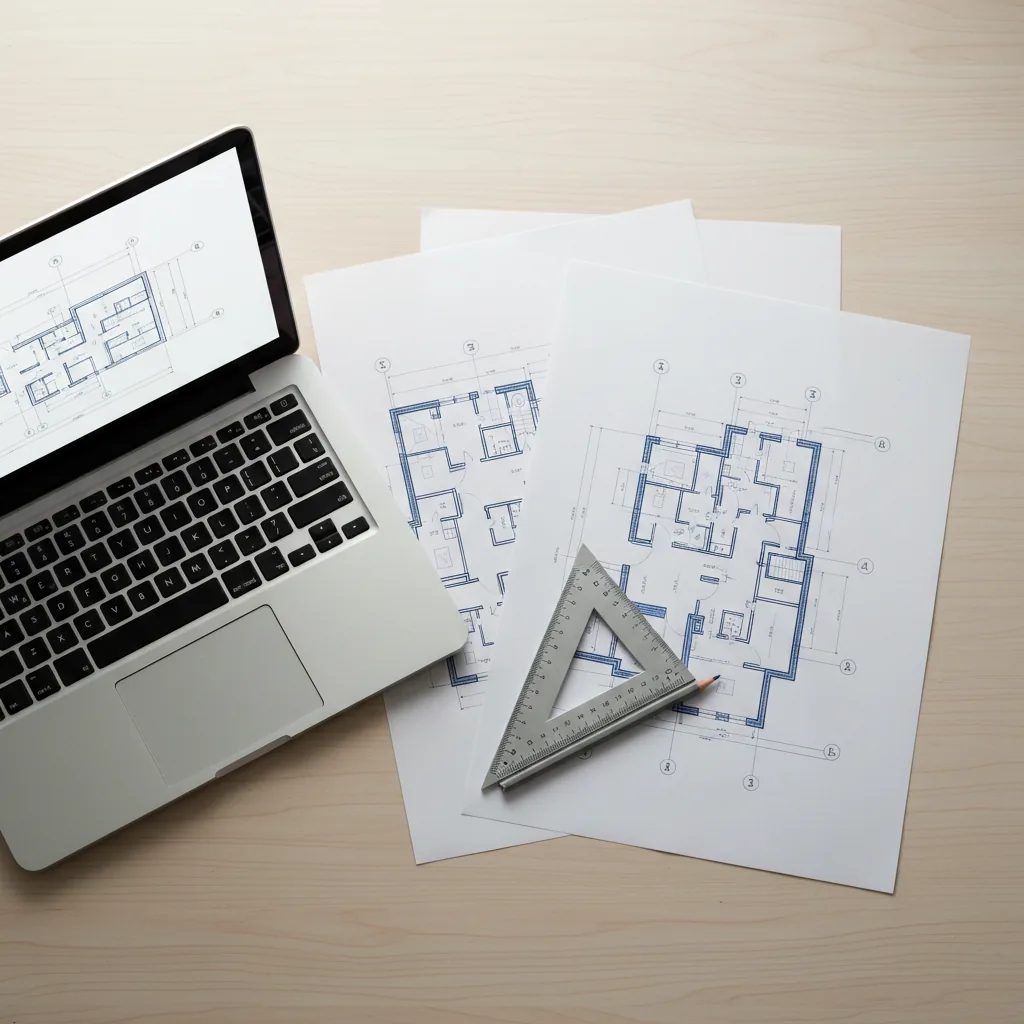
DrawingsPlans, elevations and sections as DWG or PDF, with a site plan if the film leaves the building
3D and BIMRevit, ArchiCAD, SketchUp or 3ds Max models used as they come, so nothing is re-drawn
The routeA sketch of where the camera should go, or nothing: the storyboard proposes one and you change it
Where it will playA sales-suite screen, a portal listing, a planning hearing or a social feed. Length and shape follow from this
No perfect briefDrawings and one sentence about the audience are enough to quote; the rest can follow once the rough cut is agreed
What you receive
The finished filmThe finished film as an MP4, cut to the length the storyboard set
Every cutShorter cuts from the same render, agreed when the storyboard is
Preview and changesThe rough cut on the clay first, then the finished film refined until you sign off
StillsFrames of the key views pulled from the same scene
Full ownershipOf the delivered film, for marketing, planning, portals and your own portfolio
Need stills for the same scheme, or a model to reuse? See interior rendering, exterior rendering and 3D modeling.
One studio in Tallinn, clients worldwide
We work with developers, architects and agencies across Europe, North America, Australia and the Middle East. Each market we work in has its own page: Estonia, Finland, Norway, Sweden, London, New York, Los Angeles, Chicago, Houston, Miami, Toronto, Sydney and Dubai.
Architectural animation FAQs
What clients ask before commissioning a first film. Anything not covered here can go into the quote form, and we answer it in the same reply.
Ask us directlyWhat are 3D architectural animation services?
A film made from your drawings before the building exists. We build the scene, put a camera in it and render a route through the building, across the site or around a product. Every element in frame is taken from a drawing or a specification, so the film can be checked against the documents it came from.
What is the difference between a 3D walkthrough and a flythrough?
Height and question. A walkthrough moves at eye height, at walking pace, and answers what it feels like to arrive at and use the building. A flythrough lifts the camera above the site and answers where the building sits, how it is reached and what surrounds it. Most schemes want both, and they come off the same scene.
How much does an architectural animation cost?
There is no list price and no rate by the second, because a film cut from a scene we already built for the stills and a film that needs the scene built first are very different jobs. What moves the quote is the number of shots, whether the route goes indoors, how much of the scene exists, how many people and vehicles move through it, and the formats. Quoted per film, fixed, within 30 minutes of receiving your drawings. The full breakdown is on the architectural animation cost page.
How long does an animation take?
It depends on the length of the film and on how much of the scene already exists. The rough cut on the grey model comes first, and that is where the route and the pacing are settled. The quote gives a delivery date for the finished film, and we keep to it.
Can you animate from renders you have already made, or from drawings alone?
Either. If we made the stills, the scene exists and the film is cut from it. If someone else did, or nothing has been rendered yet, we build the scene from your drawings. A DWG set with elevations is ideal. A PDF, a Revit, ArchiCAD or SketchUp model, or a photographed sketch all work, and we say at the quote stage what we had to assume.
Can AI make my architectural animation?
AI video tools are good at a loose mood. They are poor at holding a building still: window counts, balcony positions and the roofline drift from one frame to the next, because nothing in the model is a real object. Our films put a real camera in a real scene modelled to your drawings, so the building is the same in every frame and can be checked against the elevations. For a mood reel that is more than you need. For a planning film or a sales suite it is the point.
Can the walkthrough be interactive?
Ours are pre-rendered video: a fixed route at full quality that plays anywhere a video plays. If you want viewers to look around on their own, 360 virtual tours do that from fixed points. Many schemes use both, a film to lead with and a tour to explore.
What is a 3D architectural walkthrough?
A film that moves through a building at eye height and walking pace, made from the architect's drawings before the building exists. It follows one route, for example from the street through the entrance to the living room and the view, and it shows how the spaces connect in a way a still image cannot.
Do you do product animation as well?
Yes. Our 3D animation services cover a single object as well as a building: a turntable, a reveal or a cutaway, built from your CAD file or from a model we make first. The craft is the same as for a building at a smaller scale, and a 3D model made for one film carries over to stills and to later films.
What do I receive?
The finished film as an MP4, and the shorter cuts you ask for from the same render. Because the film is cut from a scene that exists, stills of the key views can be pulled from it too. You own the delivered files for marketing, planning, portals and your own portfolio.
Can you work on a project in my country?
Yes. We are a 3D animation studio in Estonia and have delivered to 17 countries, from our Nordic neighbours to the UK, the US, Canada and Australia. Nobody has to visit the site: the drawings give us the building, and a survey, site photographs or a map view give us the surroundings.
Send the drawings, get a fixed quote in 30 minutes
Drawings in any format, and a line on where the film will be shown, are enough to price it. There is no budget field to fill in, and the number arrives before any phone call.
We take a limited number of projects each month.