3D Rendering Cost: Prices, Pricing Models and What Drives Them
3D rendering is priced per project, not per image. See the pricing options, what drives the price and how a fixed quote is calculated.
In this article
- Projects start at €1,000, and a single-building launch set typically costs €3,000 to €6,000.
- Rendering is priced per project as one fixed price, with hourly billing only for open-ended work.
- Extra views of the same scene cost much less than the first one.
- The scene, the files, the deadline and the resolution all move the price.
At 3Dstudio.co, 3D rendering is priced per project. Projects start at €1,000, a single-building launch set typically costs €3,000 to €6,000, and multi-building developer packages typically run €5,000 to €15,000.
There is no per-image price list, because the first view of a scene pays for building it and each further view costs much less. Your exact price is one fixed number, set in a quote within 30 minutes of receiving your files, together with a delivery date. See the pricing page for the options, or read on for what moves the price. For developer launch sets, see rendering for real estate developers.
How 3D rendering is priced: project, package, retainer or hourly
Rendering providers charge in different ways: per image, by the hour or per second of finished animation. At 3Dstudio.co there are 4 options, and each one fits a different kind of work.
| Pricing option | What you get | When it fits |
|---|---|---|
| Single image | One view of one building, room or product. One fixed price agreed before work starts, 2 revision rounds, 4K, and more views can be added later from the same scene. | A first project, or one main view for a listing, a pitch or a planning submission. |
| Launch package | The full marketing set for a development, all made from one 3D model: exteriors, interiors, 3D floor plans and an aerial view, plus animation or a 360 virtual tour if you need them. One delivery schedule, and it costs less per image than ordering the same images separately. | A development that is going on sale and needs a consistent set of visuals. |
| Monthly retainer | A fixed number of images each month, priority slots in our schedule, the same artist on every project and your 3D scenes kept ready for the next job. | Developers, agencies, architecture practices and product brands with regular work. It is usually offered after a first project together. |
| Hourly, at €85 per hour | Time billed with a time report and an estimate before each task. | Open-ended work where the scope changes as you go, such as 3D modeling or design changes during development. |
Rendering itself is not billed by the hour. A defined project gets one fixed price, so the price does not grow if a stage takes longer than planned.
What affects the cost of 3D rendering
Every quote is built from the same drivers. Change any one of them and the number moves.
| Driver | Raises the price when | Lowers the price when |
|---|---|---|
| Number of views | You need a large set, and each view shows a different scene. | You need one main view, or several views of the same scene. The first view carries the cost of building it. |
| Scene size and complexity | The scene is a mixed-use block with landscaping, vehicles and people. | The scene is a studio apartment or a single plain building. |
| Type of rendering | The view is an exterior, which adds the site and landscaping, or an aerial view, which adds the surroundings. | The view is an interior, which is usually the smallest job. |
| File readiness | We start from 2D drawings or sketches that first have to be interpreted and modeled. | We start from a coordinated 3D model with clear material specifications. See how a 3D architectural model is built from drawings. |
| Animation length | The film is long. Animation is priced by length, so 30 seconds of film is a bigger job than a set of stills from the same scene. | You order stills instead of a film. |
| Deadline | You need a rush delivery, which means moving other work to fit yours. | A standard schedule fits your plan. |
| Resolution and format | You need large-format delivery at 8K to 12K for a hero wall or a billboard. | Standard 4K is enough for your use. |
| Art direction and styling | Styling is matched to a brand, with a chosen time of day. | Standard furniture and a default sky are acceptable. |
| Changes after the 2 included revision rounds | Large design changes come after the camera is agreed. They add time, and we agree their cost before we start them. | Decisions are made at the clay model and first look stages. |
| Existing scene | The project starts from nothing. | It is a second phase, or the next project of a returning client, and the scene already partly exists. |
A single view usually takes about a week, and a medium-to-large set takes 2 to 3 weeks. If your date is tighter than that, tell us when you send the files. We say what fits inside it, for example fewer views or a simpler scene.
How the type of rendering changes the price
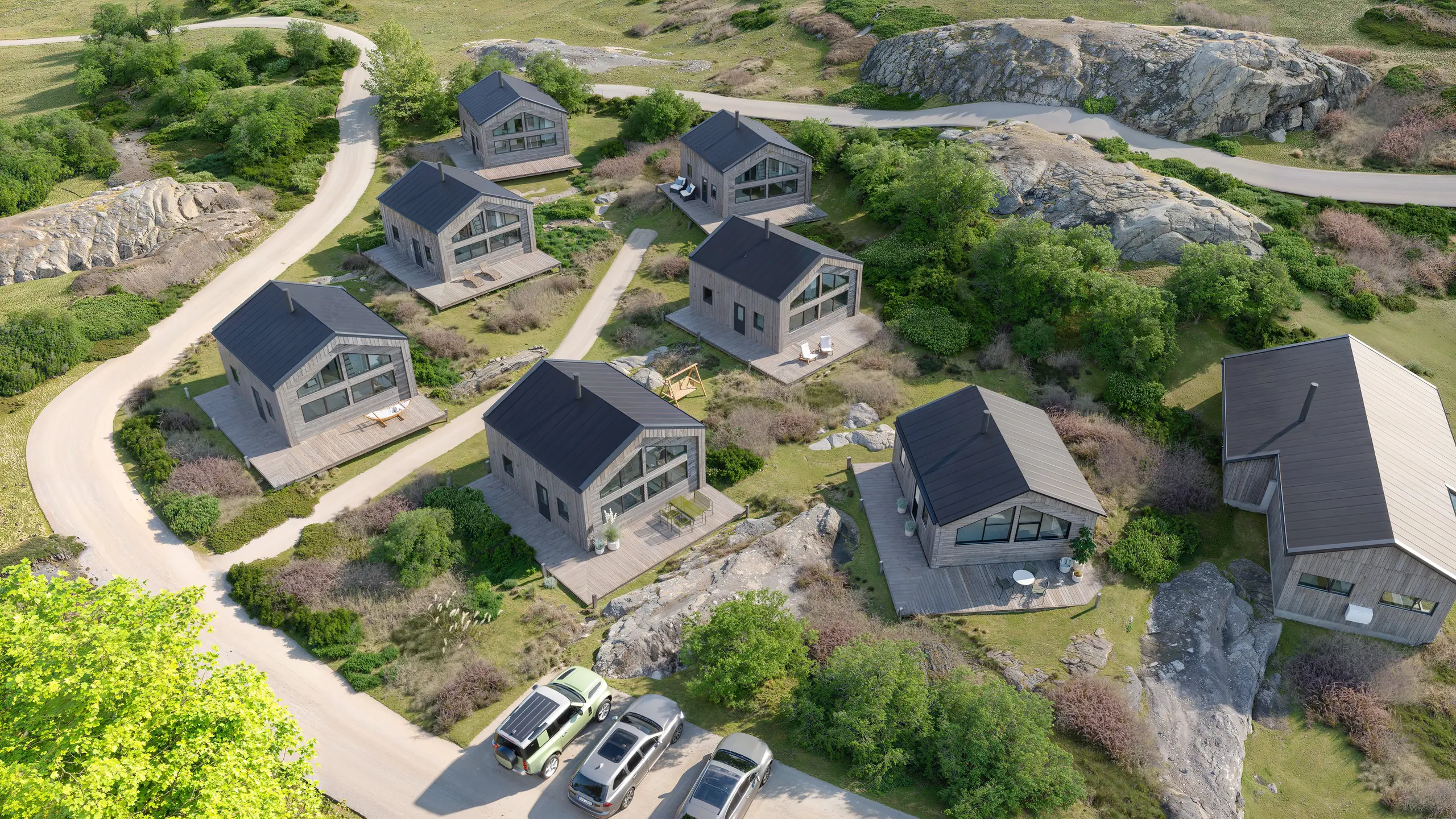
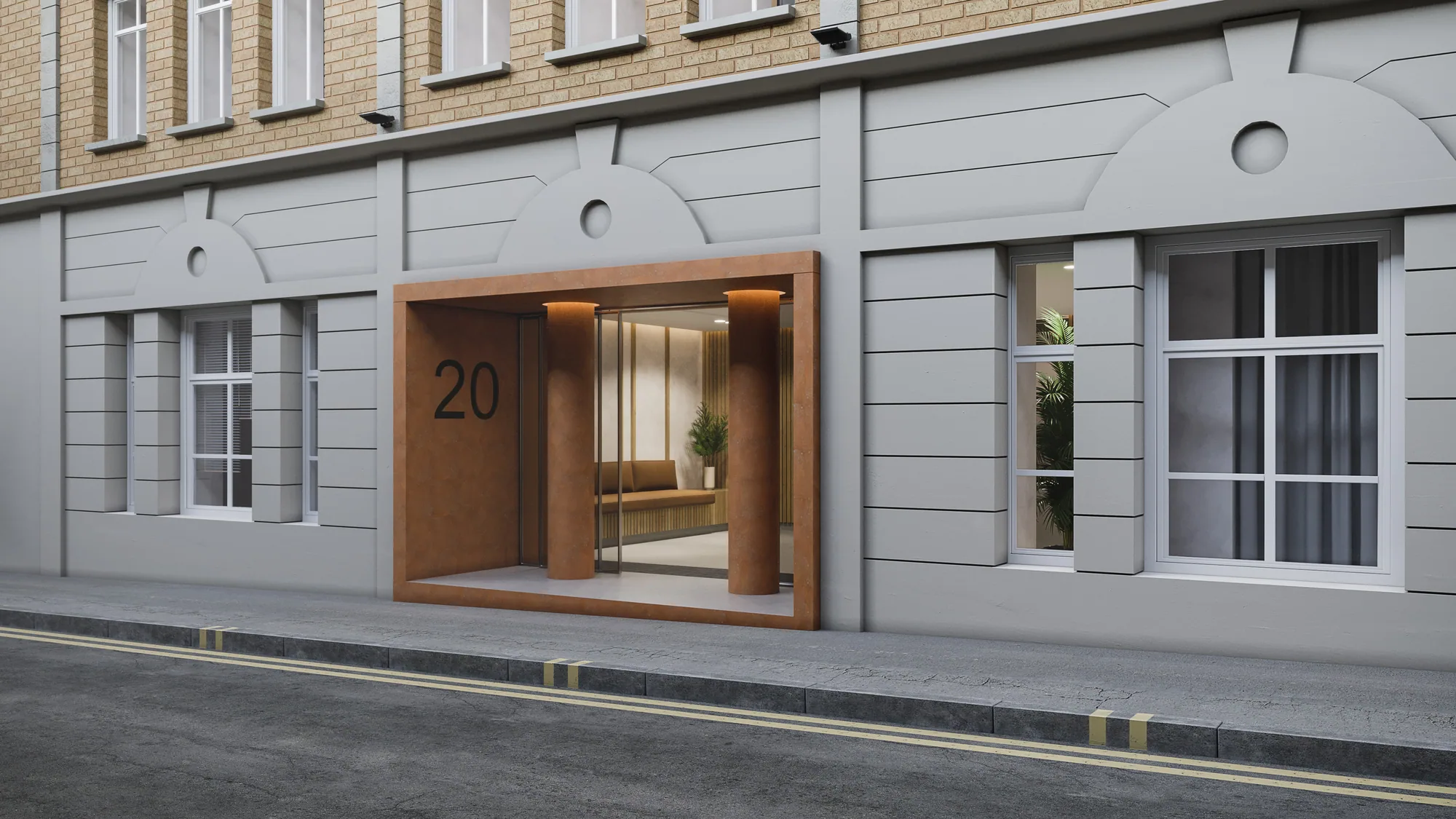
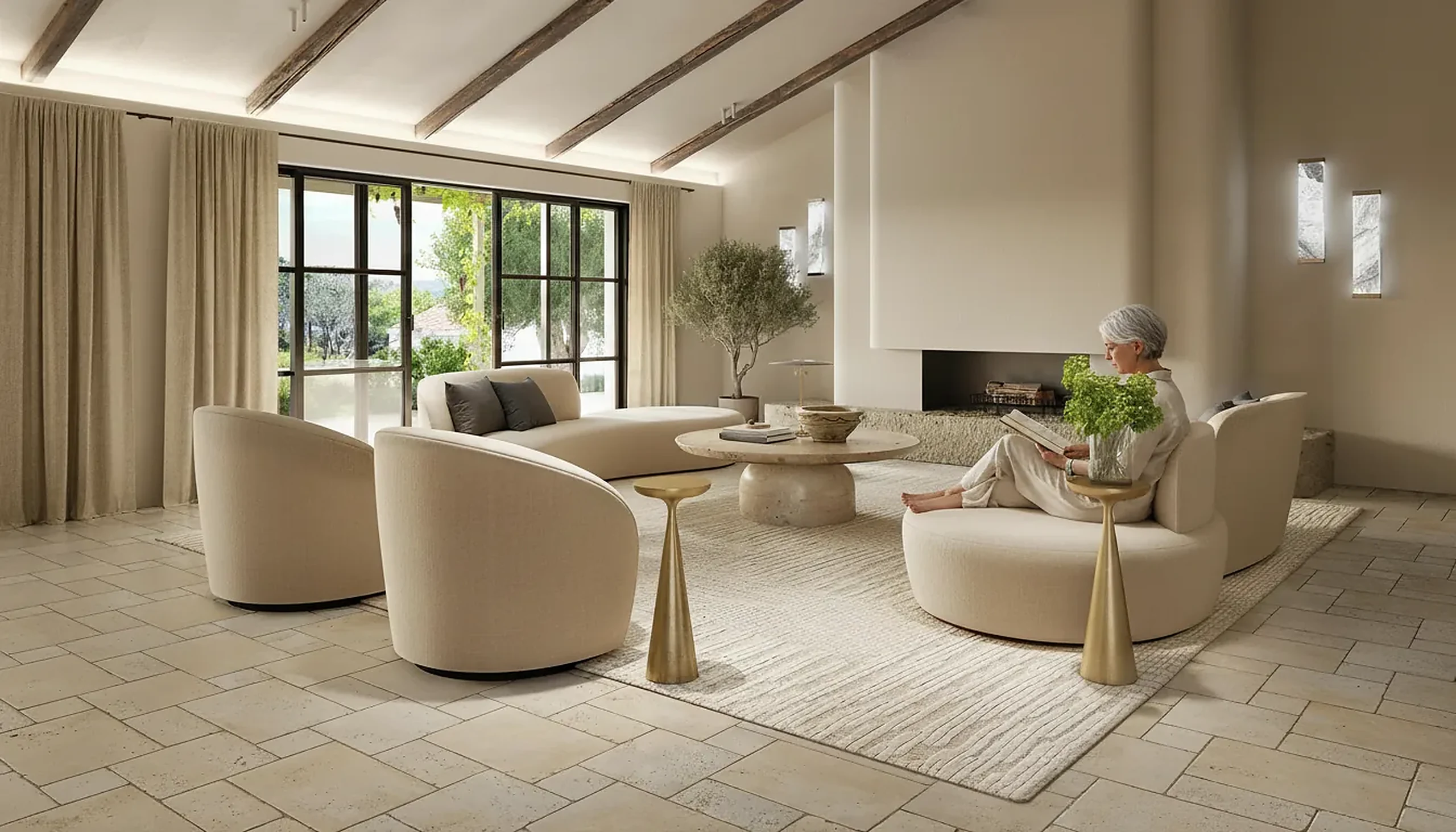
An interior is usually the smallest job. An exterior adds the site and its landscaping, and an aerial view adds the surroundings.
Exterior rendering
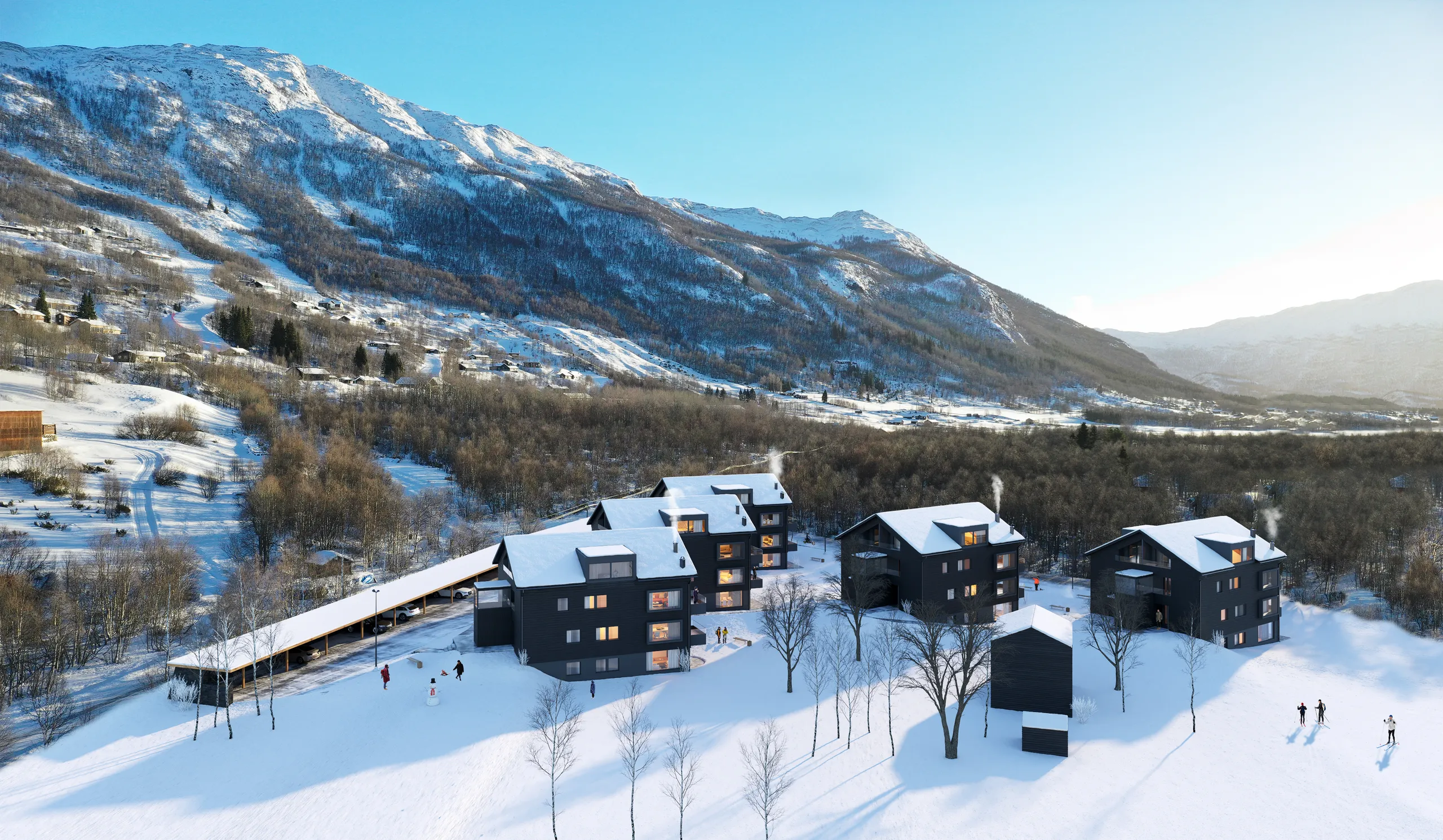
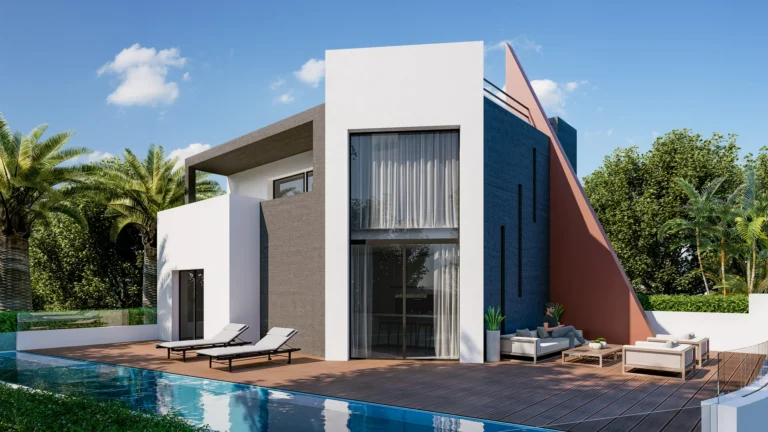
An exterior rendering has more to build than it looks: the whole building envelope, the roofline, the ground plane, landscaping, neighboring buildings where they are visible, and often people, cars or weather to make the scene read as real. A single facade view is cheaper to build than a full site with several angles, because the modeling covers more ground before a frame is rendered. For prices of exterior images only, see our page on exterior rendering cost.
Interior rendering
Interior rendering trades scale for detail. There is less geometry than in a building exterior, but every surface sits close to the camera, so furniture, fittings, materials and light all need to hold up at close range. A styled interior with custom furniture and a chosen mood costs more to build than a plain room with catalog furniture, even at the same resolution.
Aerial and site views
An aerial view has to model or source the surrounding context, not just the building: neighboring plots, roads, vegetation and terrain, often across a wider area than a street level view shows. The extra work is the surroundings, because the camera shows a wider area.
3D floor plans
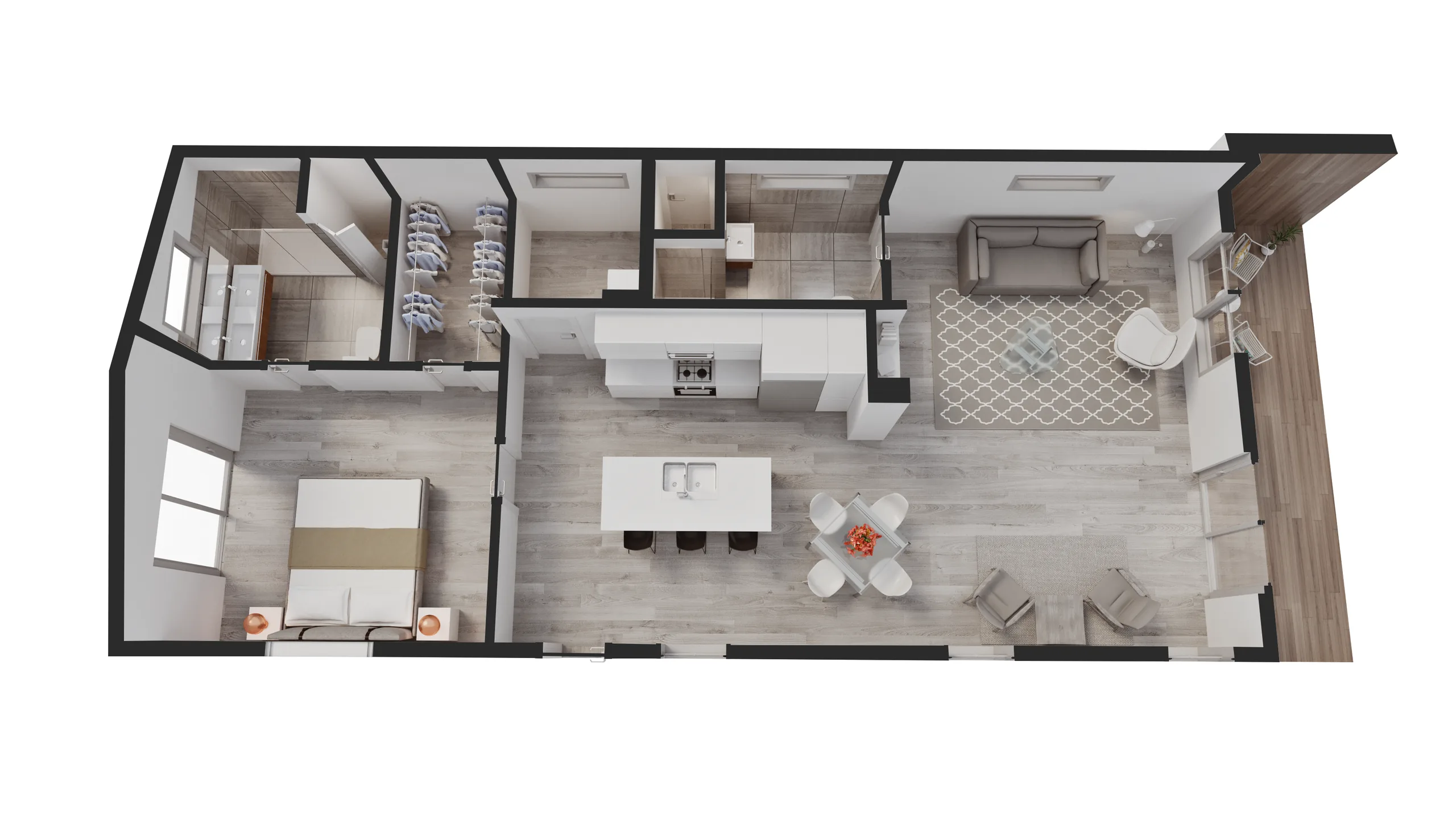
3D floor plans (top down, angled or dollhouse) are built from the same kind of 3D model as an interior, but they skip the lighting and camera work that a photoreal view needs. If an interior set already exists, the plans can reuse its model. One plan is produced per layout, as a still image and not an interactive viewer.
3D animation
3D animation (a walkthrough, a flythrough or a product film) starts from the same grey model as a still image. The camera route is agreed on a rough cut of the grey model first, while changing direction is still cheap. Then every frame along the route is rendered, not just one, and animation is priced by length. That is why a short animation usually costs more than a single still of the same space, and why the route is locked early.
Virtual staging
Virtual staging starts from a photograph of a real, usually empty room, not from a 3D model built from drawings. The work is matching furniture and light to an existing photo. It does not move walls or remove fixed features, and every staged image is supplied with a copy captioned as virtually staged.
Virtual tours
A 360 virtual tour is made of panoramas, and each panorama is a full 360-degree image. Every direction of the room has to be finished, not only what one camera frames. One panorama therefore needs more finished surface than a single still of the same room.
How a fixed per-project quote is built
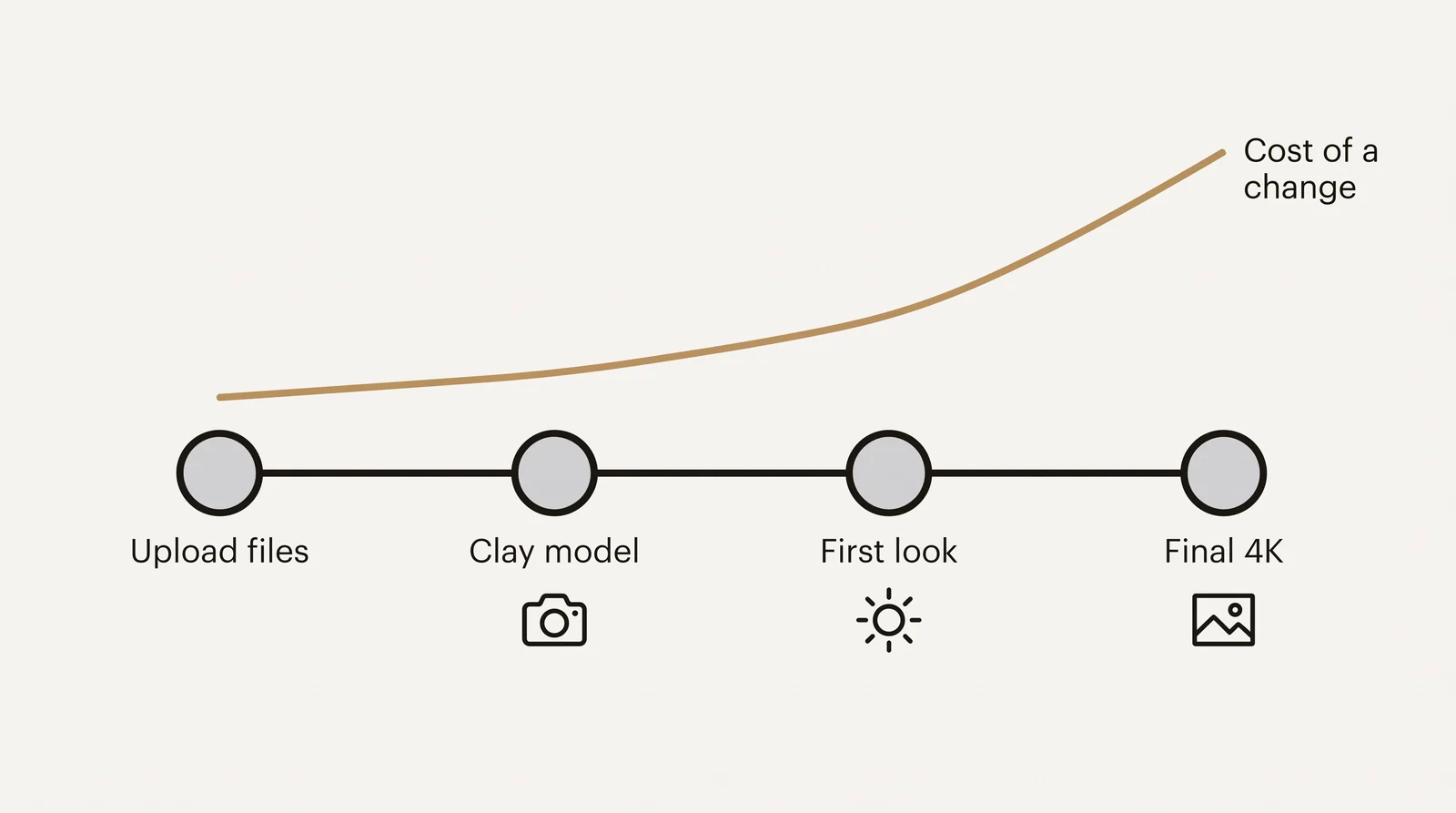
The price is fixed and agreed before any work starts. It comes from a short process, and each stage changes how much a later change costs. Open-ended work where the scope changes as you go, such as 3D modeling or design changes during development, is billed by the hour instead, at €85 per hour.
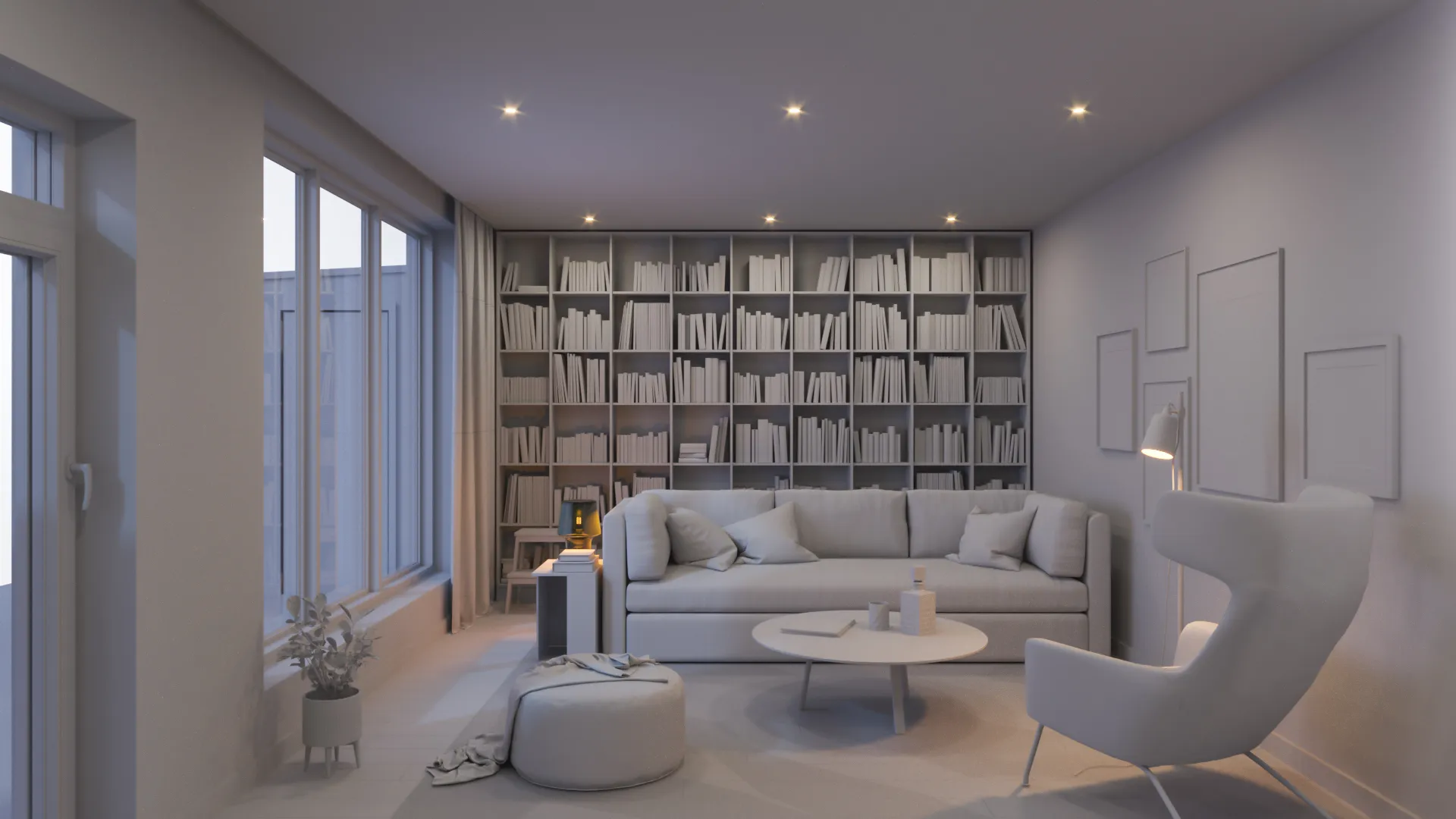
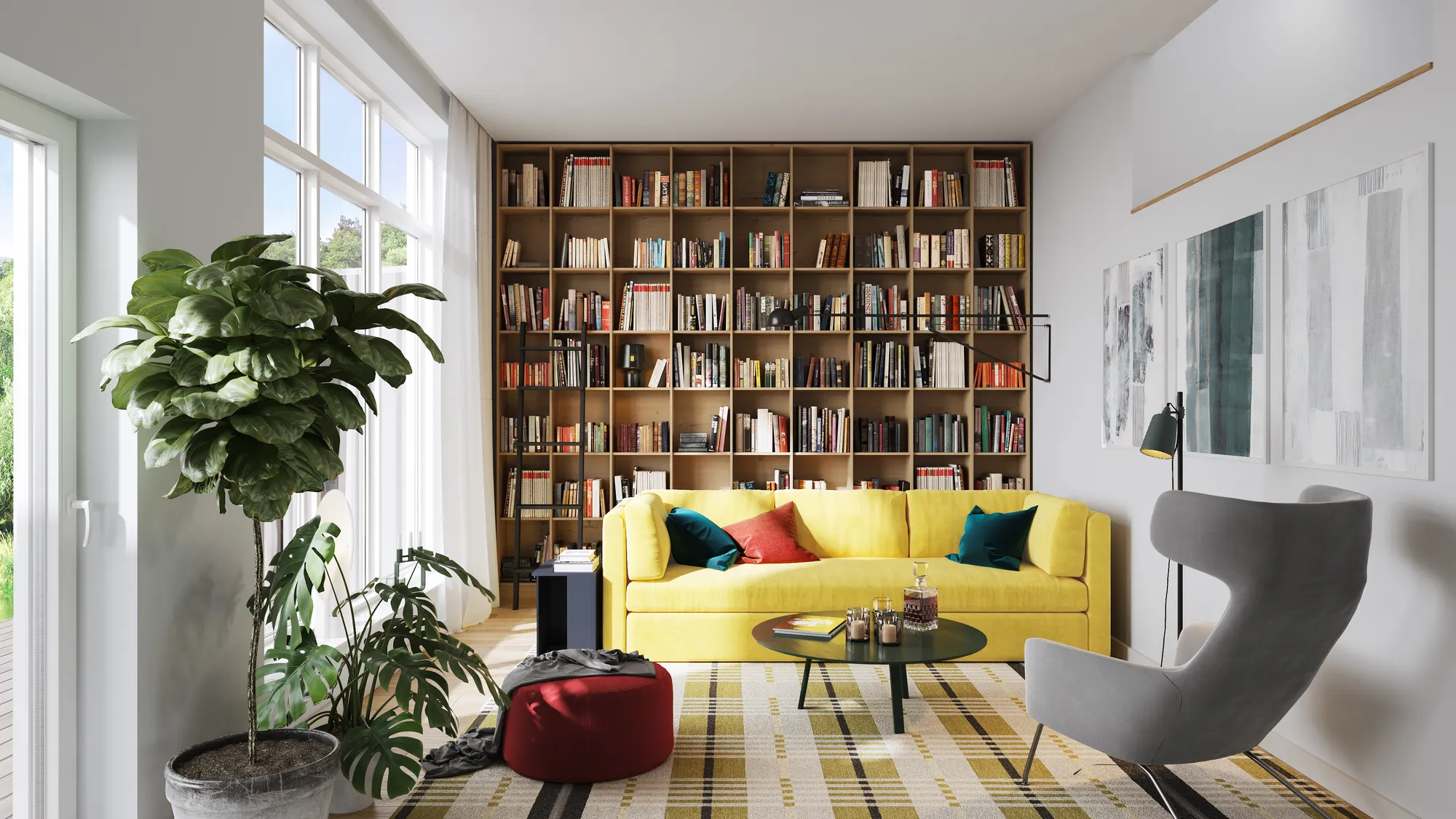
Left is the untextured clay model of a library living room, the stage where camera and layout are agreed while changes are cheap; right is the finished render from the same camera, which adds materials and light.
- Upload your files. CAD, PDF plans and elevations, a SketchUp, Revit, ArchiCAD or 3ds Max file, or even a photo of a hand sketch is enough. The brief is built from what you send, so there is no questionnaire and no discovery call. A fixed price and delivery date come back within 30 minutes.
- Clay model. An untextured grey 3D model is built. The camera position, lens, height and time of day are agreed here, while changes are cheap.
- Photoreal first look. Materials, light and surroundings are added to one view. A change is still cheap at this stage, and the 2 included revision rounds run from here.
- Final delivery. Images arrive in 4K with full usage rights. Any further views reuse the same scene.
Tip: Agree the camera position and lens at the clay stage. Moving a camera or changing the time of day costs far less before materials and light are added.
See what happens at each stage on how a project runs from upload to delivery.
Why extra views of the same scene cost less
The first view of a scene pays for building it: the geometry, the materials, the lighting setup and the surroundings. Every further angle of the same building, room or site reuses that work, so it costs much less than the first, even though it is a new image. This is also why a launch package costs less per image than the same images ordered separately.
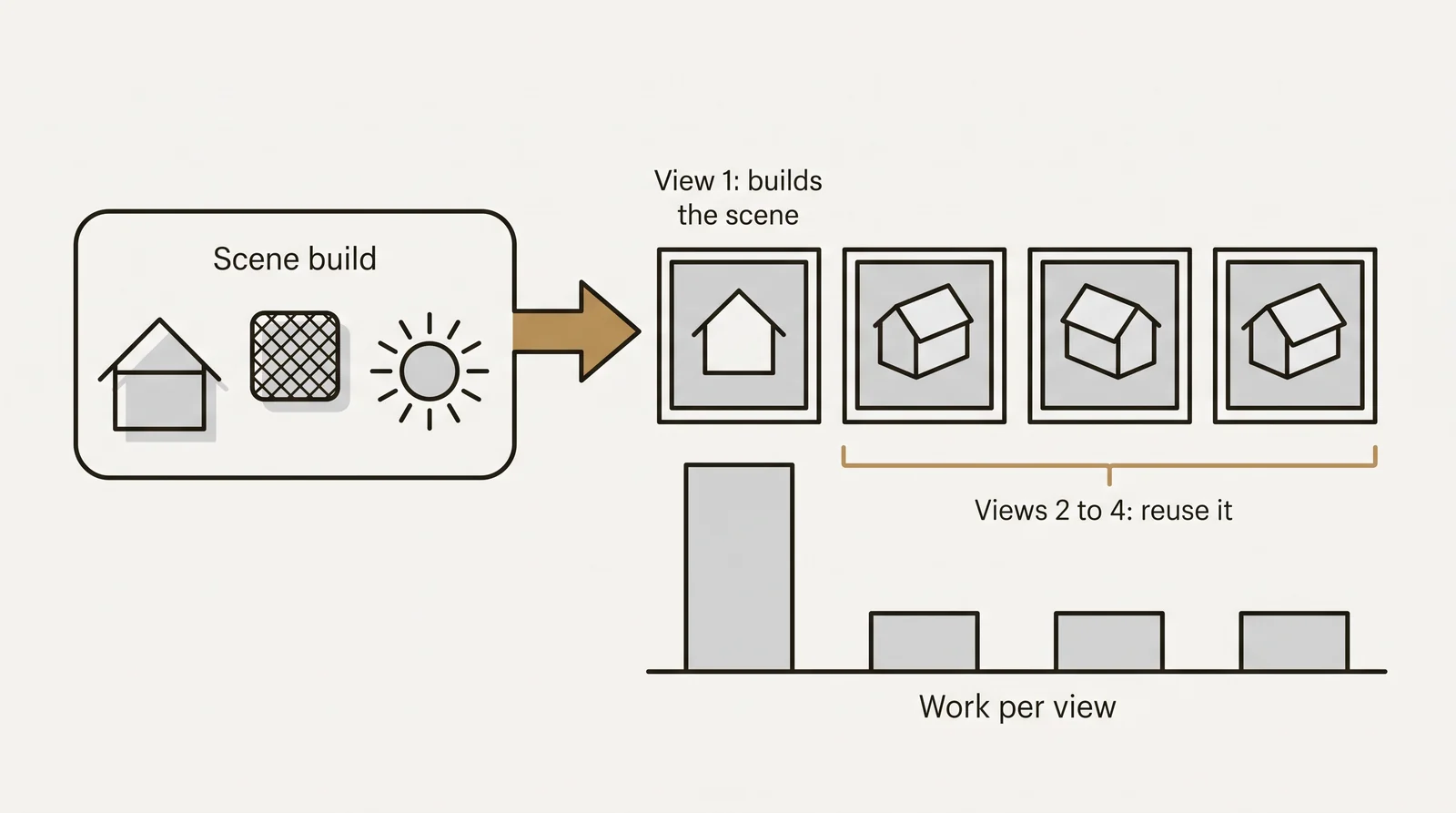
The same logic explains how a scope changes the job:
- One main view of a building. The full scene is built for a single image.
- Several views of the same building. The scene already exists, so each added view is much less work.
- The same views plus an aerial view. The surroundings now have to be built too, so the added view is more work than another street level angle.
Views spread across several unrelated buildings do not share work in this way. Each building pays for its own build.
What is included in the price and what costs extra
| Included in every fixed price | Costs extra |
|---|---|
| 2 revision rounds, then refinement until sign-off | Large design changes after the camera is agreed |
| Delivery in 4K | Large-format delivery at 8K to 12K |
| Full usage rights, no license fee | |
| A fixed delivery date. | A rush delivery date |
| NDA as standard, and nothing published without written permission | Open-ended 3D modeling or design changes, billed at €85 per hour |
The price only changes if you change the scope. Tell us what you need to keep fixed, such as a date or a maximum number of views, when you send the files.
How to reduce cost without cutting quality
We do not discount the same scope, because the price already reflects the work. Instead we rescope: change what is asked for so the result still meets the brief at a number that fits.
- Fewer views. Order one main view instead of a full set. You get one finished angle instead of several.
- One key space instead of the whole building. Order the main facade or one key interior first, and add more views later from the same scene.
- Standard resolution instead of large format. 4K covers web, social and print up to about A4 at full print quality. Larger prints and billboards need 8K to 12K.
- Stills instead of animation. A set of stills from the camera positions an animation would use can cover a brochure or a listing without the extra rendering that a moving camera needs.
Say what your budget is before the project starts, not after the quote arrives. Rescoping is easy while the brief is open, and harder once a scene has been built to a different scope.
How to compare 2 rendering quotes
Two totals are only comparable when the scope behind them matches. Line up these items first:
- The number of views, and which ones.
- The resolution: 4K or large format.
- The number of revision rounds included.
- Usage rights, and any license fee for using the images.
- The delivery date, and what happens if it is missed.
- Whether the 3D scene is kept for later views.
- What the quote excludes, such as changes after the camera is locked.
A lower total that excludes several of these items is not a lower price for the same job.
Studio, freelancer or AI tool: how the price is set
AI image and video tools are useful for loose mood boards and early concepts. They do not hold a building’s actual geometry, so window counts, balconies and roofline details can drift from the drawings, and nothing in the output is checked against a plan. Concept images get cheaper with these tools. A building checked against the drawings does not.
| What matters | 3Dstudio.co | Freelancer | AI image tool |
|---|---|---|---|
| How the price is set | One fixed price per project, agreed before work starts | Can be per image or by the hour, agreed case by case | Usually a subscription or credits, set by the tool |
| Accuracy against drawings | Model built from CAD or BIM files and checked by a person | Usually built from the same files, depends on the individual | Does not read drawings, so geometry can drift from the plan |
| Revisions | 2 rounds included, then refined until sign-off | Agreed case by case | You generate again. There is no model to edit, so a specific fix cannot be targeted. |
| Confidentiality | Works under NDA as standard, nothing published without written permission | Agreed case by case | Depends on the tool’s own terms |
| Reuse of the same scene | The scene stays with the studio, so later views cost less | Depends on whether the project file is kept | No underlying 3D scene exists to reuse |
| Usage rights | Full usage rights on delivery, no license fee | Agreed case by case | Depends on the tool’s own terms of use |
3Dstudio.co has been in business since 2013, has completed 1,247 projects for clients in 17 countries, and is rated 5.0 on Clutch. Read the 3Dstudio.co client reviews.
What to send to get an accurate quote
The more complete your files are, the closer the first quote is to the final one, because less of the scene has to be guessed. Send what you already have:
- CAD files (.dwg), PDF plans and elevations, or a SketchUp, Revit, ArchiCAD or 3ds Max file. To check a DWG before sending it, open it in our free DWG to PDF converter.
- IFC or another common BIM format, if the project already exists as a coordinated model.
- Material specifications or a mood board, if the styling matters. For an exterior or aerial view, add reference photos of the site.
- What the images are for, such as a planning submission, a sales brochure or a listing. That changes which service and which resolution fits.
A photo of a hand sketch is enough if nothing more finished exists. You do not need to tidy any of it first.
Questions about 3D rendering cost
How much does a single 3D rendering cost?
A single image is quoted as one project, with a fixed price agreed before work starts. Projects start at €1,000. The first view of a scene carries the cost of building it, so a second view of the same building costs much less. Send your files and the exact price comes back within 30 minutes.
Is 3D rendering priced per square foot or per square meter?
No. Floor area is a poor guide to the work. A small villa with a pool and planting can need more scene building than a large plain interior. The price follows the number of views, scene size and complexity, file readiness, styling and the deadline.
Is 3D rendering billed by the hour?
No, rendering is one fixed price per project. Open-ended work where the scope changes as you go, such as 3D modeling or design changes during development, is billed at €85 per hour with a time report.
What is included in a 3D rendering quote?
2 revision rounds then refinement until sign-off, delivery in 4K, full usage rights with no license fee, a fixed delivery date and an NDA as standard. Large design changes after the camera is agreed, large-format 8K to 12K delivery, clutter clearing for virtual staging and rush dates cost extra.
Does a rush deadline change the price?
Yes. A standard schedule costs less than a rush delivery, because other work has to move to fit yours. A single view usually takes about a week, and a medium-to-large set takes 2 to 3 weeks. If your date is tight, we say what fits, for example fewer views or a simpler scene.