Marketing for Architects: Channels, Images and How to Brief Them
How to market an architecture practice: website portfolio, competitions, press, social media, bids, referrals and local search, with the images each channel needs.
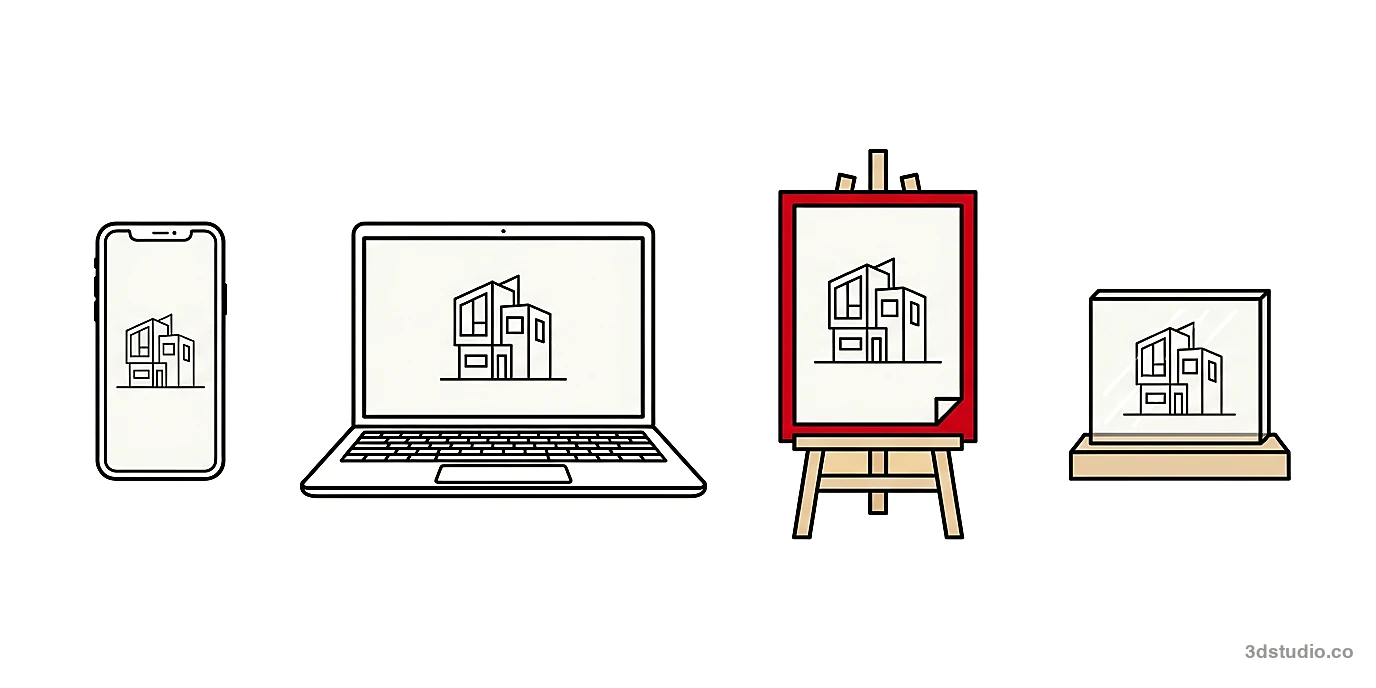
In this article
- Choose 2 or 3 channels and keep them up, instead of opening 7 and leaving them empty.
- Prepare one image set per project and reuse it on the website, in entries, in press folders and on social media.
- Check the rules and the image rights for each channel before you order or send images.
- Unbuilt work can be shown with renders made from your model, labeled as visualizations.
Marketing for architects means making the right clients aware of your practice and giving them evidence they can trust before the first meeting. For most practices that evidence is images, so the work is to choose a few channels and prepare the right pictures for each one: a website portfolio, competitions and award entries, publications and press, social media, proposals and bids, client referrals and local search.
This guide covers each of these 7 channels, what a viewer decides when they see your work, and how to brief the images. We are 3Dstudio.co, an architectural visualization studio, so the focus is on images made from a 3D model. The full guide to 3D visualization for architects covers design-stage uses. Our architectural visualization service and our page on 3D rendering for architects explain how we work with practices.
| Channel | What the viewer decides | Images to prepare |
|---|---|---|
| Website portfolio | Whether to contact you | 1 exterior and 1 interior per project, plus a plan and a section |
| Competitions and award entries | Whether the jury remembers the scheme | 1 hero view and 2 or 3 supporting views in the same light |
| Publications and press | Whether an editor can run the story | High-resolution images with captions and credits |
| Social media | Whether a follower stops and looks | Crops of the same hero images, and short video |
| Proposals and bids | Whether you suit the brief | Comparable work and a design-stage view of the site |
| Client referrals | Whether a client can describe your work to a friend | A one-page project sheet with 3 images |
| Local search | Whether a local client finds and trusts you | Photos and images with clear file names and alt text |
How to advertise architectural services: start with a plan
Advertising architectural services works best when it points to work you can already show. Paid placement, such as a sponsored post, a directory listing or a search ad, only sends people to your website. So the website and the images come first. Follow these 5 steps before you spend money on anything:
- Name the client you want. Choose one group (homeowners, developers, public bodies or businesses) and the building type you want to design more of.
- Choose 2 or 3 channels from the table. Two or 3 channels are easier to keep up than 7.
- Prepare one image set per project. The last section of this guide lists what a set contains.
- Reuse the set in every channel. The same hero image goes on the website, in an award entry, in a press folder and, cropped, on social media.
- Review twice a year. Look at your own enquiry records and note which page or channel each enquiry came from. Keep what works and drop the rest.
Website and portfolio
The website is the place every other channel sends people to, so prepare it first. A visitor decides quickly whether your work suits their project, so show fewer projects with more care. Give each project its own page and put the strongest image at the top. Use 4 to 6 images per project: a hero exterior, an interior, a view that shows the site, a plan and a section. Add a short caption with the building type, the location, your role and the status (built, under construction, competition or concept). Label unbuilt work as a visualization.
Have a 3D model? Our AI Render Studio turns a screenshot of it into a photoreal image. 11 free renders, no card needed.
Render your model free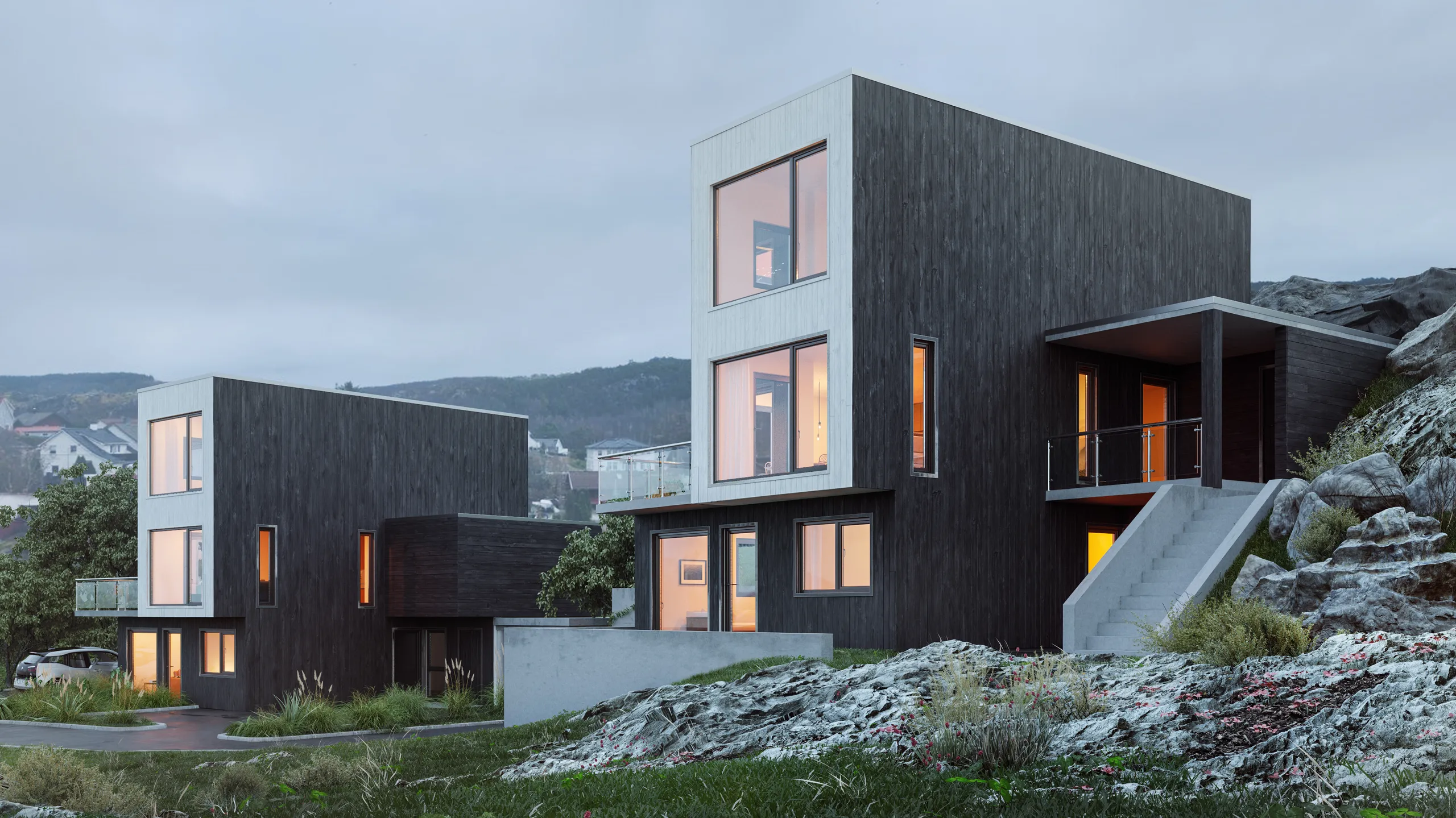
To brief a portfolio image, ask for the camera at eye level, vertical lines kept vertical, one clear light (daylight to show materials, dusk for a hero image) and a quiet setting that does not compete with the building. Our guides to 3D exterior rendering and to the interior rendering process cover these choices in detail.
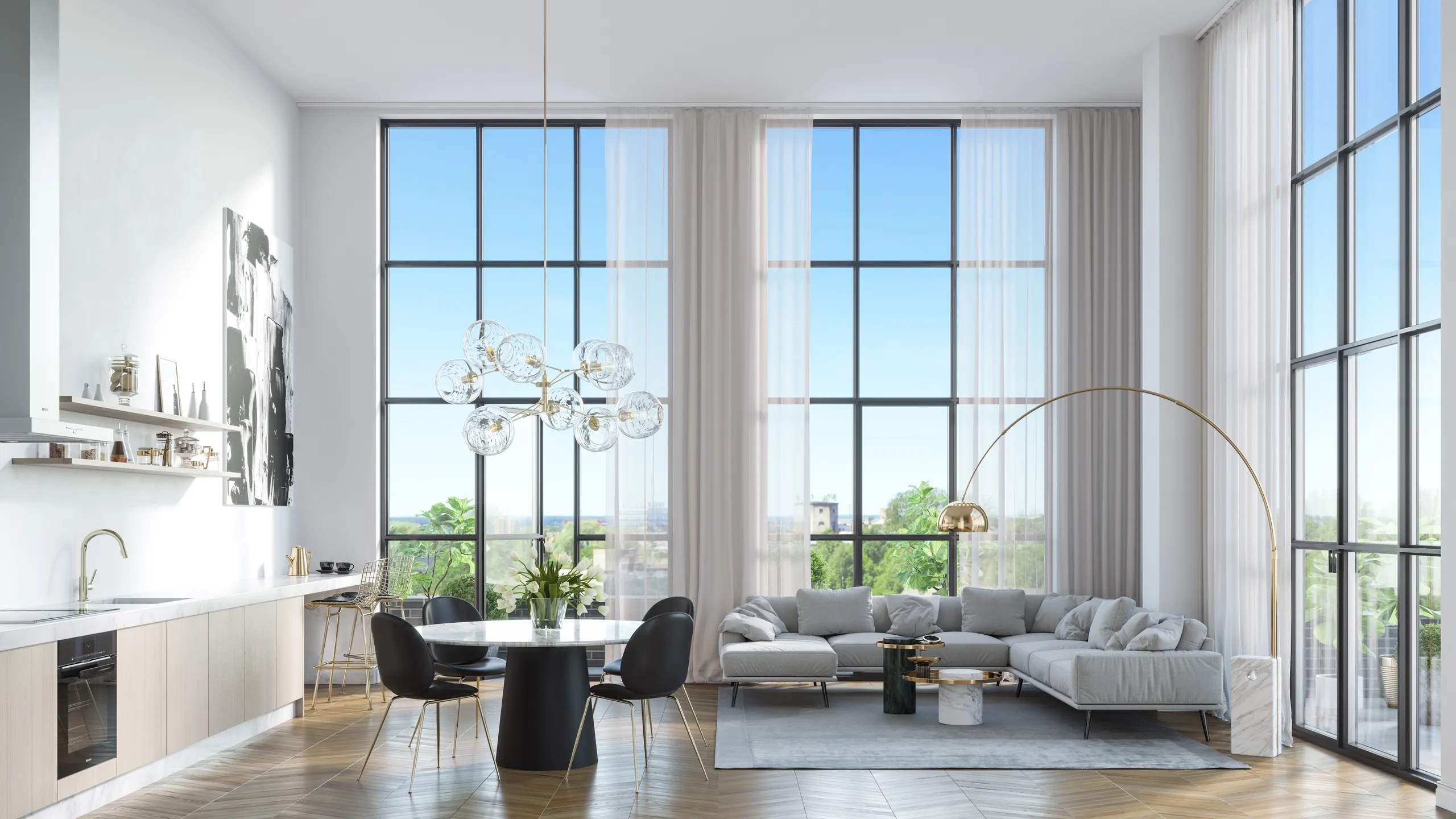
If a project is not built yet, or a photographer has not visited, a render made from your model can show it, as long as it matches your drawings. Images from AI tools suit mood and concept posts. Depending on the tool, details such as window frames, balconies or the roofline can change, and nothing in the output is checked against your drawings. For the work you present as your design, use images built from the model.
Competitions, award entries and press
Competitions and award entries
A jury looks at many entries in a short time, so the images must read at small size. Use 1 hero view, 2 or 3 supporting views and one section or diagram. Keep the same light, season and camera height in all of them, so the set looks like one scheme. A section cut rendering explains how a building is organized inside, which a single exterior cannot do.
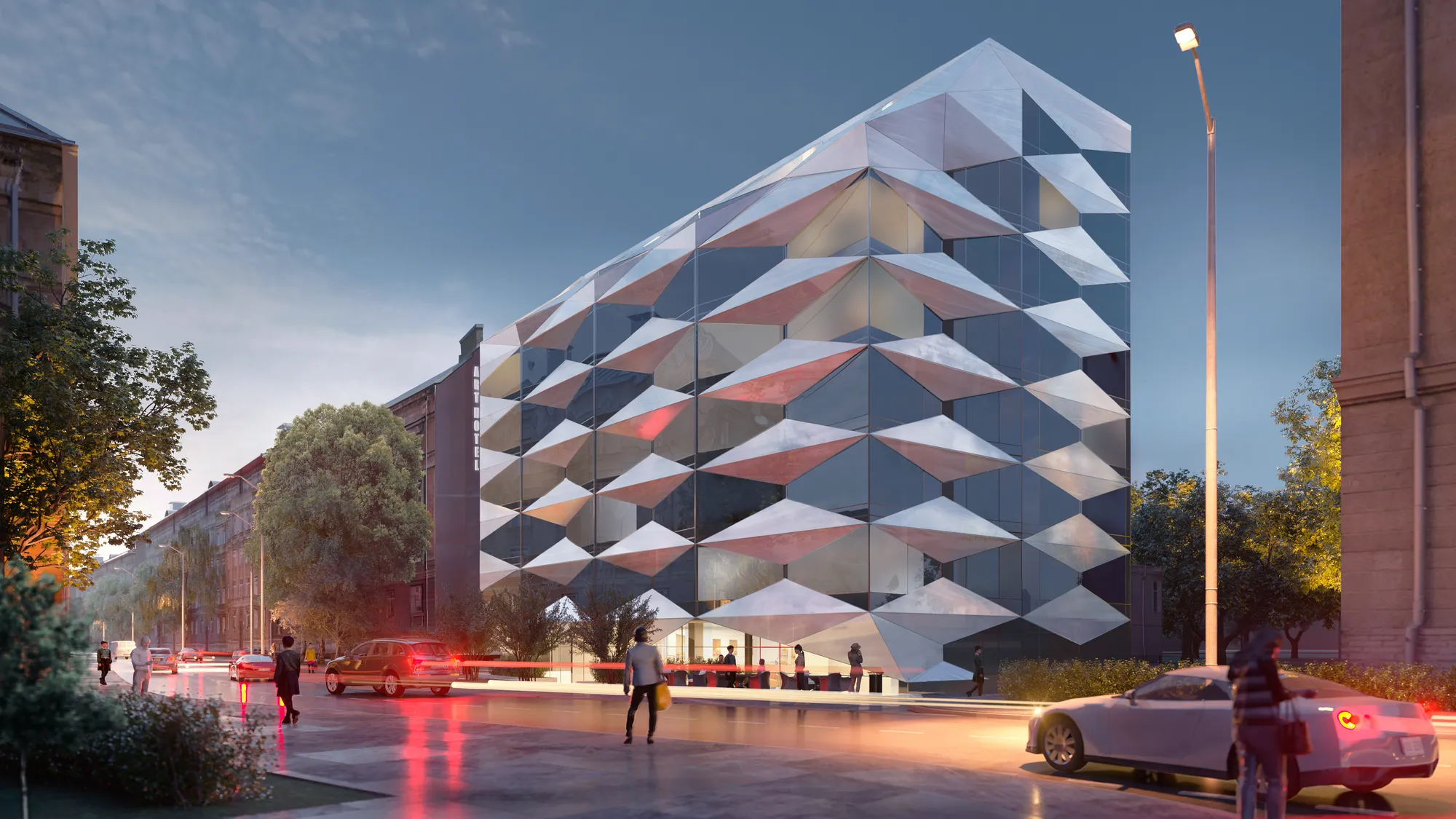
Every award has its own rules, so read them before you order images. Check the number of images, the file size, the caption length, and whether the category accepts renderings or only photographs of built work. To brief the set, send the drawings, the board layout or entry form, and the size at which the images will be seen. Ask for a clear silhouette and a simple background.
Publications and press
Editors of magazines, websites and local newspapers can use your project only if the material is ready to run. Prepare one press folder per project:
- 4 to 6 high-resolution images, mostly landscape, with one portrait crop
- A plan and, where it helps, a section
- A caption for each image and the credits for the design team
- A short description of the project in a few plain sentences
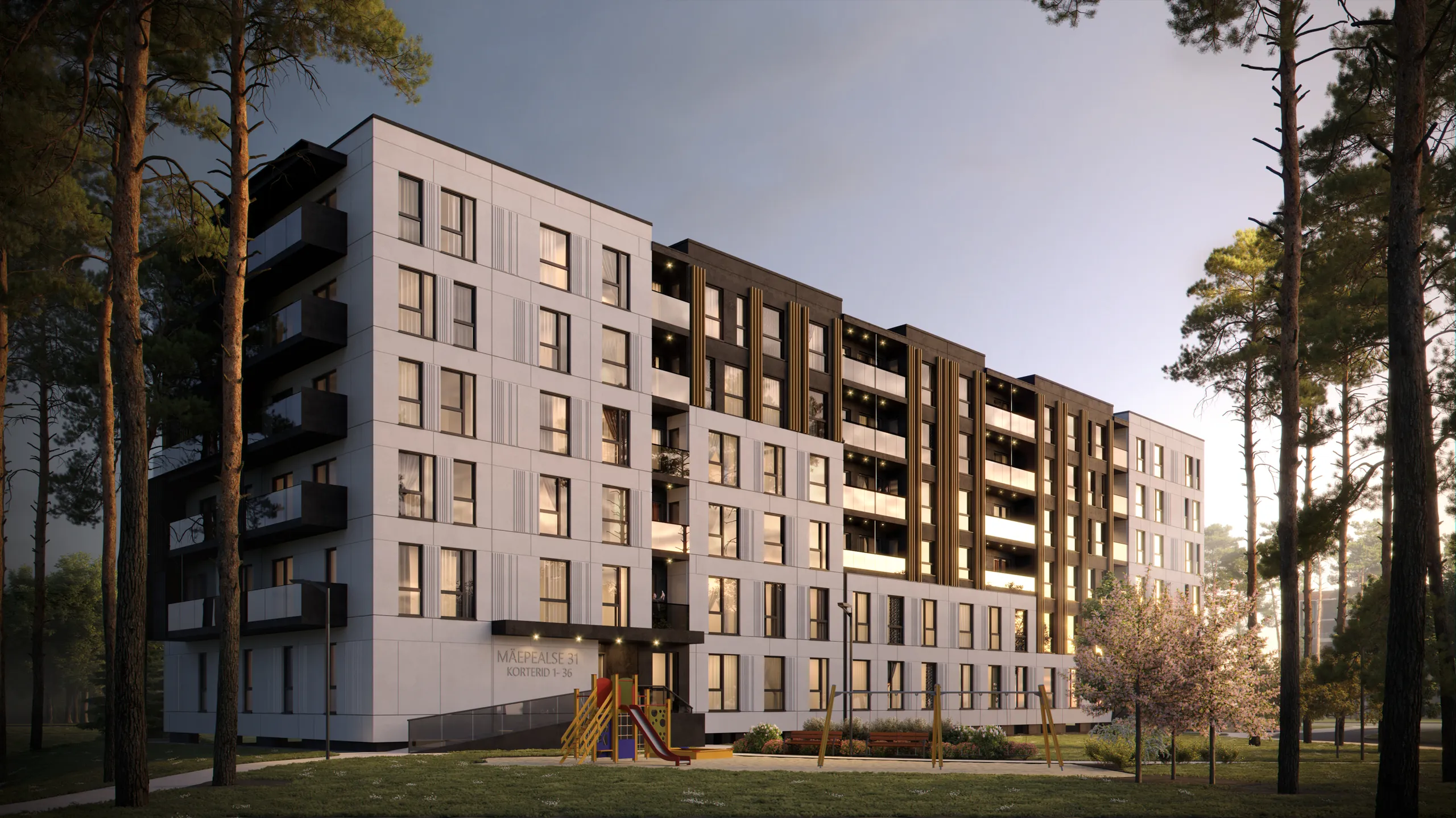
Check the rights for every image before you send it. Photographers usually hold the copyright of photographs of built work. Images we deliver come with full usage rights, including press, with no license fee. While a project is still in planning or under construction, an image made from the model gives local press something to print before the building exists.
Social media for architects
The best social media platforms for architects depend on who you want to reach, not on a general ranking. Choose the platform where your clients already look at design, and post on a schedule you can keep. Social media marketing for architects is mainly image work: the same hero images, cropped and captioned for each platform. The table describes what each platform is, based on its own pages (checked October 2026). Features change, so check them before you build a plan around one.
| Platform | What it is | What to post |
|---|---|---|
| A professional network. It suits developers, public clients, contractors and engineers. | Completed projects, competition results, a hero image with a caption that says what the project is and what your role was | |
| An image and video app with Reels and Stories. It suits homeowners and interior clients. | Crops of hero images, detail views, short clips | |
| A visual search and shopping platform where people save ideas (Pins) to boards. It suits people collecting ideas for a home. | Project images that link back to the project page on your site | |
| YouTube | A video platform. | A walkthrough of a project, made from the same 3D model as your stills |
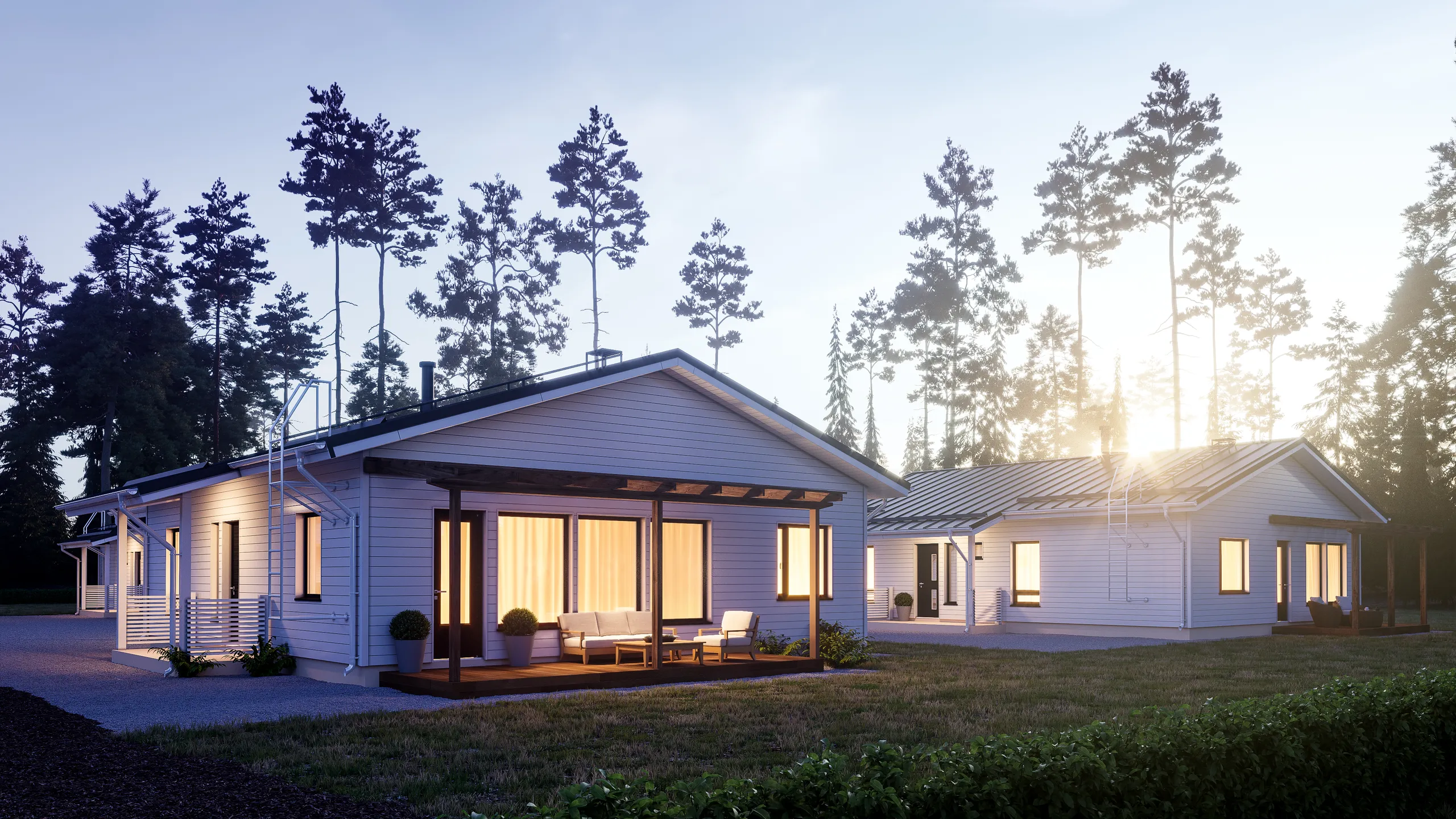
For architecture on social media, brief the hero image with room around the building, so it can be cropped square, portrait and landscape without cutting off the roofline. Dusk images with lit windows still read clearly at the small size of a phone screen. For video, a 3D animation or walkthrough uses the same model as the stills, so the building looks the same in every format.
Proposals and bids
A proposal is read by a client who compares practices on paper. The images should answer 2 questions: have you designed something like this, and do you understand this site? Use these 3 kinds of image:
- Comparable work. Choose 2 or 3 projects of the same building type and a similar scale, not simply the most impressive ones.
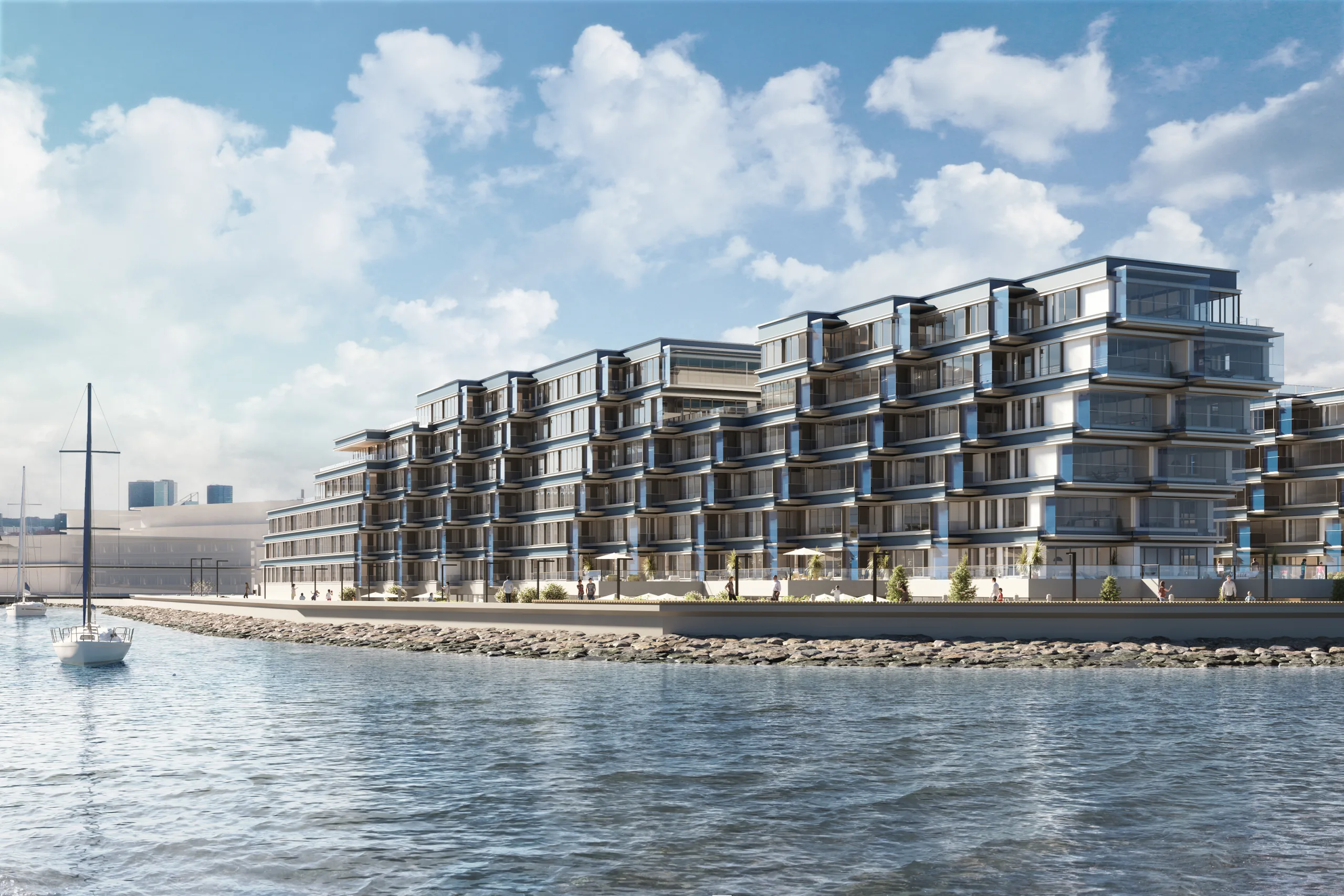
- The site. A view that shows the setting, such as a view from the water, the street or the hillside, helps the client see scale and approach.
- A design-stage view. A grey (clay) model view shows massing before any material is chosen. Changes at this stage are cheap, which is why we agree the camera on the grey model first (see how the process works).
Bids often have short deadlines. Send the drawings with the viewpoints marked on a plan. You get a reply within 30 minutes of sending the files, with a fixed price and delivery date or the 1-2 questions we need answered first, so you can decide whether the images fit the bid schedule.
Client referrals and local search
Client referrals
A referral happens when a past client can describe your work to someone else. Make that easy:
- Send the final images. After handover, give the client a small set of finished images of their project, not only a thank-you note.
- Ask for permission in writing before you publish a client’s home or company on your website or social media. We follow the same rule for our own portfolio.
- Keep a one-page project sheet. Use 3 images, a plan and 3 sentences on the brief. A client, an agent or a contractor can forward it as it is.
Local search and directories
Local search is how people find a practice when they search for an architect in their town. 4 things matter:
- A complete Google Business Profile. Google describes it as a free business profile that appears on Google Search and Google Maps (checked October 2026). Add your address, services and photos of your work.
- One website page per service and place you work in, each with its own project images.
- Clear image files. Name each file for what it shows, and write alt text that describes the picture in a plain sentence, for example “timber house on a coastal slope”, not a list of keywords.
- The same name, address and phone number on your website, your profile and every directory.
Architectural marketing ideas for practices that have the basics
Advanced marketing techniques for architecture and engineering firms build on the same images. Once the website, the press folder and the project sheet exist, these ideas add to them:
- Project pages written as a brief and a response: what the client needed, what the site limited, and how the design answered both.
- A walkthrough film from the same model as the stills, for the website and for presentations.
- Section views that explain structure and services. These help engineering partners and technical clients understand a scheme.
- Site plan images for neighbors and planning officers. Our guide to site plan rendering shows what they contain.
- A PDF portfolio for each client group, for example homes, developers and public bodies, with only the relevant projects.
- A short update twice a year to past clients and agents, with one new image set.
How to brief marketing images for all channels
Order one set per project and plan it so that every channel gets its crop. A set has 5 items:
- A hero exterior, landscape, with room around the building
- An interior view of the main space
- A context view or an aerial that shows the site
- A plan, such as a 3D floor plan for projects with several homes
- One detail or section view
Send the drawings (DWG, PDF, Revit, ArchiCAD, SketchUp or 3ds Max files), mark the viewpoints, and say which channels the images are for. For a quote, even a photo of a hand sketch is enough. Delivery is in 4K as standard, and up to 8K to 12K for large-format print on request. Every project has 2 revision rounds, then refinement until sign-off. Projects start at €1,000. Each project has one fixed price agreed before work starts (see pricing). For built work, hire a photographer. A render is for unbuilt work and for views a camera cannot take. You can see finished work in our portfolio.
Questions about marketing for architects
How do architects get more clients?
Through a small number of channels that are kept up: recommendations from past clients, a website that shows finished work clearly, competitions, press and local search. Choose 2 or 3, prepare one image set per project, and reuse it in every channel.
Do architects need paid advertising?
Not to begin with. Paid placement sends people to your website, so the portfolio has to be ready first. When it is, a sponsored post, a directory listing or a search ad can point to the same project pages.
Can I market a project that is not built yet with renderings?
Yes. Label the image as a visualization, make sure it matches the drawings, get the client’s permission, and check the advertising rules that apply in your country.
Who owns the images used for marketing?
Photographers usually hold the copyright of photographs. Images we deliver come with full usage rights for brochures, portals, hoardings, press, social media and planning submissions, with no license fee. Agree the rights in writing before you publish.
Which image should come first on an architect’s website?
The strongest finished exterior of the type of project you want more of.